
Hygiene and prevention
How to clean your private parts: A guide to safe and gentle care | Santelle

Zineb Sadki
Editorial writing, Santelle
Intimate hygiene is essential for daily comfort and health, but it is often surrounded by many common myths.
Using products that are too harsh or practicing poor habits can easily do more harm than good.
Here is a complete guide to adopting a suitable routine, understanding your intimate anatomy, and recognizing warning signs.
The Right Steps for Cleaning Your Intimate Area
1. Wash Once a Day, No More
A daily wash is more than enough. In hot weather or after intense exercise, you can increase this to twice a day, but no more.
Washing too often weakens the protective flora and can do more harm than good.
2. Use Only Water, or a Gentle, Specific Product
Plain water is often all you need.
If you prefer a product, choose a specific intimate wash that is soap-free, with a neutral or slightly acidic pH (around 5).
Avoid standard soaps, scented shower gels, antibacterial products, or internal vaginal douching.
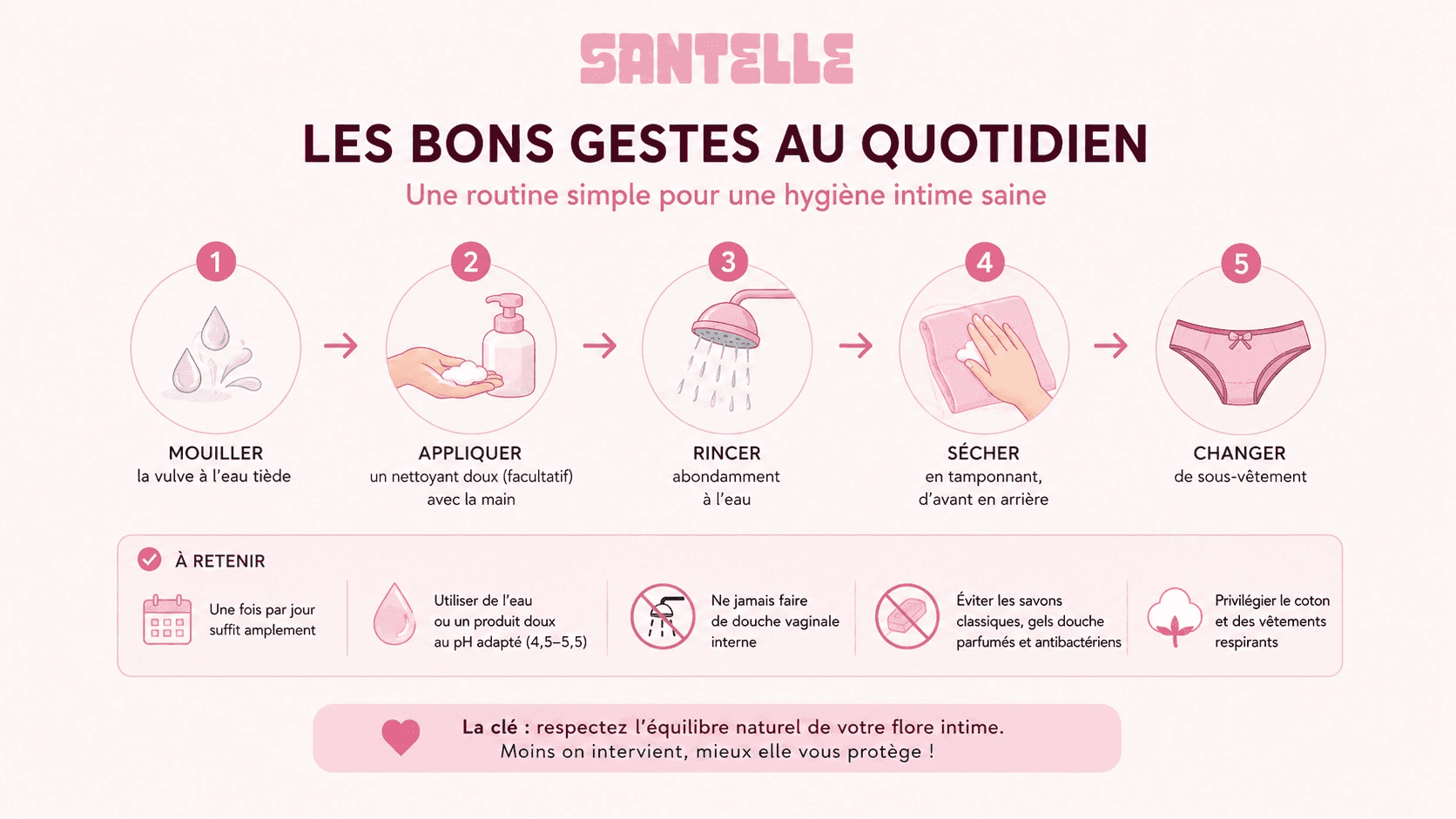
3. Wipe and Wash from Front to Back
This simple habit prevents bacteria from the anal area from spreading to the vagina or urethra, reducing the risk of urinary tract infections.
4. Never Vaginally Douche
Never introduce water, soap, or spray inside the vagina. The vagina is self-cleaning, and douching washes away protective bacteria, greatly increasing the risk of infection.
5. Dry Thoroughly After Washing
Moisture encourages yeast and bacteria to grow. After washing, gently pat the area dry instead of rubbing.
Step | Action | Frequency |
|---|---|---|
1 | Wet the vulva with lukewarm water | Daily |
2 | Apply a gentle wash (optional) with your hand | Daily |
3 | Rinse thoroughly with water | Daily |
4 | Pat dry from front to back | Daily |
5 | Change underwear | Daily |
Understanding Your Intimate Anatomy
Before discussing best practices, it is helpful to distinguish between the different parts of female anatomy, as "vulva" and "vagina" are often confused:
Term | Definition | Should it be cleaned with a product? |
|---|---|---|
Vulve | The external, visible area: the outer and inner lips, clitoris, and vaginal opening | Yes, on the outside only |
Vagin | The internal passage connecting the vulva to the cervix | No, never—it cleans itself |
Périnée | The area of skin between the vulva and the anus | Yes, gently |
Simplified diagram of the area to clean:
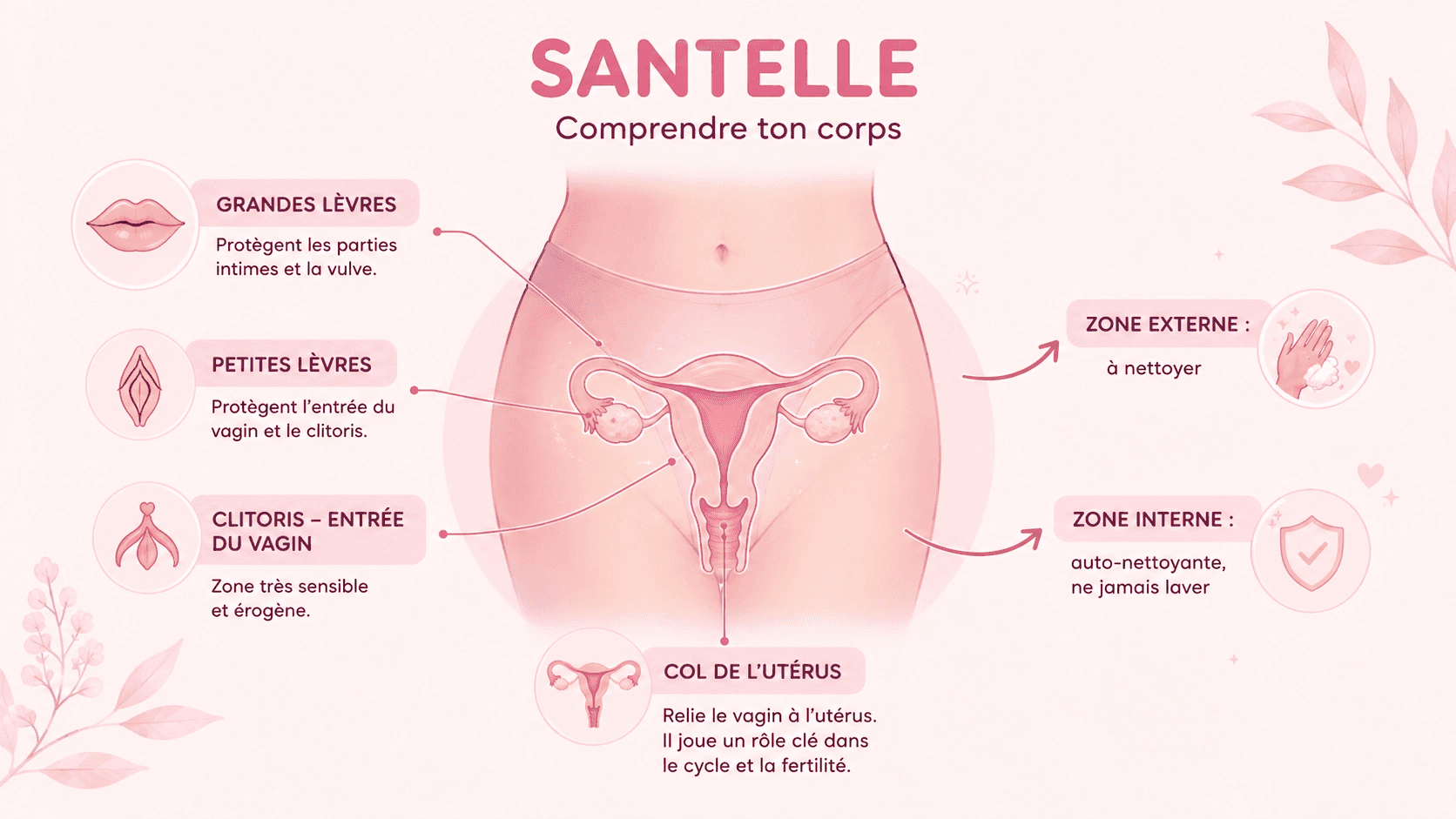
This distinction is the foundation of good intimate hygiene: only clean the external, visible parts.
How the Vaginal Flora Protects Itself
The vagina is home to a natural ecosystem of beneficial bacteria called the vaginal flora, also known as the vaginal microbiome.
This flora is dominated by lactobacilli, "friendly" bacteria that play a key role in protecting the intimate area.
These lactobacilli convert compounds in the vaginal lining into lactic acid.
This process maintains a naturally acidic vaginal pH, between 3.8 and 4.5.
This acidity acts as a natural barrier that prevents harmful bacteria and yeast (such as Candida albicans) from multiplying, keeping the intimate area healthy.
Body Area | Average pH |
|---|---|
Facial skin | 5.5 |
Body skin | 5.0 to 6.0 |
Vulva | 5.0 to 5.5 |
Vagina | 3.8 to 4.5 (acidic) |
Standard soap | 9 to 10 (alkaline) |
This table shows that the vagina and the vulva have slightly different pH levels. The vulva, being closer to external skin, can tolerate a slightly less acidic pH.
The vagina, however, relies heavily on this natural acidity to protect itself.
This explains why standard soap, which is highly alkaline, can easily disrupt this delicate balance.
Using standard soap can neutralize the vagina's natural acidity, weakening its defenses and leading to irritation, dryness, or infections.
That is why it is best to use products specifically designed for intimate care rather than standard body washes.
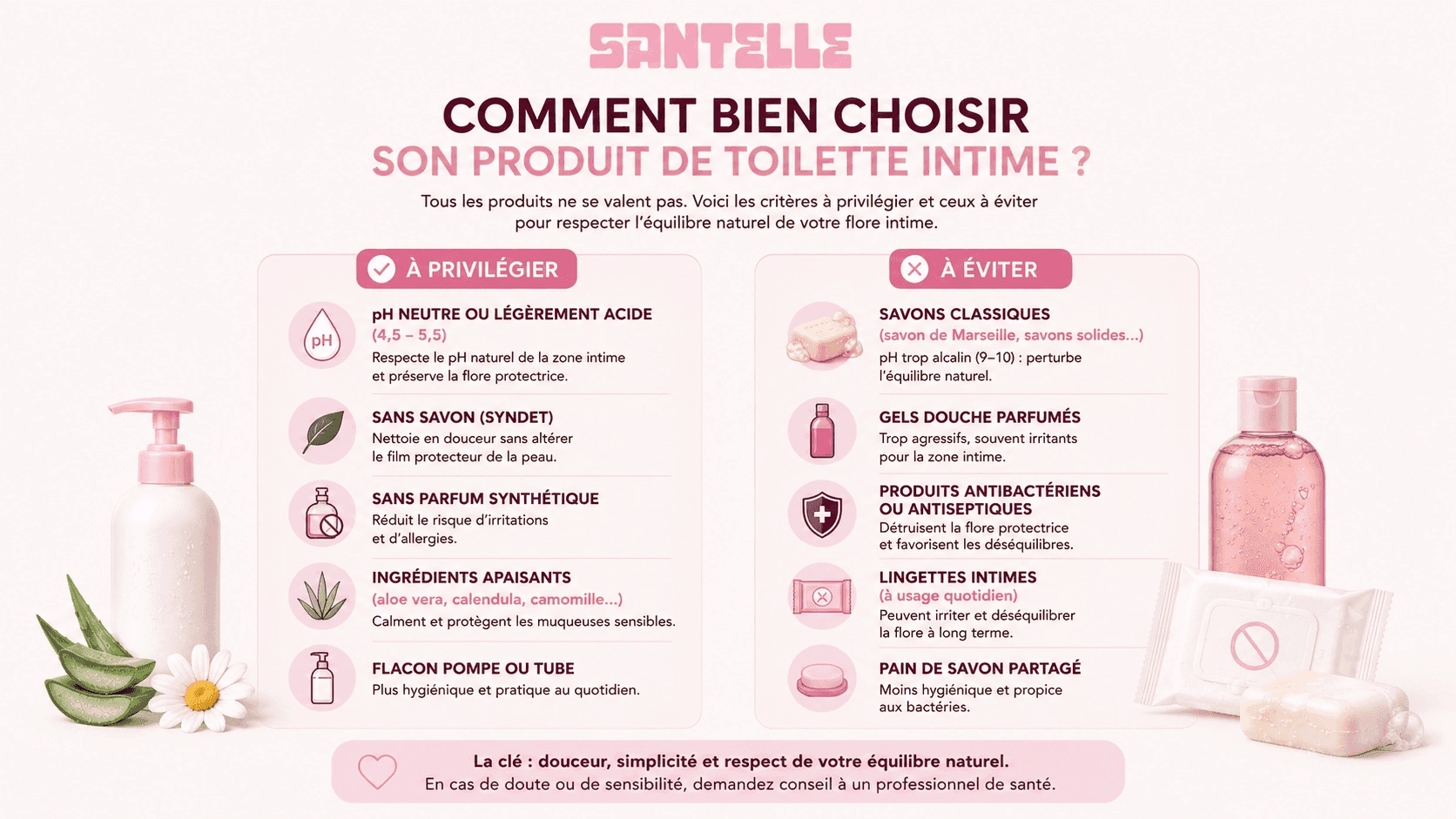
Choosing the Right Intimate Care Product
If you experience persistent itching despite a gentle routine, it may be a sign of vaginal irritation rather than a lack of hygiene. You can read more about this in our guide on causes and solutions for vaginal irritation.
Feature | What to look for | Example brands | What to avoid |
|---|---|---|---|
pH | Neutral or slightly acidic (4.5–5.5) | Saforelle, Gyn-Hydralin, Lactacyd pH 5 | Standard soaps (pH 9-10) |
Formulation | Soap-free ("syndet") | Cattier Femina, Mixa Sensitive Intimate | Scented shower gels |
Fragrance | Fragrance-free or hypoallergenic | Saforelle Fragrance-free, Uriage Gyn-Phy | Daily use of antibacterial or antiseptic soaps |
Active ingredients | Soothing ingredients (aloe vera, calendula) | Cattier Femina with calendula, Saforelle | Daily use of intimate wipes |
Packaging | Pump bottle or tube (hygienic) | Gyn-Hydralin, Lactacyd | Shared bar soaps |
Intimate Care During Your Period
Menstruation temporarily changes the environment of your intimate area. Menstrual blood is more alkaline than typical vaginal secretions, which can slightly alter pH levels and make it easier for bacteria to grow if hygiene needs are not met.
A few simple practices can keep you comfortable and balanced.
Change your period products (pads, tampons, cups) regularly: typically every 4 to 8 hours.
Wash as usual with water, and if desired, a gentle intimate cleanser, avoiding over-washing.
If you use a menstrual cup, carefully follow the cleaning and sterilizing instructions between cycles.
Hormonal changes can cause the vulva to feel drier during your period; a gentle, hydrating wash can help.
Choosing Clothing and Underwear
What you wear also impacts the health of your intimate area.
Fabrics that trap heat and moisture create an ideal environment for yeast and bacteria to grow. Choosing breathable materials is key.
Choose cotton underwear, as it is breathable and helps keep the area dry.
Avoid wearing very tight clothing or synthetic underwear daily.
Change your underwear daily.
Avoid staying in wet swimwear for too long.
Change out of sweaty exercise clothes promptly after working out.
Intimate Health Through Different Life Stages
Intimate hygiene isn't one-size-fits-all; it changes with different stages of life.
Fluctuating estrogen levels at different life stages affect the thickness of the vaginal lining, how much protective sugar (glycogen) is available for lactobacilli, and vaginal pH.
As a result, your vaginal flora constantly changes, becoming more sensitive or resilient depending on your life stage.
Here is what you need to know to care for your intimate area at each stage.
Life Stage | Features | Key Advice |
|---|---|---|
Puberty / Adolescence | Vaginal microbiome is still developing | Stick to a gentle routine and avoid harsh products |
Pregnancy | Increased discharge and higher risk of yeast infections | Use a very gentle wash and monitor any symptoms |
Postpartum | Sensitive tissues that are healing | Rinse with lukewarm water and avoid scented products |
Menopause | Lower estrogen levels, often causing dryness | Use a hydrating cleanser and avoid overwashing |
Common Mistakes to Avoid
Even with the best intentions, certain daily habits can disrupt the balance of your intimate area rather than protect it.
Here are the most common mistakes to avoid to keep your intimate area comfortable and healthy.
Vaginal douching (internal washing): spraying water or cleansers inside the vagina washes away protective bacteria and disrupts its natural defense system.
Using scented soap or standard body wash: these are too harsh for this delicate skin, disrupt the natural pH, and can cause irritation or infections.
Washing too often: washing the area more than twice a day can weaken its natural defenses.
Daily use of scented intimate wipes: while convenient on occasion, using them too often can irritate the skin.
Scrubbing too hard: aggressive scrubbing can cause tiny tears and irritate the delicate skin.
Reusing washcloths: damp washcloths can harbor bacteria. It is much cleaner and safer to use your clean hands.
Shaving or waxing right before or after washing: this increases the risk of irritating already sensitive skin.
Intimate Symptoms: Causes and When to See a Doctor
Certain signs should not be ignored. If simple hygiene adjustments do not resolve these symptoms, they may require medical evaluation.
Here are the main symptoms to watch for and what they might mean:
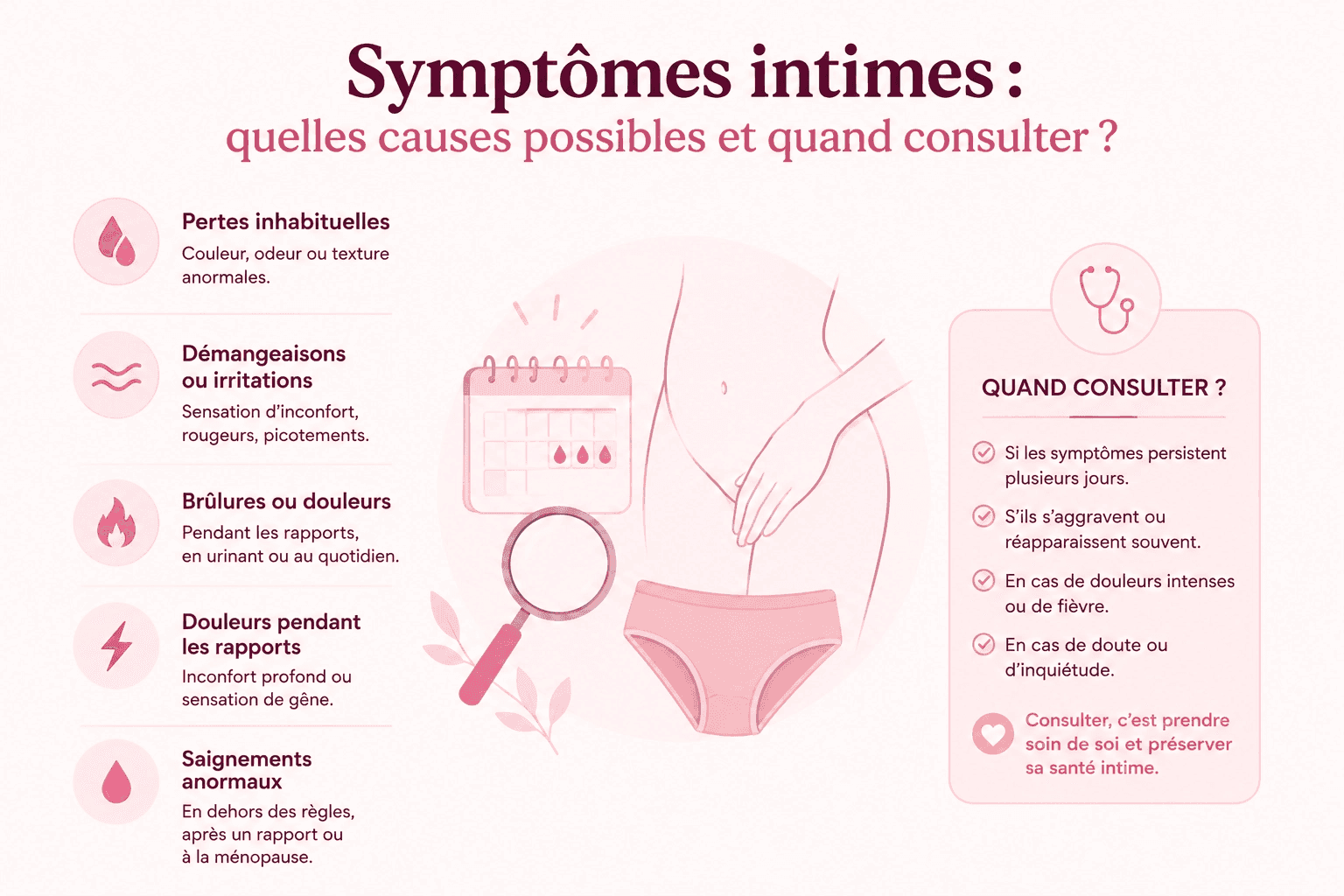
Itching with thick, white discharge: often points to a vaginal yeast infection (candidiasis).
Strong odor and grayish discharge: can indicate bacterial vaginosis (BV), caused by an imbalance in vaginal bacteria.
Burning or pain when urinating: is typically a sign of a urinary tract infection (UTI).
Redness without unusual discharge: is often a sign of irritation or an allergic reaction to a recently used product.
Persistent dryness and discomfort: may be linked to hormonal shifts during pregnancy, menopause, or from taking birth control pills.
These symptoms often indicate an infection that requires medical treatment rather than just changes in how you wash.
If you are unsure whether your symptoms are caused by a yeast infection, bacterial vaginosis, or another imbalance, an at-home vaginal health test can offer helpful guidance before you see a doctor.
However, an at-home test does not replace a professional diagnosis, especially if your symptoms are severe, return frequently, or do not improve.
When to Consult a Healthcare Professional
Please see a doctor, midwife, or gynecologist if you experience:
Persistent itching or burning
Unusual vaginal discharge (changes in color, odor, or texture)
Pain during sex or while urinating
Redness or irritation that does not improve with gentle care
These symptoms can be signs of an infection (such as yeast or bacterial vaginosis) that needs prescription treatment.
If your symptoms keep coming back despite a gentle routine, it may be helpful to read about how to naturally support your intimate flora to address the root cause and lower the risk of recurrence.
Why You Shouldn't Wait to Seek Care
Leaving symptoms untreated can make them last longer or lead to further complications.
For example, an untreated yeast infection can become chronic, and untreated bacterial vaginosis can make you more vulnerable to other pelvic infections.
A quick consultation can pinpoint the exact cause, often with a simple checkup or swab, so you get targeted treatment instead of trying multiple over-the-counter products.
Who to See
Primary Care Doctor: Your first point of contact for most common intimate symptoms.
Midwife / OB-GYN Nurse Practitioner: Can perform routine exams, preventive screenings, and prescribe treatments.
Gynecologist: Highly recommended for recurring symptoms, unclear concerns, or specialized care (like pregnancy or menopause health).
Pharmacist: Can help answer quick questions about product safety, but cannot diagnose infections.
Frequently Asked Questions
Should I clean inside my vagina?
No, never. The vagina is self-cleaning thanks to its natural, healthy bacteria. You only need to wash the vulva (the external area).
How often should I wash my intimate area?
Once a day is plenty for most people. You can wash up to twice a day if you are sweating heavily or after exercising. Over-washing can irritate the skin and disrupt your natural microbiome.
Can I use standard body wash or bar soap?
No, it is best to avoid them. They are typically too alkaline compared to the naturally acidic pH of your intimate area, which can lead to irritation and yeast infections.
Are intimate wipes okay to use every day?
No, they should only be used occasionally (like when traveling or when you do not have access to a shower). Frequent use, especially of scented wipes, can irritate delicate skin.
Is vaginal discharge normal?
Yes, vaginal discharge is completely normal and changes throughout your menstrual cycle. However, a sudden or unusual change in color, smell, or texture could be a sign of an imbalance.
How should I wash my intimate area during my period?
The same way you do normally: with water or a gentle, soap-free cleanser once or twice a day, and by changing your pads, tampons, or cups regularly.
Does douching help me feel cleaner?
No, it actually does the opposite. Douching washes away the healthy bacteria that protect you, making you more prone to irritation and infections without any hygiene benefits.
When should I see a doctor?
If you experience itching, burning, pain, or unusual discharge that doesn't go away, it is best to consult a healthcare professional rather than try to wash more frequently.
Frequently asked questions
Should you wash inside the vagina?
No, never. The vagina is self-cleaning thanks to its lactobacilli flora. Only the vulva (the external part) should be washed.
How many times a day should you wash the intimate area?
Once a day is enough in most cases, twice at most with heavy sweating or physical activity. Washing more often risks upsetting the flora.
Can you use Marseille soap or an ordinary shower gel?
No, it is better to avoid them. Their pH is too alkaline compared with the naturally acidic pH of the intimate area, which can encourage irritation and infection.
Are intimate wipes recommended for daily use?
No, they should stay exceptional (travelling, no access to water). Used too often, especially if perfumed, they can irritate the skin.
Is it normal to have vaginal discharge?
Yes, vaginal discharge is a natural phenomenon that varies across the menstrual cycle. An unusual change in colour, odour or texture, on the other hand, can signal an imbalance worth watching.
How do you wash the intimate area during your period?
The same way as at any other time: with water or a gentle cleanser, once or twice a day, without overdoing it, changing your protection regularly.
Is douching useful for feeling cleaner?
No, it is actually advised against. It removes the natural protective flora and increases the risk of infection, with no real hygiene benefit.
When should you worry and seek advice?
As soon as itching, burning, pain or unusual discharge appear and persist, it is better to see a health professional than to intensify your washing routine.
Written by
Zineb Sadki
Editorial writing, Santelle
Zineb writes and edits the Santelle blog, on intimate health and the vaginal microbiome.
