

Zineb Sadki
An unbalanced vaginal flora mainly shows up as three key symptoms: unusual vaginal discharge, an unpleasant odor that is often described as fishy, and itching or burning around the vulva.
These two signals are the most common signs of an imbalance in your vaginal flora.
They happen when the protective bacteria in the vagina, called lactobacilli, decrease and allow other microbes to take over.
This common imbalance affects most women at some point in their lives.
While it doesn't always mean you have a serious infection, it shouldn't be ignored. Identifying the right symptom often helps point to the underlying cause and the correct treatment.
What is the vaginal flora (vaginal microbiome)?
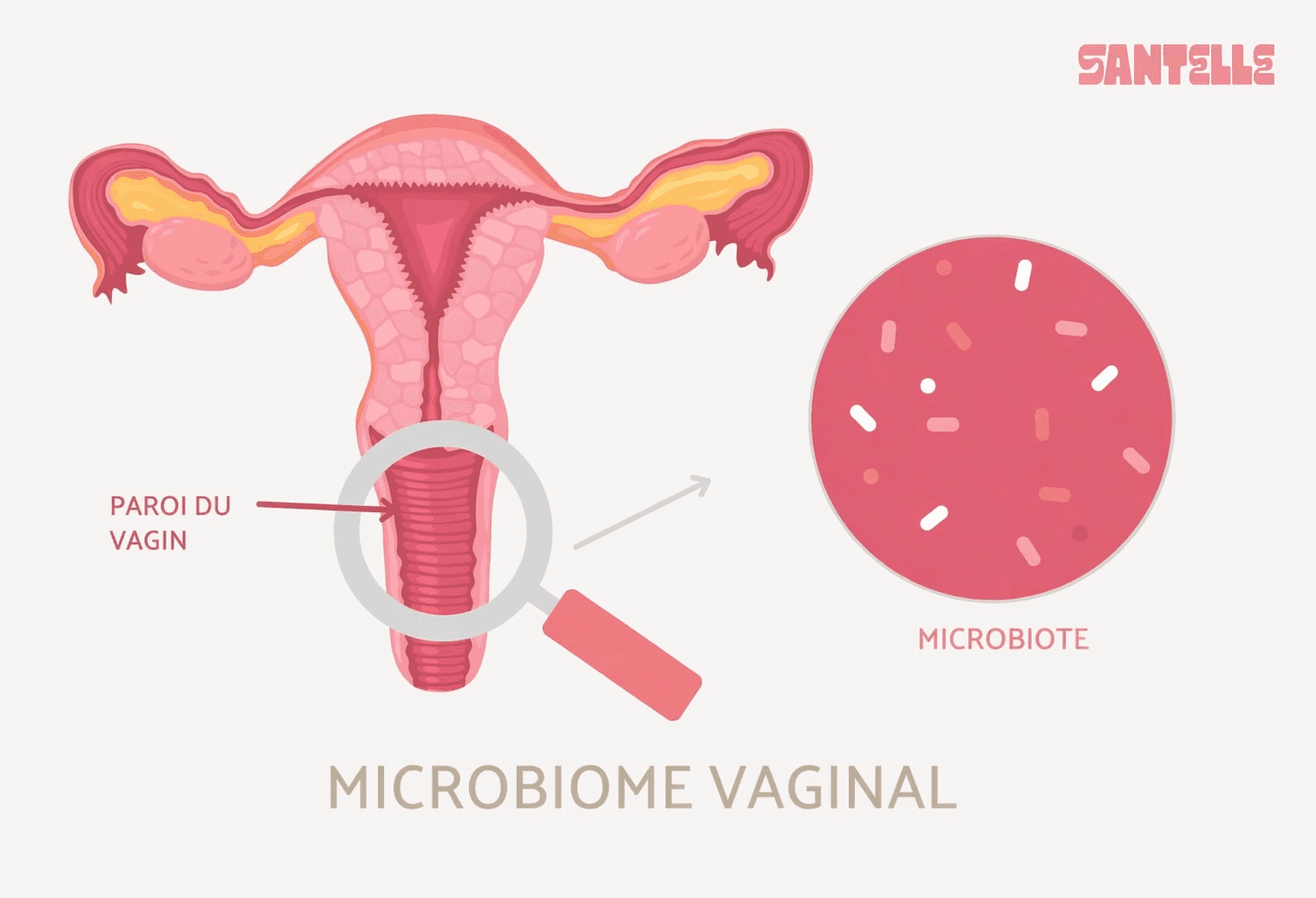
The vaginal flora, also known as the vaginal microbiome or Döderlein's flora, is the community of microorganisms that naturally live inside the vagina.
This refers to the collection of microbes that naturally live in the vagina.
This community is mostly made up of protective bacteria called lactobacilli, particularly Lactobacillus crispatus.
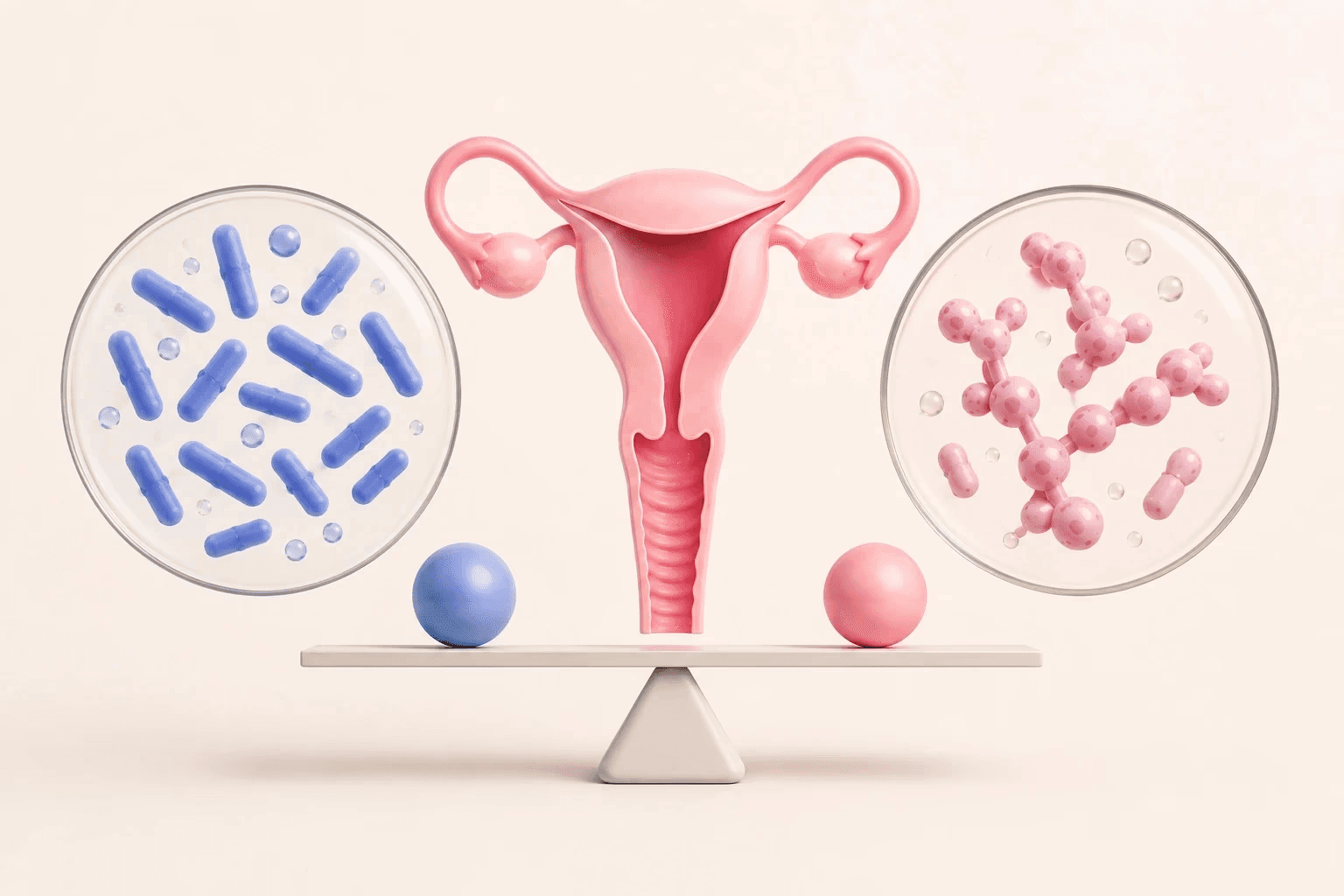
They produce lactic acid, which keeps the vaginal environment acidic.
This normal acidity level, or pH, sits between 3.8 and 4.5. This sour environment keeps harmful germs from growing and is your body's first line of protection against infections.
When lactobacilli levels drop, the pH goes up. This opens the door for other bacteria like Gardnerella vaginalis (which causes bacterial vaginosis) or yeast like Candida albicans (which causes yeast infections) to overgrow.
Component | Role |
|---|---|
Lactobacilli (L. crispatus, L. jensenii, L. gasseri) | Produce lactic acid to keep the pH acidic and protective |
Vaginal pH (3.8 to 4.5) | Creates an unfriendly environment for harmful germs |
Lactic acid and hydrogen peroxide | Help stop bad bacteria and yeast from growing |
Gardnerella vaginalis | Bacteria that multiply during bacterial vaginosis |
Candida albicans | The yeast responsible for yeast infections when things are out of balance |
What are the symptoms of an imbalance?
An unbalanced vaginal flora can cause several signs, which can appear on their own or all at once.
1. Unusual vaginal discharge (changes in color or texture)
This is usually the first and most obvious sign.
Normal, clear, or off-white discharge that has little to no smell changes in color, texture, and amount.
What it looks like | What it usually means |
|---|---|
Thick, white, and clumpy, like cottage cheese, with no strong smell | Yeast infection (vaginal thrush) |
Yellowish, greenish, or grayish | Infection or bacterial vaginosis |
Thin, watery, and sometimes foamy | Bacterial vaginosis |
Much heavier flow than usual | An ongoing imbalance to keep an eye on |
Keep in mind that discharge can change naturally with your menstrual cycle. You should mainly pay attention if the change lasts for more than a few days.
2. Unusual odors
A musty, fishy odor is one of the most classic signs of bacterial vaginosis.
This smell is often more noticeable after unprotected sex, as semen temporarily changes the vaginal pH.
A yeast infection, on the other hand, rarely causes a strong smell. It is best known for causing intense itching.
So, a strong odor without itching is more likely to be bacterial vaginosis than a yeast infection.
3. Itching, burning, and irritation
Itching, burning, and soreness are classic signs of a yeast overgrowth. You might also notice redness and mild swelling around the vulva.
This discomfort often feels worse when wearing tight clothes, sitting for long periods, or after washing with harsh soaps.
4. Vaginal dryness
Though it is less obvious, vaginal dryness is a very common result of an imbalance.
A drop in protective lactobacilli and normal hormonal shifts—such as after giving birth, during breastfeeding, while using birth control, or during perimenopause—can lower your natural moisture.
This can cause tightness, fragile skin, and sometimes small, painful cracks around the opening.
This fragility is also why sex can become painful.
Irritated tissue paired with lubrication issues or a yeast infection can make penetration uncomfortable. This is often blamed on stress, but it's frequently a sign that your vaginal microbiome needs attention.
5. Pain during sex
Pain or discomfort during sexual intercourse can be a direct result of an unbalanced flora, which leads to irritated tissue, dryness, or inflammation from a yeast infection or bacterial vaginosis.
This symptom is often brushed off or blamed on other things like stress or low libido, but any new or unusual discomfort should be a sign to check on your vaginal health.
6. Recurrent urinary tract infections (UTIs) or repeat yeast infections
When these infections keep coming back several times a year, the root cause is often a long-term shortage of protective lactobacilli.
Candida albicans, which normally lives harmlessly in the vagina in small amounts, takes advantage of this imbalance to grow out of control.
Without enough protective bacteria, it is also easier for gut bacteria, like E. coli, to travel up to the urethra and cause a UTI.
This can start a frustrating cycle: antibiotics for a UTI, followed by a yeast infection, treatment, and then another UTI just weeks later.
Symptom | Likely cause |
|---|---|
Thick, white, clumpy discharge with no strong odor | Yeast infection (vaginal thrush) |
Thin, grayish discharge with a fishy smell that worsens after sex | Bacterial vaginosis |
Notable itching and burning around the vulva | Yeast infection or irritation from harsh soaps and hygiene products |
Dryness, tightness, and fragile skin | Hormonal shifts (postpartum, birth control, menopause) paired with low healthy bacteria |
Pain or discomfort during sex | Dryness, inflammation, or an active infection |
Repeated yeast infections or bladder infections | A long-term imbalance in vaginal and/or gut flora |
Burning during urination without other vaginal symptoms | Likely a urinary tract infection (UTI), which is different from a yeast infection |
This table is for general guidance. Only a healthcare provider can give you an accurate diagnosis, as different conditions can have very similar symptoms.
What causes vaginal flora imbalances?
Several factors, often working together, can weaken your healthy bacteria and raise your vaginal pH, making it easier for harmful organisms to grow:
Antibiotics: While they kill off bad bacteria to treat an illness, they also destroy healthy lactobacilli. This is why yeast infections are so common after taking antibiotics.
Harsh cleaning routines: Douching, scented body washes, and soaps with the wrong pH can strip away the protective vaginal flora.
Hormonal shifts: Menstruation, pregnancy, postpartum recovery, hormonal birth control, and menopause all affect the balance of your microbiome.
Stress and lack of sleep, which weaken your immune system's ability to keep germs in check.
Dietary factors, particularly eating a lot of sugar, which can feed yeast overgrowth.
Wearing synthetic underwear or tight clothes, which trap heat and moisture, creating a perfect breeding ground for germs.
Smoking, which can lower glycogen levels needed to feed healthy lactobacilli.
Unprotected intercourse, which can alter vaginal pH or introduce new bacteria.
Certain birth control methods like IUDs, which are sometimes linked to recurring yeast infections or UTIs, though this does not happen to everyone.
How do you restore balance to your vaginal flora?
If you are hesitant to book an appointment or feel nervous talking about this at the pharmacy, don't worry. A few simple changes in your routine can make a big difference.
To restore your vaginal microbiome naturally, try these tips:
Wash the external area gently, once a day, using water or a pH-neutral cleanser. Avoid douching entirely.
Wear breathable cotton underwear and avoid tight, damp clothing.
Always wipe from front to back to prevent gut bacteria from spreading.
Eat a fiber-rich diet and cut back on sugary foods.
Reduce smoking and drink plenty of water.
Urinate shortly after sex to help flush out bacteria and prevent UTIs.
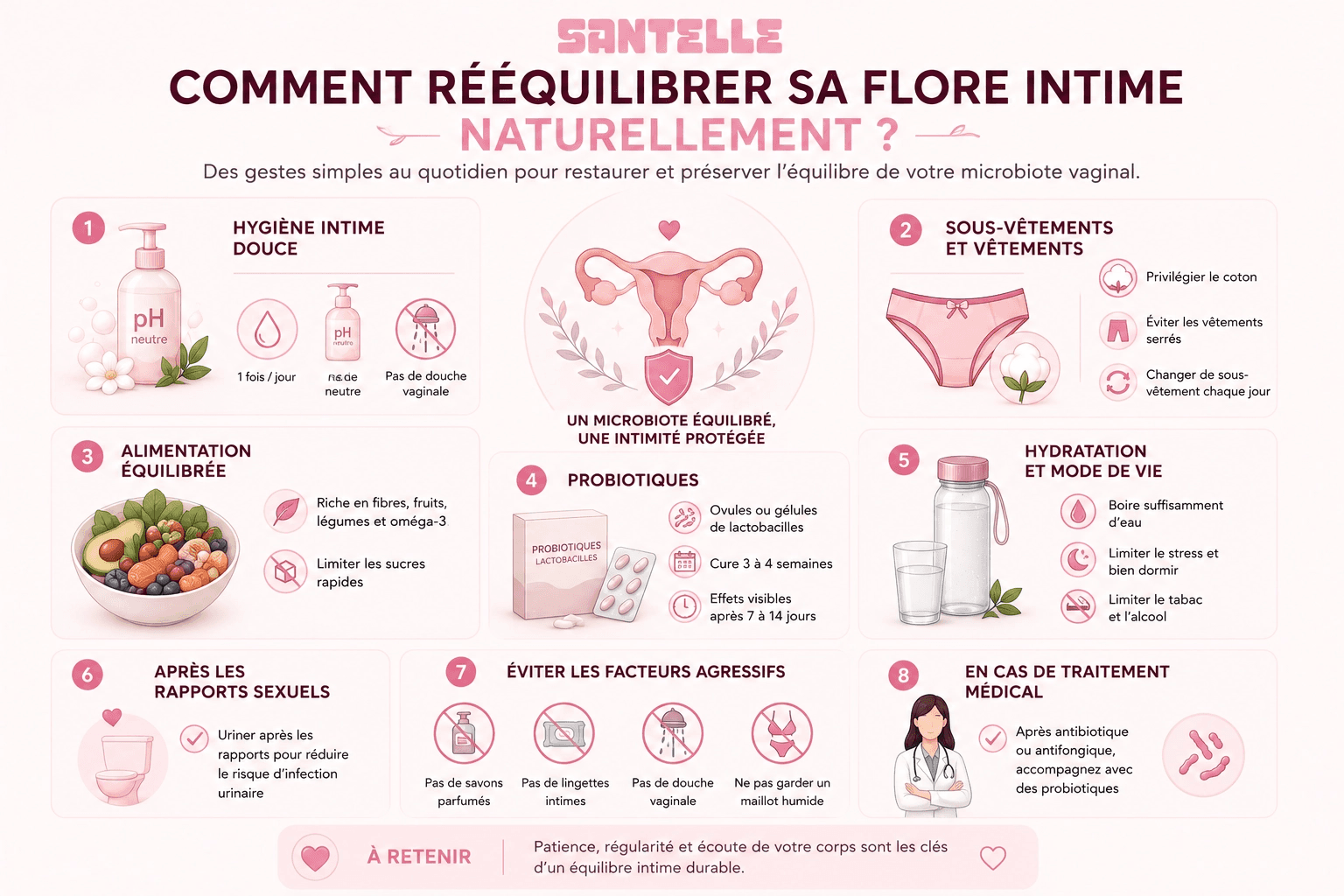
Along with these habits, taking probiotics is one of the most effective, research-backed ways to replenish friendly bacteria.
However, these lifestyle tips do not replace professional medical advice.
Only a doctor or healthcare provider can perform a quick exam or swab to give you an accurate diagnosis and prescribe the right treatment—such as antifungals, antibiotics, or local hormone treatments for dryness.
Always get a diagnosis first before starting a treatment.
If your symptoms last more than a few days despite these changes, or if they keep coming back, seeing a professional is the best way to get to the root of the issue.
FAQ
How can I restore my vaginal flora naturally?
Practice gentle care: use a pH-neutral wash, wear breathable cotton underwear, cut down on sugar and smoking, and consider trying a probiotic supplement to support healthy bacteria.
If your symptoms do not improve, you should see a doctor to rule out any infections that require medical treatment.
What symptoms might I notice during sex?
You might experience discomfort or pain during intercourse, a dry feeling, or notice a stronger odor or heavier discharge afterwards, especially if you have bacterial vaginosis.
Slight irritation or soreness may also linger for a couple of days.
Is there a medication to balance vaginal flora?
There is no single magic pill, as treatment depends on the cause of your imbalance. Probiotics can help rebuild healthy bacteria, especially after taking antibiotics.
If you have an active infection, a doctor will prescribe targeted treatment: an antifungal cream or pill for a yeast infection, an antibiotic like metronidazole for bacterial vaginosis, or local estrogen therapy if dryness is due to hormone changes.
Can this affect my partner?
A standard yeast infection is not considered a sexually transmitted infection, so partners rarely need treatment.
Bacterial vaginosis can sometimes be triggered by unprotected sex, but it is not typically passed back and forth between partners.
An unbalanced vaginal flora mainly shows up as three key symptoms: unusual vaginal discharge, an unpleasant odor that is often described as fishy, and itching or burning around the vulva.
These two signals are the most common signs of an imbalance in your vaginal flora.
They happen when the protective bacteria in the vagina, called lactobacilli, decrease and allow other microbes to take over.
This common imbalance affects most women at some point in their lives.
While it doesn't always mean you have a serious infection, it shouldn't be ignored. Identifying the right symptom often helps point to the underlying cause and the correct treatment.
What is the vaginal flora (vaginal microbiome)?
The vaginal flora, also known as the vaginal microbiome or Döderlein's flora, is the community of microorganisms that naturally live inside the vagina.
This refers to the collection of microbes that naturally live in the vagina.
This community is mostly made up of protective bacteria called lactobacilli, particularly Lactobacillus crispatus.
They produce lactic acid, which keeps the vaginal environment acidic.
This normal acidity level, or pH, sits between 3.8 and 4.5. This sour environment keeps harmful germs from growing and is your body's first line of protection against infections.
When lactobacilli levels drop, the pH goes up. This opens the door for other bacteria like Gardnerella vaginalis (which causes bacterial vaginosis) or yeast like Candida albicans (which causes yeast infections) to overgrow.
Component | Role |
|---|---|
Lactobacilli (L. crispatus, L. jensenii, L. gasseri) | Produce lactic acid to keep the pH acidic and protective |
Vaginal pH (3.8 to 4.5) | Creates an unfriendly environment for harmful germs |
Lactic acid and hydrogen peroxide | Help stop bad bacteria and yeast from growing |
Gardnerella vaginalis | Bacteria that multiply during bacterial vaginosis |
Candida albicans | The yeast responsible for yeast infections when things are out of balance |
What are the symptoms of an imbalance?
An unbalanced vaginal flora can cause several signs, which can appear on their own or all at once.
1. Unusual vaginal discharge (changes in color or texture)
This is usually the first and most obvious sign.
Normal, clear, or off-white discharge that has little to no smell changes in color, texture, and amount.
What it looks like | What it usually means |
|---|---|
Thick, white, and clumpy, like cottage cheese, with no strong smell | Yeast infection (vaginal thrush) |
Yellowish, greenish, or grayish | Infection or bacterial vaginosis |
Thin, watery, and sometimes foamy | Bacterial vaginosis |
Much heavier flow than usual | An ongoing imbalance to keep an eye on |
Keep in mind that discharge can change naturally with your menstrual cycle. You should mainly pay attention if the change lasts for more than a few days.
2. Unusual odors
A musty, fishy odor is one of the most classic signs of bacterial vaginosis.
This smell is often more noticeable after unprotected sex, as semen temporarily changes the vaginal pH.
A yeast infection, on the other hand, rarely causes a strong smell. It is best known for causing intense itching.
So, a strong odor without itching is more likely to be bacterial vaginosis than a yeast infection.
3. Itching, burning, and irritation
Itching, burning, and soreness are classic signs of a yeast overgrowth. You might also notice redness and mild swelling around the vulva.
This discomfort often feels worse when wearing tight clothes, sitting for long periods, or after washing with harsh soaps.
4. Vaginal dryness
Though it is less obvious, vaginal dryness is a very common result of an imbalance.
A drop in protective lactobacilli and normal hormonal shifts—such as after giving birth, during breastfeeding, while using birth control, or during perimenopause—can lower your natural moisture.
This can cause tightness, fragile skin, and sometimes small, painful cracks around the opening.
This fragility is also why sex can become painful.
Irritated tissue paired with lubrication issues or a yeast infection can make penetration uncomfortable. This is often blamed on stress, but it's frequently a sign that your vaginal microbiome needs attention.
5. Pain during sex
Pain or discomfort during sexual intercourse can be a direct result of an unbalanced flora, which leads to irritated tissue, dryness, or inflammation from a yeast infection or bacterial vaginosis.
This symptom is often brushed off or blamed on other things like stress or low libido, but any new or unusual discomfort should be a sign to check on your vaginal health.
6. Recurrent urinary tract infections (UTIs) or repeat yeast infections
When these infections keep coming back several times a year, the root cause is often a long-term shortage of protective lactobacilli.
Candida albicans, which normally lives harmlessly in the vagina in small amounts, takes advantage of this imbalance to grow out of control.
Without enough protective bacteria, it is also easier for gut bacteria, like E. coli, to travel up to the urethra and cause a UTI.
This can start a frustrating cycle: antibiotics for a UTI, followed by a yeast infection, treatment, and then another UTI just weeks later.
Symptom | Likely cause |
|---|---|
Thick, white, clumpy discharge with no strong odor | Yeast infection (vaginal thrush) |
Thin, grayish discharge with a fishy smell that worsens after sex | Bacterial vaginosis |
Notable itching and burning around the vulva | Yeast infection or irritation from harsh soaps and hygiene products |
Dryness, tightness, and fragile skin | Hormonal shifts (postpartum, birth control, menopause) paired with low healthy bacteria |
Pain or discomfort during sex | Dryness, inflammation, or an active infection |
Repeated yeast infections or bladder infections | A long-term imbalance in vaginal and/or gut flora |
Burning during urination without other vaginal symptoms | Likely a urinary tract infection (UTI), which is different from a yeast infection |
This table is for general guidance. Only a healthcare provider can give you an accurate diagnosis, as different conditions can have very similar symptoms.
What causes vaginal flora imbalances?
Several factors, often working together, can weaken your healthy bacteria and raise your vaginal pH, making it easier for harmful organisms to grow:
Antibiotics: While they kill off bad bacteria to treat an illness, they also destroy healthy lactobacilli. This is why yeast infections are so common after taking antibiotics.
Harsh cleaning routines: Douching, scented body washes, and soaps with the wrong pH can strip away the protective vaginal flora.
Hormonal shifts: Menstruation, pregnancy, postpartum recovery, hormonal birth control, and menopause all affect the balance of your microbiome.
Stress and lack of sleep, which weaken your immune system's ability to keep germs in check.
Dietary factors, particularly eating a lot of sugar, which can feed yeast overgrowth.
Wearing synthetic underwear or tight clothes, which trap heat and moisture, creating a perfect breeding ground for germs.
Smoking, which can lower glycogen levels needed to feed healthy lactobacilli.
Unprotected intercourse, which can alter vaginal pH or introduce new bacteria.
Certain birth control methods like IUDs, which are sometimes linked to recurring yeast infections or UTIs, though this does not happen to everyone.
How do you restore balance to your vaginal flora?
If you are hesitant to book an appointment or feel nervous talking about this at the pharmacy, don't worry. A few simple changes in your routine can make a big difference.
To restore your vaginal microbiome naturally, try these tips:
Wash the external area gently, once a day, using water or a pH-neutral cleanser. Avoid douching entirely.
Wear breathable cotton underwear and avoid tight, damp clothing.
Always wipe from front to back to prevent gut bacteria from spreading.
Eat a fiber-rich diet and cut back on sugary foods.
Reduce smoking and drink plenty of water.
Urinate shortly after sex to help flush out bacteria and prevent UTIs.
Along with these habits, taking probiotics is one of the most effective, research-backed ways to replenish friendly bacteria.
However, these lifestyle tips do not replace professional medical advice.
Only a doctor or healthcare provider can perform a quick exam or swab to give you an accurate diagnosis and prescribe the right treatment—such as antifungals, antibiotics, or local hormone treatments for dryness.
Always get a diagnosis first before starting a treatment.
If your symptoms last more than a few days despite these changes, or if they keep coming back, seeing a professional is the best way to get to the root of the issue.
FAQ
How can I restore my vaginal flora naturally?
Practice gentle care: use a pH-neutral wash, wear breathable cotton underwear, cut down on sugar and smoking, and consider trying a probiotic supplement to support healthy bacteria.
If your symptoms do not improve, you should see a doctor to rule out any infections that require medical treatment.
What symptoms might I notice during sex?
You might experience discomfort or pain during intercourse, a dry feeling, or notice a stronger odor or heavier discharge afterwards, especially if you have bacterial vaginosis.
Slight irritation or soreness may also linger for a couple of days.
Is there a medication to balance vaginal flora?
There is no single magic pill, as treatment depends on the cause of your imbalance. Probiotics can help rebuild healthy bacteria, especially after taking antibiotics.
If you have an active infection, a doctor will prescribe targeted treatment: an antifungal cream or pill for a yeast infection, an antibiotic like metronidazole for bacterial vaginosis, or local estrogen therapy if dryness is due to hormone changes.
Can this affect my partner?
A standard yeast infection is not considered a sexually transmitted infection, so partners rarely need treatment.
Bacterial vaginosis can sometimes be triggered by unprotected sex, but it is not typically passed back and forth between partners.
Vaginal flora imbalance: what are the symptoms, and what can you do?
Vaginal flora imbalance: what are the symptoms, and what can you do?
Vaginal flora imbalance: what are the symptoms, and what can you do?
Unusual discharge, unpleasant odors, or itching... Learn about the signs of an unbalanced vaginal microbiome, what causes it, and how to restore it
Unusual discharge, unpleasant odors, or itching... Learn about the signs of an unbalanced vaginal microbiome, what causes it, and how to restore it
© 2026 Santelle Sàrl+41 79 738 46 35c/o Roxanne SabbagRoute de Pressy 5b1253 Vandoeuvres, CH

© 2026 Santelle Sàrl. +41 79 738 46 35Roxanne Sabbag, Route de Pressy 5b, 1253 Vandoeuvres, CH
© 2026 Santelle Sàrl+41 79 738 46 35c/o Roxanne SabbagRoute de Pressy 5b1253 Vandoeuvres, CH