

Symptoms
What Is Vaginal Dryness, and How Do You Actually Fix It?

Zineb Sadki
Editorial writing, Santelle
Vaginal dryness affects far more women than most people realize, and at every age.
The burning, the discomfort, the pain during sex: these symptoms are real, they're common, and most importantly, they're treatable.
Here's everything you need to know to understand what's happening in your body and find lasting relief.
What Is Vaginal Dryness?
Vaginal dryness happens when the vaginal lining stops producing enough natural moisture.
The root cause, in most cases, is a drop in estrogen — the hormone responsible for keeping vaginal tissue supple, hydrated, and well-supplied with blood.
When estrogen levels fall, the tissue gradually thins and dries out, often without women connecting their symptoms to what's actually going on hormonally.
The short version: vaginal dryness occurs when declining estrogen causes the vaginal lining to produce fewer natural secretions.
This leads to irritation, pain, and an increased vulnerability to infection. It can affect women at any age, for hormonal, medication-related, or psychological reasons, and it's not a sign of aging.
It's a signal your body is sending, and it deserves a real response.
What Are the Symptoms of Vaginal Dryness?
Before looking for a solution, it helps to recognize what you're dealing with.
Vaginal dryness isn't just occasional mild discomfort, it tends to develop gradually and affects multiple aspects of intimate wellbeing.
The most common symptoms include:
Redness around the vagina, cervix, and labia
Burning and itching sensations
Local inflammation
Pain during sex (dyspareunia)
Light spotting or bleeding after penetration
Frequent urinary tract infections (UTIs)
When sex starts causing pain, it's natural to pull back — to space out intimacy, or avoid it entirely. Over time, that avoidance can erode desire.
When intimacy becomes something to fear rather than enjoy, it's time to act.
Vaginal dryness vs. yeast infection: these two conditions are frequently confused. A yeast infection comes with thick, white, clumpy discharge and a distinct odor.
Vaginal dryness, on the other hand, is primarily a sensation of insufficient lubrication, without abnormal discharge. If you're not sure which one you're dealing with, see a doctor — the treatments are completely different.

What's Causing My Vaginal Dryness?
Vaginal dryness doesn't look the same for every woman. It can show up at very different points in life, for very different reasons. Here are the most common profiles to help you identify where yours might be coming from.
Could Menopause or Perimenopause Be Behind It?
This is the most common cause, and the most underreported.
Menopause triggers a sharp drop in estrogen that permanently changes the quality of the vaginal lining. The shift is gradual, often silent at first, and gets worse over time without treatment.
As estrogen falls, the vaginal tissue thins and loses elasticity — a process called vaginal atrophy.
The cells produce less glycogen, which is essentially the fuel that feeds Lactobacillus bacteria, the good bacteria that maintain a healthy vaginal pH. The result: tissue that's drier, more fragile, and more susceptible to irritation and infection.
Unlike hot flashes, which often fade over time, vaginal dryness related to menopause tends to get progressively worse if left untreated.
More than half of women over 50 experience it — yet a minority ever bring it up with their doctor. That silence is costly: every month without treatment means further tissue thinning.
A blood test measuring FSH (follicle-stimulating hormone) can confirm whether you're in menopause. FSH levels between 20 and 150 IU/L are characteristic of established menopause — a result that points directly toward local hormonal treatment.
Can the Birth Control Pill Cause Vaginal Dryness?
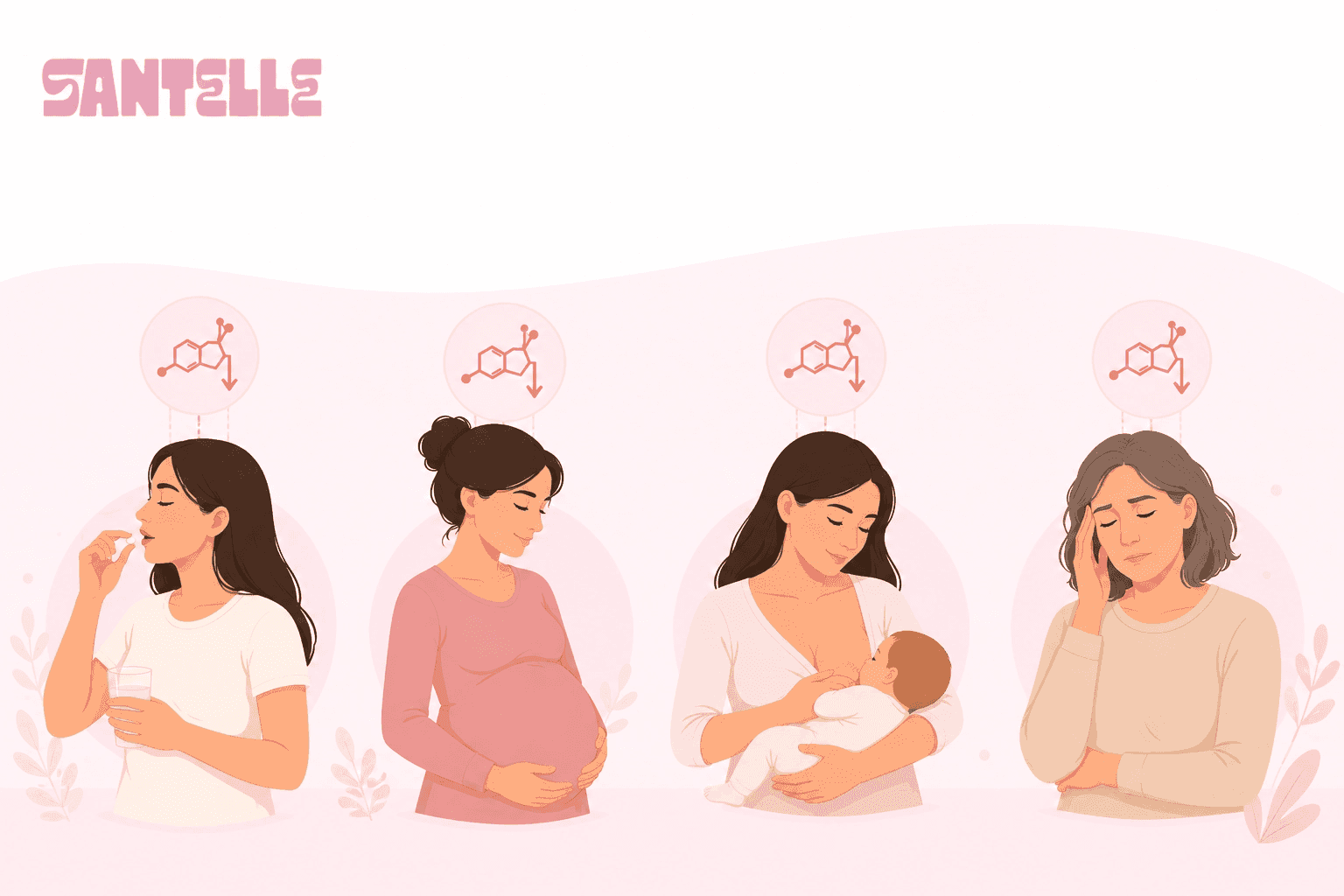
Birth control can cause vaginal dryness, even in your 20s.
This connection rarely gets discussed in the exam room, but the pill is actually one of the most common causes of vaginal dryness in younger women.
Certain low-dose combined pills or progestin-only pills can lower local estradiol levels and cause vaginal dryness.
This is still frequently dismissed as low libido or stress — but the reality is that your body isn't producing enough local estrogen. You haven't lost interest. Your tissue is just under-hormonated.
If your symptoms started after beginning or switching birth control, bring it up with your doctor. Adjusting your method or switching formulations can often resolve everything.
Is Vaginal Dryness Normal After Pregnancy or While Breastfeeding?
Postpartum vaginal dryness is almost universal — and almost never talked about.
After delivery, the body goes through a dramatic hormonal shift: prolactin (the hormone that drives milk production) surges, while estrogen drops to some of its lowest levels. Whether or not you're breastfeeding, this hormonal environment almost inevitably leads to vaginal dryness.
Prolactin keeps estrogen suppressed to prevent ovulation — your body is prioritizing feeding a new life, and it's essentially put lubrication on hold. This is biologically normal, but that doesn't mean you have to suffer through it. Safe, effective options exist that are compatible with breastfeeding.
Can Stress Cause Vaginal Dryness?
Stress has a direct physiological effect on vaginal lubrication, and it's usually the last thing anyone thinks of.
When your mind is under pressure, your body feels it in intimate ways. The link between chronic stress and vaginal dryness isn't psychological — it's physical.
Cortisol (the primary stress hormone) disrupts the hypothalamic-pituitary axis — the brain's hormonal regulation system — and throws off estrogen production. Anxiety also suppresses the physical arousal response, which mechanically reduces vaginal secretions. This isn't "all in your head." It's a real physiological cascade.
What Medications or Health Conditions Can Cause Vaginal Dryness?
Certain medications and health conditions can be responsible too.
Beyond hormonal and psychological causes, several lesser-known factors can trigger or worsen vaginal dryness:
Medications that commonly cause vaginal dryness:
Antidepressants (particularly SSRIs)
Antihistamines
Certain blood pressure medications
Ovulation inducers (fertility treatments)
Chemotherapy and anti-estrogen drugs (breast cancer treatment)
Surgical removal of the ovaries (oophorectomy)
Health conditions: Certain autoimmune diseases — particularly Sjögren's syndrome — can cause widespread mucosal dryness, including vaginal dryness.
Hygiene habits: Tight clothing, synthetic underwear, vaginal douching, and soaps with the wrong pH can all disrupt vaginal flora and worsen dryness.
What Are the Best Treatments for Vaginal Dryness?
Once you've identified the likely cause, the next step is choosing the right treatment approach. There's no single universal solution — options range from OTC products you can pick up at the drugstore to prescription hormonal therapy.
The most important thing to know: you don't have to just live with this. There are effective options for every situation and every degree of dryness.
Vaginal Moisturizers (No Prescription Needed)
These are your daily vaginal lining allies, and they're not the same thing as lubricants.
Many women only reach for a lubricant before sex and never use a moisturizer. That's an easy mistake that leaves the vaginal tissue without the regular hydration it needs.
Unlike lubricants, vaginal moisturizers are used two to three times a week to restore moisture to the tissue over time. The most effective formulas contain hyaluronic acid (brands like Revaree, Hyalo Gyn) or polycarbophil (Replens).
These are available without a prescription and are appropriate for women of any age, regardless of what's causing the dryness.
Lubricants for Sex
Lubricants complement moisturizers. Used on their own, lubricants don't treat the underlying dryness, but they're essential for immediate comfort during sex. Chosen well, they can make an enormous difference.
Apply just before sex for instant relief from friction and discomfort.
Opt for water-based, fragrance-free, glycerin-free formulas that are condom-compatible. Silicone-based lubricants last longer, but aren't compatible with silicone sex toys.
Local Estrogen Cream or Vaginal Suppositories (Prescription)
For women in menopause, this is the gold-standard treatment.
Despite common misconceptions, local vaginal estrogen doesn't work like systemic hormone therapy. It targets the vaginal tissue directly, with very low systemic absorption and a strong safety profile — including for women who can't take systemic hormones.
Applied directly in the vagina, these treatments address the hormonal root cause without significant absorption into the bloodstream.
Tissue that's been compromised by years of estrogen deficiency can recover meaningful elasticity and moisture within just a few weeks.
Menopause Hormone Therapy (MHT)
A whole-body solution when dryness is just one of several symptoms.
When vaginal dryness is accompanied by hot flashes, sleep disruption, or mood changes, systemic hormone therapy may be a more appropriate option than local treatment alone.
This is a conversation to have with your gynecologist based on your full health profile.
MHT is available as oral tablets, patches, or subcutaneous implants. It's contraindicated for women with a history of hormone-sensitive cancers.
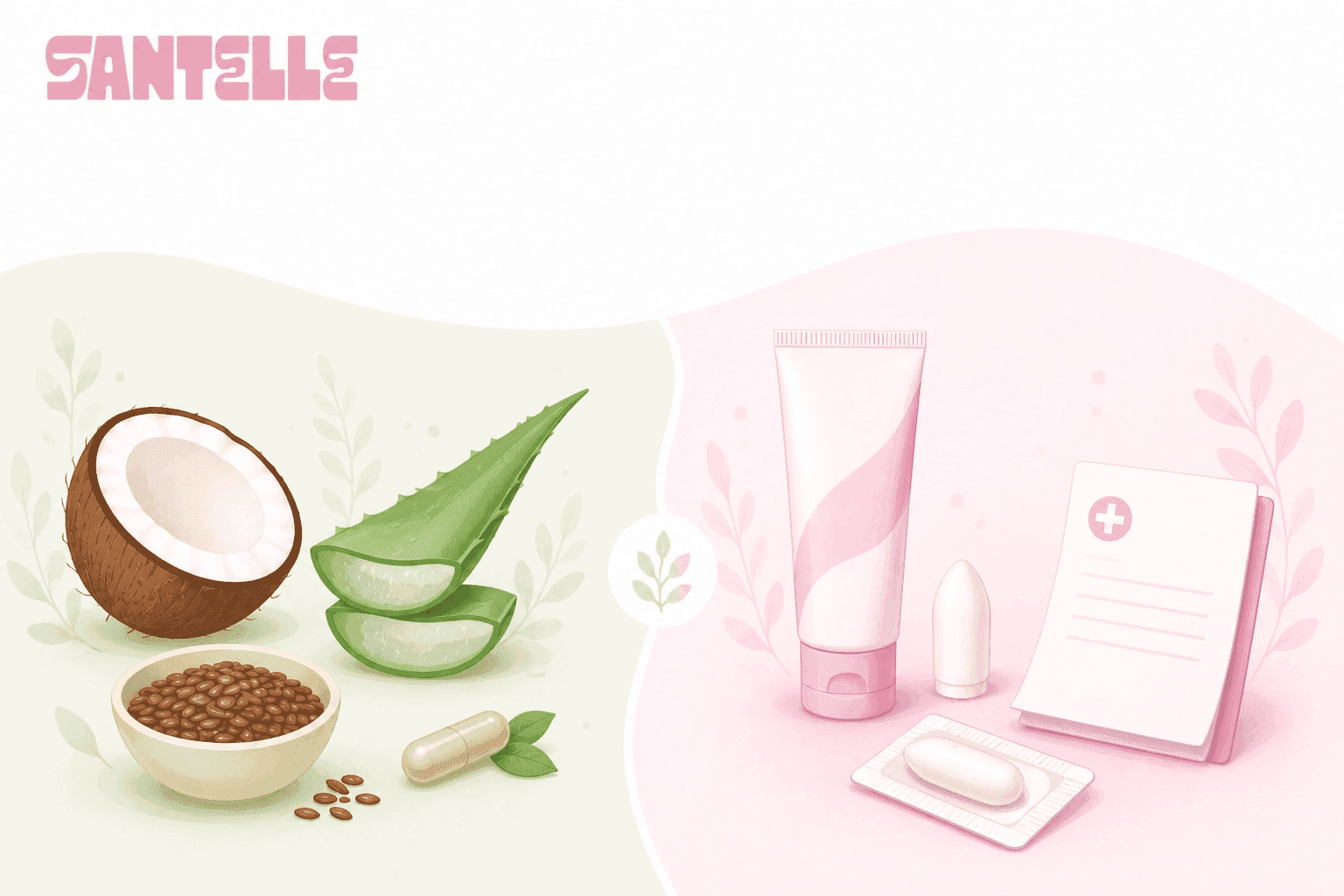
Natural Remedies for Vaginal Dryness
Medical treatments aren't the only option, some natural approaches have a legitimate place in the conversation.
They work best as complements rather than substitutes for treatment, and their effectiveness varies depending on severity. Here's an honest look at the most commonly used ones, without overpromising.
1. Coconut Oil
Coconut oil is the natural remedy that comes up most often — and with some good reason. It's soothing, hydrating, and has mild antifungal and antibacterial properties, making it a usable option as a topical lubricant or moisturizer.
Two important caveats:
It's not compatible with latex condoms
It can disrupt vaginal flora in some women
Introduce it gradually and pay attention to how your body responds.
2. Aloe Vera and Borage Oil
These two work through different mechanisms but complement each other well in a natural approach, especially for women who want to avoid synthetic products.
Pure aloe vera gel: well-documented soothing and moisturizing effect on irritated mucosal tissue
Borage oil (in capsule form): rich in gamma-linolenic acid (GLA), it supports mucosal hydration from the inside, particularly useful during perimenopause
Both are supplements to medical treatment, not replacements, if your dryness is significant.
3. Phytoestrogens: Soy and Red Clover
Phytoestrogens have been studied extensively since the early 2000s, with nuanced results. These plant-based compounds bind weakly to estrogen receptors and can offer real, if modest,benefits.
They don't replace medical treatment for women with significant symptoms, but they may play a useful preventive or complementary role.
Options include:
A diet rich in legumes, flaxseeds, and sesame
Concentrated supplements — only under medical guidance
4. Diet, Hydration, and Lifestyle
Most people don't think about food and water intake when it comes to vaginal dryness — but what you eat and drink every day directly affects mucosal tissue quality.
Daily habits that help:
Drink 1.5 to 2 liters of water a day
Eat omega-3-rich foods: fatty fish, walnuts, flaxseeds
Quit smoking — tobacco directly reduces local blood flow, which worsens tissue health
Use a pH-balanced soap for external intimate hygiene only; no douching, no scented products on the genital area, cotton underwear only
Sex and Vaginal Dryness
Daily intimate comfort is also about having a sex life that doesn't hurt.
Vaginal dryness shouldn't become a reason to avoid intimacy, whether with a partner or on your own. It does require adapting, with self-compassion and without guilt.
Open communication with your partner matters just as much as any treatment. Naming what you're experiencing — the discomfort, the pain, the fear of pain — makes it possible to adjust pace, positions, and pressure.
Certain positions (woman on top, shallower penetration) tend to be better tolerated when the vaginal lining is sensitive.
Regular sexual activity, including masturbation, has a real preventive benefit: it maintains healthy pelvic blood flow and helps preserve tissue elasticity.
Vaginal dryness can also create anticipatory anxiety before sex, a fear of pain that becomes its own problem.
If that cycle takes hold, working with a sex therapist or specialized psychologist can be genuinely valuable. That kind of support complements medical treatment.
How Can You Prevent Vaginal Dryness?
A few consistent habits can meaningfully reduce your risk or slow the progression of symptoms.
These aren't dramatic lifestyle overhauls, just small choices that work with your body's natural physiology:
Avoid tight clothing and synthetic underwear
Use a pH-balanced, fragrance-free soap for external intimate hygiene only
Never douche
Skip scented products on the genital area entirely
Don't smoke
Don't wait to see a doctor when symptoms first appear — early treatment means less tissue damage to reverse
When Should You See a Doctor for Vaginal Dryness?
If symptoms persist despite lifestyle adjustments, it's time to see a healthcare provider. Your intimate health is a medical issue, not a modesty issue.
See your doctor or gynecologist if:
Symptoms have persisted for more than a few weeks despite using moisturizers
Sex is consistently painful
You're noticing redness, bleeding, or recurring infections
You suspect your birth control or a current medication is contributing
There is no reason to suffer in silence. One appointment can change everything.
Vaginal Dryness FAQ
Is vaginal dryness permanent?
No. In most cases, it responds well to treatment. Even with atrophy related to menopause, a properly managed local treatment can restore healthy tissue within weeks.
Can you get vaginal dryness at 25?
Yes — particularly with certain birth control pills, during periods of intense stress, after childbirth, or while breastfeeding. This isn't something that only happens to older women.
How do I know if my birth control is causing vaginal dryness?
If symptoms appeared or worsened after starting or switching contraception, there's a good chance that's the connection. Talk to your doctor — switching formulations is often all it takes to resolve the problem.
What's the best OTC vaginal moisturizer for dryness?
Vaginal moisturizers containing hyaluronic acid (Revaree, Hyalo Gyn) or polycarbophil (Replens) are the most effective options without a prescription. Use them two to three times a week, independently of sex.
What's the fastest fix for vaginal dryness before sex?
A water-based, fragrance-free, glycerin-free lubricant applied just before sex is the most immediate solution. Pair it with adequate foreplay to support natural arousal and lubrication.
Can vaginal dryness cause infections?
Yes. Compromised vaginal tissue loses much of its natural defense against pathogens. Recurring UTIs and vaginal infections are often an indirect sign of untreated vaginal dryness.
Does insurance cover vaginal dryness treatments?
Prescription local estrogen products are often covered by insurance with a prescription. OTC options like Replens and Revaree are typically not covered but are available without a prescription at most pharmacies.
Frequently asked questions
Is vaginal dryness permanent?
No. In most cases it can be treated effectively. Even with atrophy linked to menopause, a properly followed local treatment can restore a healthy mucous membrane within a few weeks.
Can you have vaginal dryness at 25?
Yes, particularly on certain pills, during periods of intense stress, after giving birth or while breastfeeding. It is not limited to women of a certain age.
How do I know if my vaginal dryness comes from the pill?
If the symptoms appeared or got worse after starting or changing your contraception, the link is likely. See your doctor, a simple change of pill can be enough to resolve it.
Which cream for vaginal dryness without a prescription?
Vaginal moisturisers based on hyaluronic acid (Gydrelle, Cicatridine) or polycarbophil (Replens) are the most effective without a prescription. They are used 2 to 3 times a week, independently of sex.
Are vaginal moisturisers reimbursed?
Prescription local oestrogen creams are reimbursed in France. Over-the-counter moisturisers (Replens, Gydrelle) generally are not, but remain available in pharmacies without a prescription.
Can vaginal dryness cause infections?
Yes. A weakened mucous membrane is less well protected against pathogens. Recurrent urinary and vaginal infections are often an indirect signal of untreated vaginal dryness.
Written by
Zineb Sadki
Editorial writing, Santelle
Zineb writes and edits the Santelle blog, on intimate health and the vaginal microbiome.