

Zineb Sadki
Vaginal yeast infections affect 3 out of 4 women at least once in their lives. For half of them, recurring infections are a frustrating part of daily life.
Several at-home tests can now help you find answers from the comfort of your own home, as long as you know which one to choose, how to use it, and how to understand your results.
This article covers everything you need to know.
Can you test for a yeast infection at home?
Yes, up to a point. While at-home tests available at pharmacies or online do not replace a doctor's diagnosis, they are a fast way to get pointed in the right direction. They help you find out if your discomfort is caused by yeast (a fungal infection) or vaginosis (a bacterial infection) so you can choose the right care.
A vaginal yeast infection happens when there is an overgrowth of a fungus that naturally lives in the vaginal microbiome: Candida albicans.
Unlike bacterial infections, a yeast infection does not raise your vaginal pH. This is exactly what most at-home tests measure: your vaginal pH level, which you then look at alongside your symptoms.
While an at-home test alone cannot give you a 100% certain diagnosis, it is very helpful for ruling out other causes of irritation and guiding your next steps.
For a deeper dive into this topic, Santelle has created a helpful guide: Yeast infection screening: Everything you need to know about vaginal at-home tests, which explains how to read your results based on your symptoms.
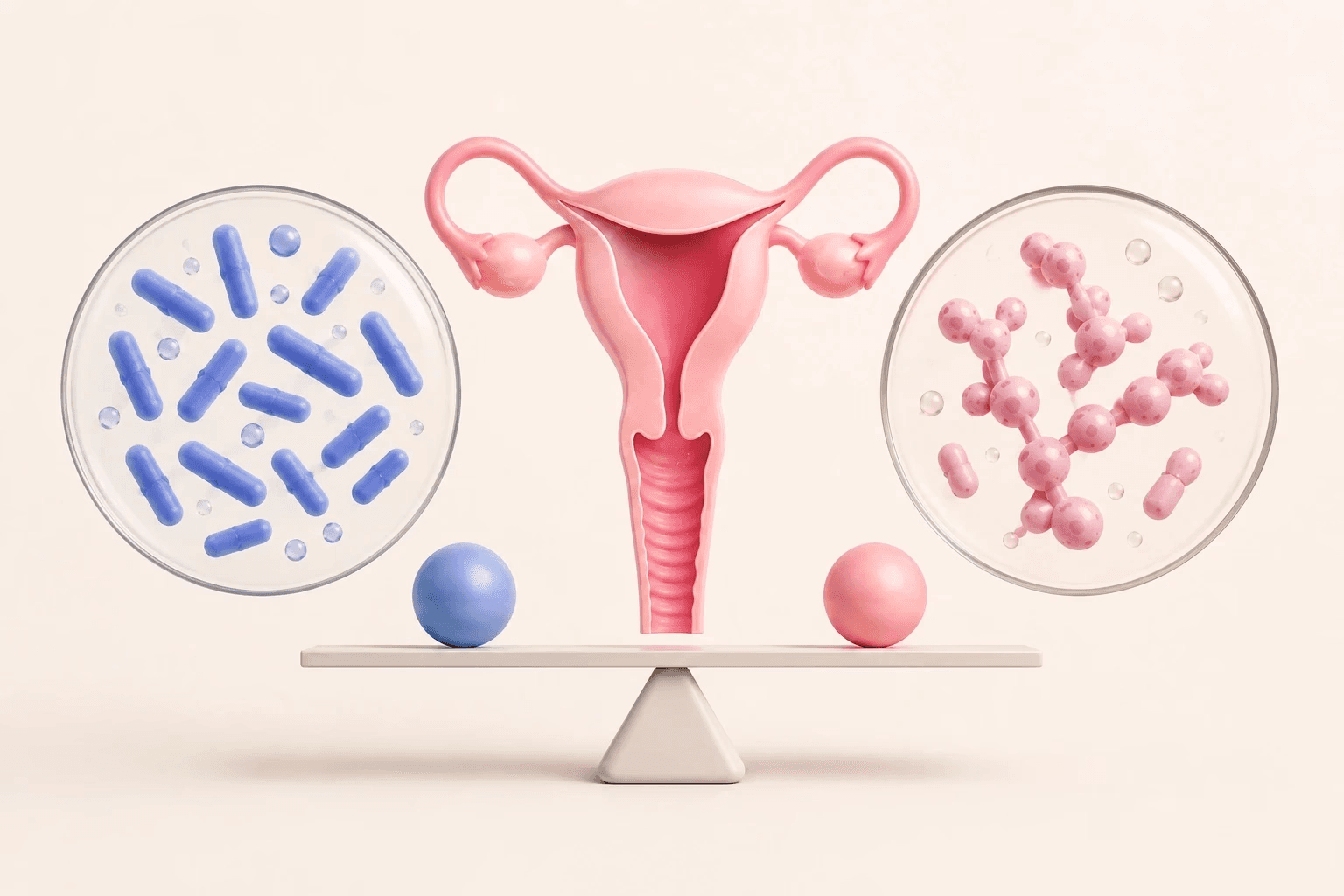
Which yeast infection tests can you do at home?
Vaginal pH tests
The vagina is naturally acidic, with a normal pH typically between 3.8 and 4.5.
This acidic environment acts as a natural barrier that stops harmful germs from growing. When you have a yeast infection, your pH usually stays within this normal range.
On the other hand, bacterial vaginosis (BV) or trichomoniasis (a common sexually transmitted infection) typically cause your vaginal pH to rise above 4.5.
In theory, a pH test helps tell these conditions apart. However, it is simply a tool to help guide you and should never replace medical advice if you are in doubt or experiencing these symptoms for the first time.
Here are the main at-home tests available:
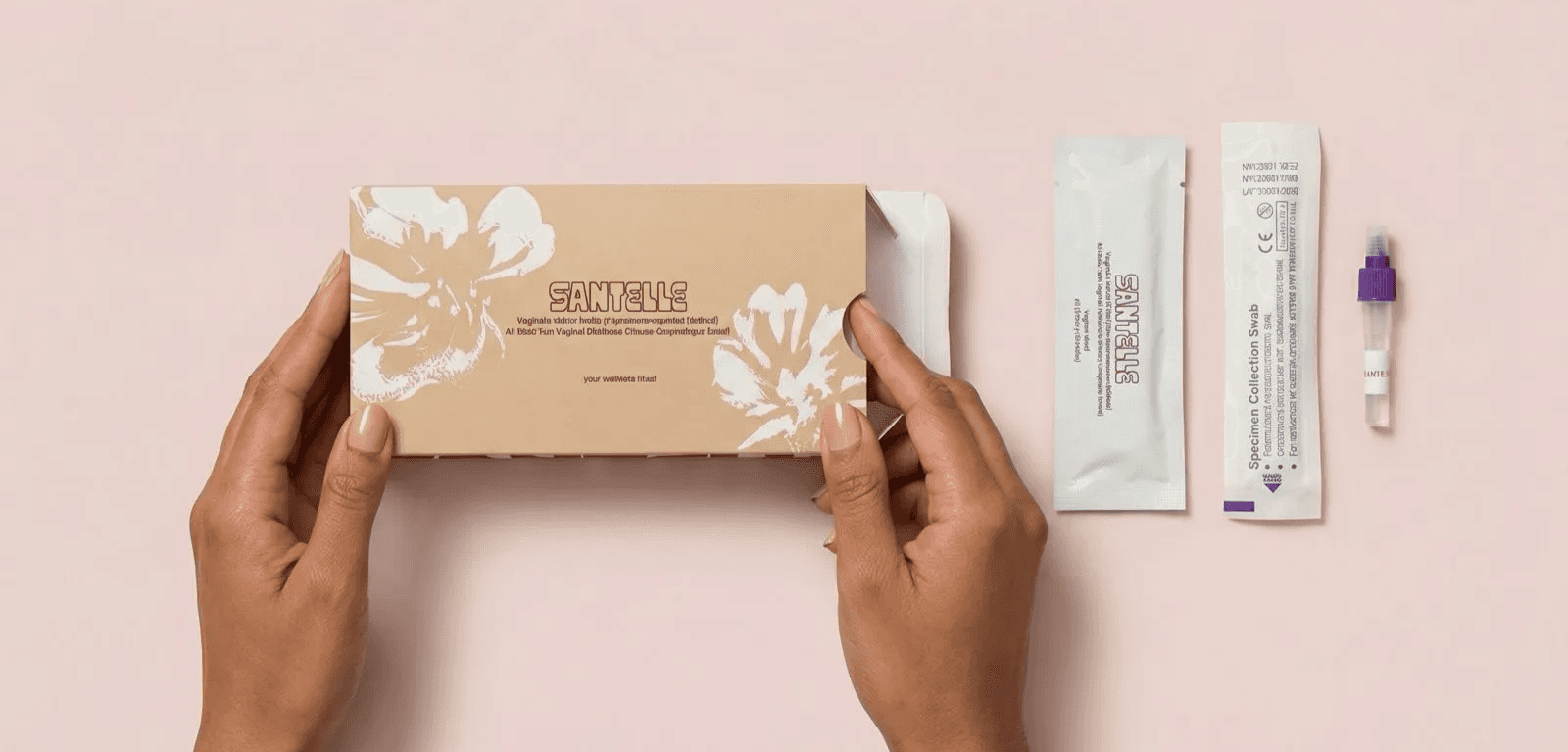
1. Santelle
If you want a more complete picture than a simple pH reading, Santelle is currently the most advanced at-home test available.
While standard tests only look at one indicator (pH), Santelle checks multiple biomarkers using a single swab. This includes pH as well as other indicators linked to bacterial and yeast imbalances.
This means you get a much clearer, more detailed result. It also reduces the risk of missing a mixed infection (having both a yeast infection and bacterial vaginosis at the same time), which a basic pH test can easily miss.
How does it work?
You collect the sample yourself at home using a sterile medical swab included in the kit. It is a quick, private process that you can do anytime without needing an appointment.
You mix the swab with the liquid provided, drop it onto the test cassette, and read your results in just 10 minutes.
This test is ideal for you if:
you suffer from frequent infections and want to finally understand what is going on;
your symptoms are unusual or do not match a typical yeast infection;
you have recently finished a course of antibiotics, or are going through hormonal changes;
you do not have active symptoms but want to proactively monitor your vaginal health to prevent future flare-ups.
you do not have active symptoms but want to proactively monitor your vaginal health to prevent future flare-ups.
The kit also comes with an app that helps you track your results and spot signs of imbalance over time. This is especially helpful if you are trying to understand a pattern of recurring infections rather than just treating a single episode.
The complete kit costs around €19 and is available directly on santelle.com.
2. HydralinTest® (Bayer)
HydralinTest is one of the most popular and widely available vaginal at-home tests.
How does it work?
You gently insert the applicator into the vagina (about 5 cm), rotate it slightly, and wait 10 seconds. The color of the tip gives you your result instantly:
Yellow (no change): Your pH is normal. If you are experiencing itching, burning, or thick, white discharge, these classic signs point to a yeast infection.
Blue-green: Your pH is elevated. This is usually a sign of bacterial vaginosis or trichomoniasis, both of which require medical advice and a prescription.
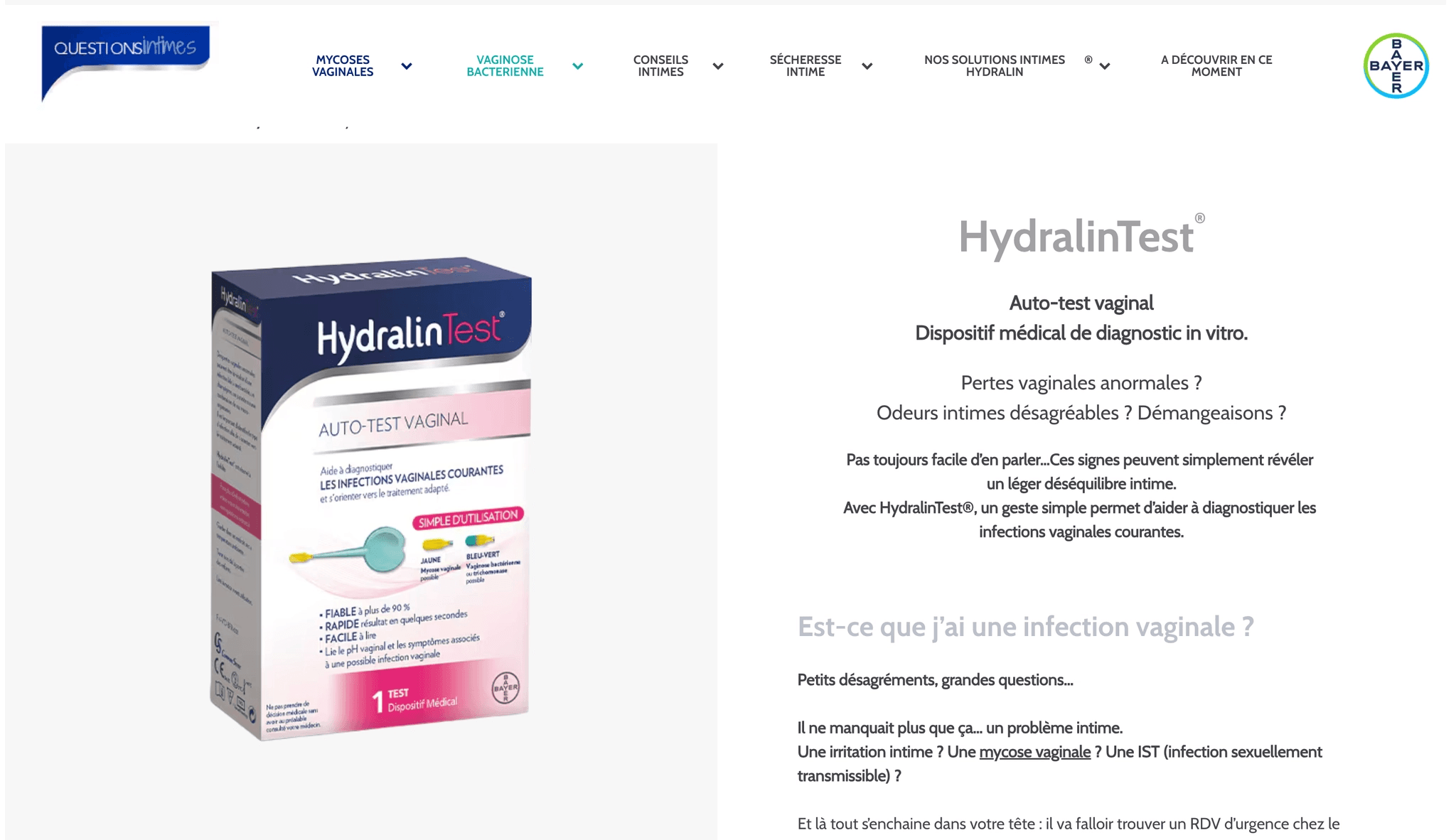
Common mistake: The tip of the HydralinTest is yellow by default right out of the box. Do not worry—this is normal, as yellow indicates a normal pH. Many users think their test is broken or defective when it is actually working exactly as it should.
This test is ideal for you if:
you want a quick result in 10 seconds with no prep steps;
you want an easy-to-find, over-the-counter option from the pharmacy;
you have had yeast infections before and recognize your usual symptoms.
Accuracy: Clinically tested with a manufacturer-stated accuracy of over 90% for detecting pH changes. The color result remains stable for 30 minutes.
Things to keep in mind: Do not use this test during your period or within 24 hours of it starting or ending. Avoid testing within 12 hours of sexual intercourse or douching, as these can cause inaccurate results. It is not recommended for menopausal women, as menopause naturally raises vaginal pH and can trigger false positives. Not having enough vaginal discharge on the swab can also cause a false negative.
It costs about €6 to €8 over-the-counter at pharmacies and online drugstores.
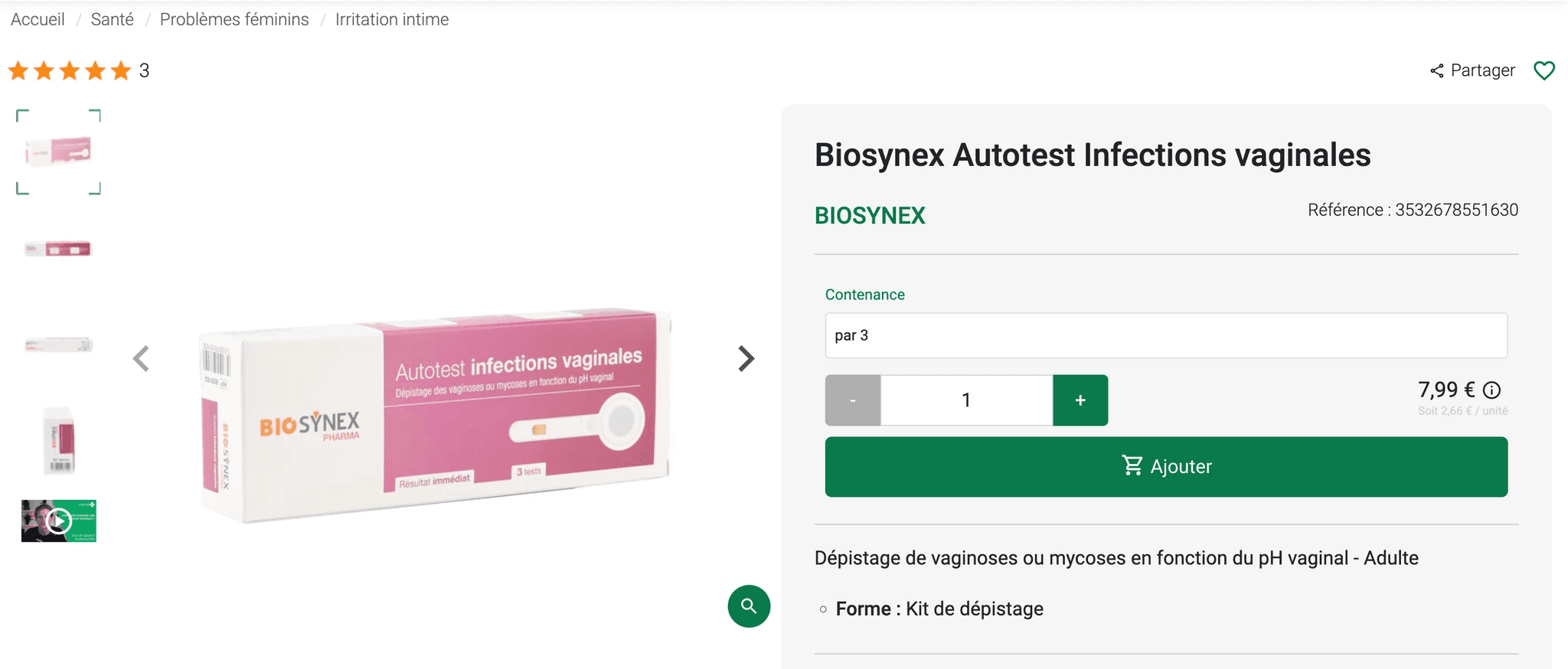
3. Exacto Vaginal Infection Test (Biosynex)
Trustpilot ★★★★☆ 4.4/5 — 13 reviews
The Exacto at-home test, made by the French laboratory Biosynex, is a highly reliable alternative to HydralinTest.
It comes in a pack of 3 tests, making it a very convenient choice for women who experience recurring infections or want to track their vaginal health over time.
How does it work?
You gently insert the applicator (1 to 3 cm), press it against the vaginal wall for 10 seconds, and compare the color change to the scale printed on the foil pouch:
Yellow to orange (pH 3.8–4.4): Your pH is normal. If you also have itching or burning, a yeast infection is highly likely. Your pharmacist can recommend an over-the-counter treatment.
Above 4.4: A bacterial infection or trichomoniasis is more likely, meaning you should consult a doctor.
This test is ideal for you if:
you want a multi-pack that you can keep at home to use over several months without buying a new kit each time;
you have finished taking antibiotics and want to make sure your vaginal microbiome is back in balance;
you are pregnant and want a quick assessment before discussing it with your midwife or doctor.
Accuracy: 90% accurate, CE-certified (CE0123) for home use. Avoid using immediately after washing your external intimate area, as this can affect the reading.
Expect to pay around €8 to €10 for a box of 3 tests, available in pharmacies.
4. Biosynex Vaginal Test Strips
Biosynex also offers individual vaginal test strips in a highly compact, travel-friendly format.
These test strips work on the same pH-measuring principle but come in an even simpler design: a small strip that you press directly against the vaginal wall.
How does it work?
Remove the sterile strip from its foil pouch right before use, insert it briefly, and compare the color change to the provided chart. It is quick, clean, and does not require a bulky applicator.
Advantage: Compact, easy to carry, and generally more budget-friendly than the Exacto applicator kit. Sold in boxes of 3 strips.
Expect to pay €6 to €9 for a box of 3 strips at your local pharmacy or online.
5. Get Tested Candida Albicans Rapid Test
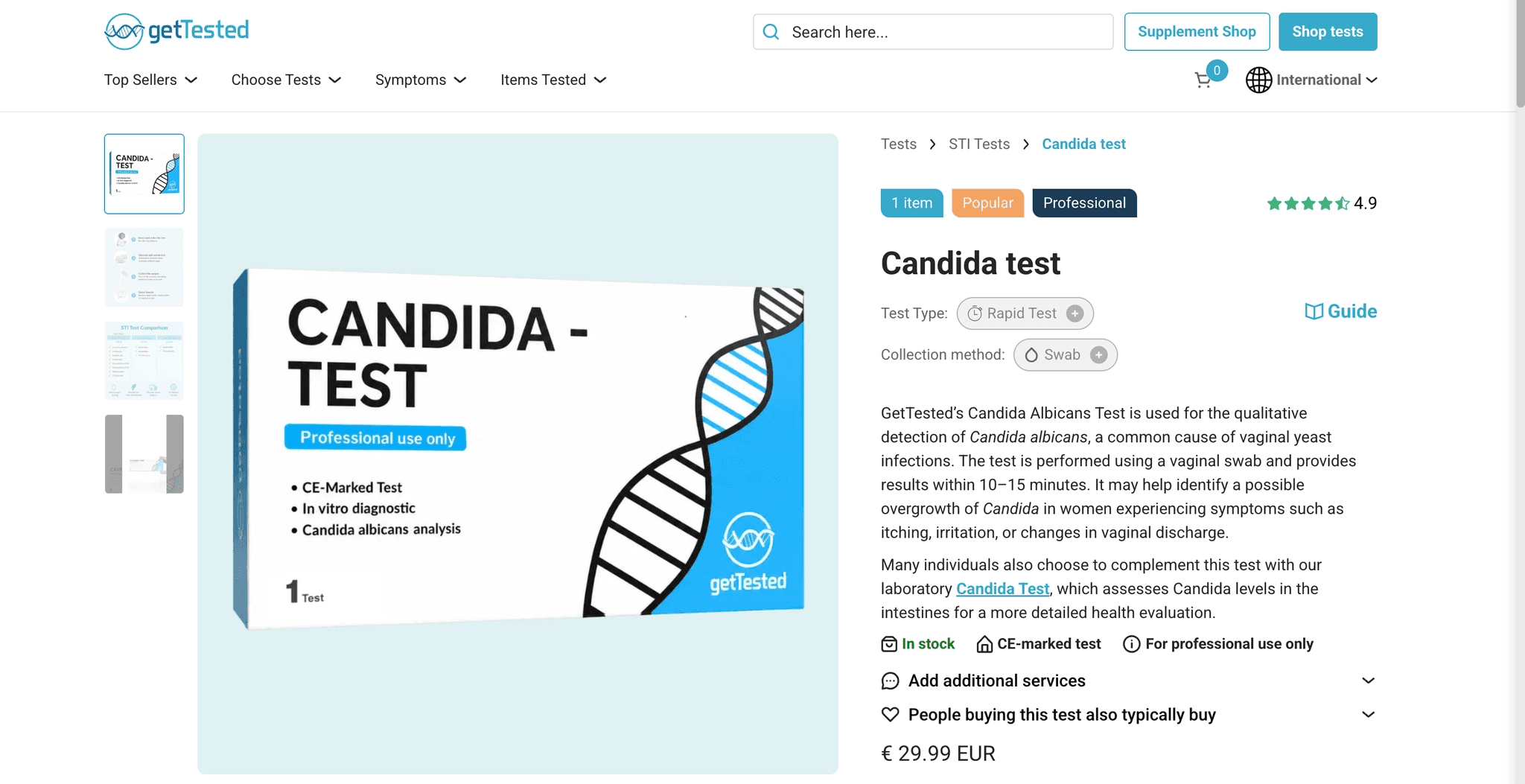
Unlike traditional pH tests that look at acidity levels, the Get Tested Candida Albicans test is an antigen test. It directly checks for the presence of the Candida albicans fungus in your vaginal discharge, bypassing pH altogether.
How does it work?
Using a sterile swab, you collect a sample of vaginal discharge from about 5 to 7 cm deep.
You then swirl the swab in a tube containing a buffer solution.
Place two drops of this mixture onto the test cassette. Your result is ready in 10 to 20 minutes, working just like a rapid home pregnancy test.
2 lines visible: Candida albicans has been detected (positive).
1 line visible (control line only): No Candida antigens detected (negative).
This test is ideal for you if:
your pH test came back normal but your symptoms will not go away;
you want direct confirmation of yeast rather than relying on pH levels;
you prefer the convenience of ordering online.
Please note: Read your results within 20 minutes, do not freeze the test components, and store the kit between 4 and 30 °C.
Expect to pay around €10 to €15, available online with home delivery.
6. The Tester Candida Test
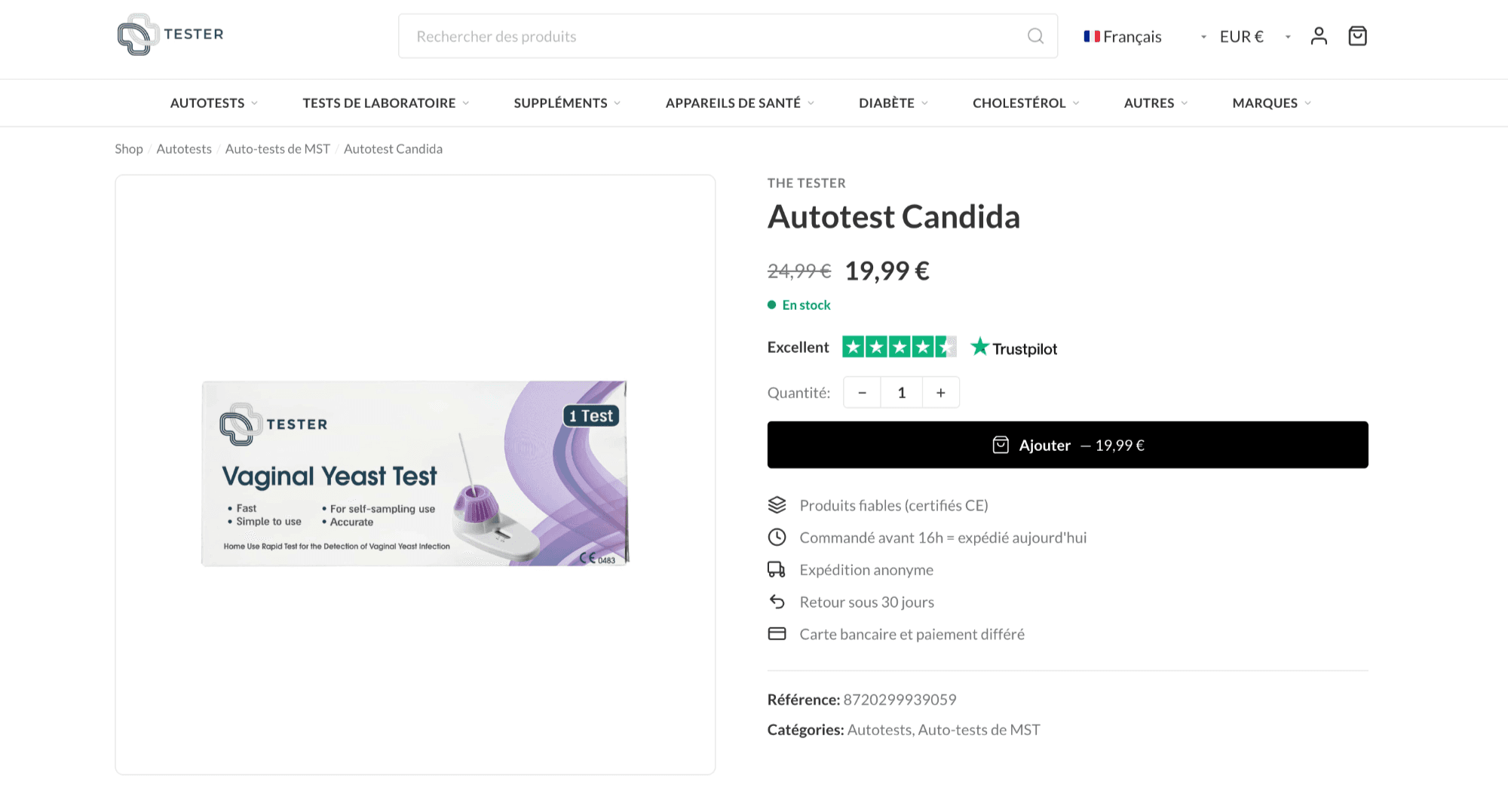
Similar to the Get Tested kit, The Tester Candida is a rapid diagnostic cassette that directly detects Candida fungal proteins using a simple vaginal swab.
How does it work?
You take a vaginal swab, mix it in a small vial of buffer solution, and drop the sample onto the cassette. Your results will show up as colored lines: 2 lines mean positive, 1 line means negative.
This test is ideal for you if:
you are looking for a highly reliable alternative to Get Tested;
you prefer ordering directly from a specialized health website;
you want a CE-marked test specifically designed for comfortable at-home use.
Expect to pay around €10 to €15, with easy online ordering and home delivery.
7. Bulk Vaginal pH Test Strips (For regular tracking)
For women who suffer from highly frequent yeast infections and want to monitor their vaginal pH regularly without spending a lot of money, bulk pH strips are available in packs of 50 to 100.
Aeryon Wellness Vaginal pH Strips: Easy-to-read strips that measure pH from 4.0 to 8.0 with results in 30 seconds. Comes in packs of 50.
Servotest Vaginal pH Indicator Strips: High-quality German design offering precise readings between 4.0 and 7.0. Comes in packs of 100.
How does it work?
Simply place the strip at the opening of the vagina or press it against a swab moistened with vaginal discharge. Compare the color change to the chart on the box. Results are ready in 30 seconds.
Important limitations: These bulk strips are screening tools rather than fully certified medical diagnostic kits. While excellent for habit-tracking and routine self-monitoring, they are not meant to give a clinical diagnosis. They cannot distinguish between yeast and BV with the same precision as a dedicated medical at-home test.
Where to buy: Available on specialized online health stores and larger e-commerce platforms.
Average price: €10 to €20 for 50 to 100 strips.
Multi-Biomarker Tests
Moving beyond basic pH tracking, a new generation of at-home tests can analyze several biological markers at once to pin down the exact cause of vaginal discomfort.
Santelle is currently the most advanced product in this category, analyzing 6 key biomarkers from a single gentle swab.
These markers work together to help differentiate between a yeast infection, a bacterial imbalance, or non-infectious irritation.
By crossing-checking multiple indicators, a multi-biomarker test provides a far more accurate picture than a simple pH reading, significantly reducing the chances of a misinterpretation.
This level of detail is highly valuable for women dealing with recurring issues who need reliable, regular monitoring.
At-Home Vaginal Tests Comparison Chart
Test | Type | What It Measures | Format | Where to Buy | Estimated Price |
|---|---|---|---|---|---|
Santelle | Multi-biomarker | 6 biomarkers | Swab + test card | santelle.com | €19 |
HydralinTest® (Bayer) | Vaginal pH | pH + symptoms | Internal applicator | Pharmacies and online drugstores | €6–8 / unit |
Exacto (Biosynex) | Vaginal pH | pH + symptoms | Internal applicator | In-store pharmacies | €8–10 / pack of 3 |
Biosynex Strips | Vaginal pH | pH only | Test strip | Pharmacies and online drugstores | €6–9 / pack of 3 |
Get Tested Candida | Antigen test | Candida albicans proteins | Swab + cassette | Online retailers (Amazon, etc.) | ~€10–15 |
The Tester Candida | Antigen test | Candida proteins | Swab + cassette | the-tester.com | ~€10–15 |
Bulk pH Strips | Vaginal pH | pH only | Test strip | Online platforms | €10–20 / pack of 50–100 |
What are the symptoms of a yeast infection?
Yeast infection symptoms are usually quite distinct, though they can sometimes overlap with other types of irritation:
Intense itching around the vulva and inside the vagina
A burning sensation, especially when peeing or during sex
Thick, white, odorless vaginal discharge that resembles cottage cheese
Redness and soreness of the vulva
Swelling of the labia
If you have persistent vaginal itching but no unusual discharge, it might not be a yeast infection. Normal friction, an allergy to soap or laundry detergents, or a simple disruption of your vaginal flora can cause identical symptoms.
To understand why an itchy vagina does not always mean you have a yeast infection, and to learn when an at-home test is truly helpful, it is best to identify the source of the irritation before treating it.
Note: Unlike bacterial vaginosis (BV), a yeast infection never causes a fishy odor. The discharge is white and completely odorless. If you notice a strong, unpleasant smell combined with grayish or yellowish discharge, it is likely a different type of infection.
How to understand your test results
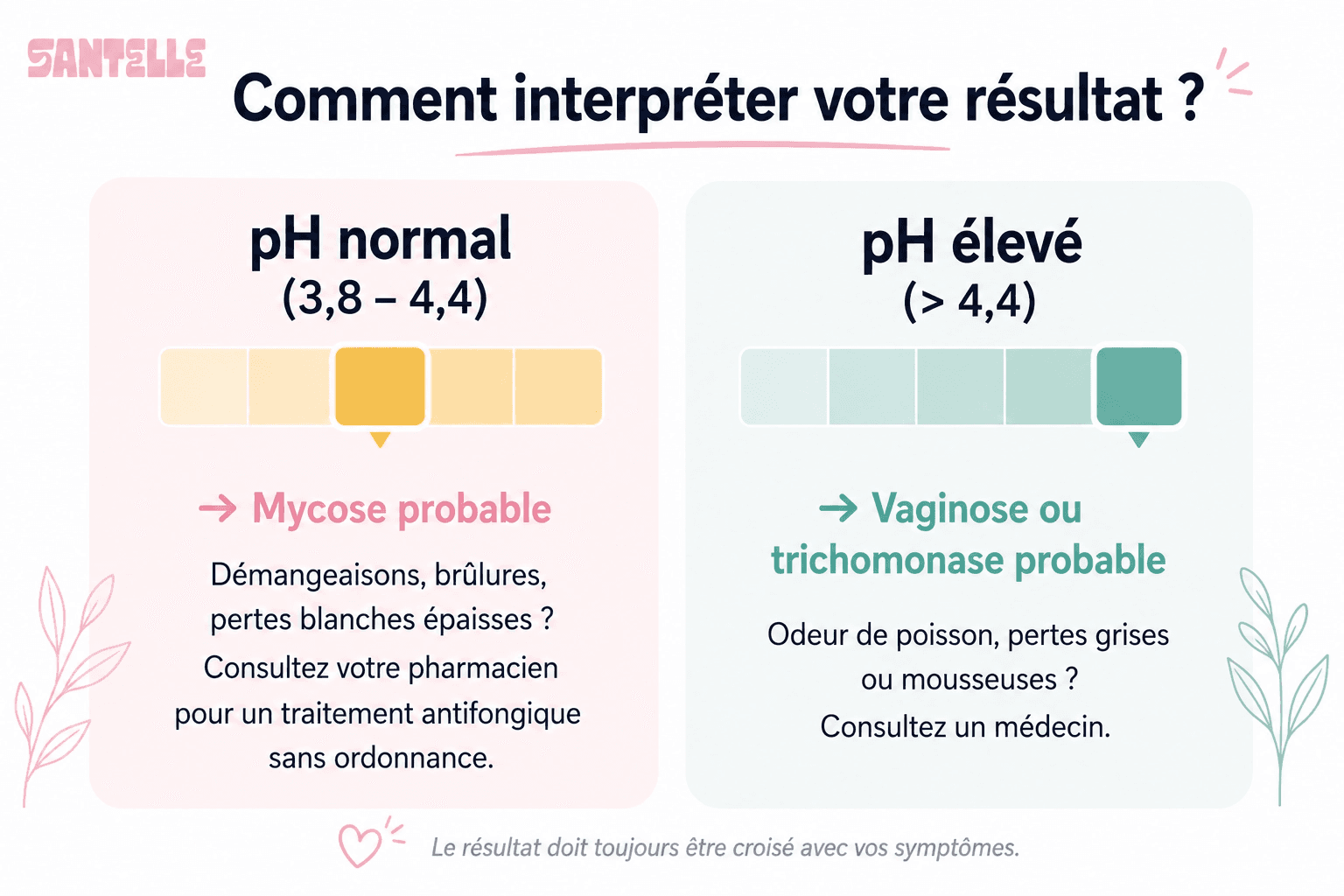
All pH-based tests work on the same color-matching principle, showing one of two outcomes:
Normal pH (3.8 to 4.4) → Yellow or Orange
Your vagina is in its normal, healthy acidic range. If you are experiencing itching, burning, and thick white discharge, you likely have a yeast infection. You can ask your pharmacist for an over-the-counter antifungal treatment (like a suppository pill or cream).Elevated pH (Above 4.4) → Blue or Green
Your pH is higher than normal, which suggests bacterial vaginosis (BV) or trichomoniasis. These infections cannot be cured with yeast infection treatments. You should consult a healthcare provider to get the correct treatment (usually prescription antibiotics).
Common concerns about using home tests
When should I absolutely avoid taking the test?
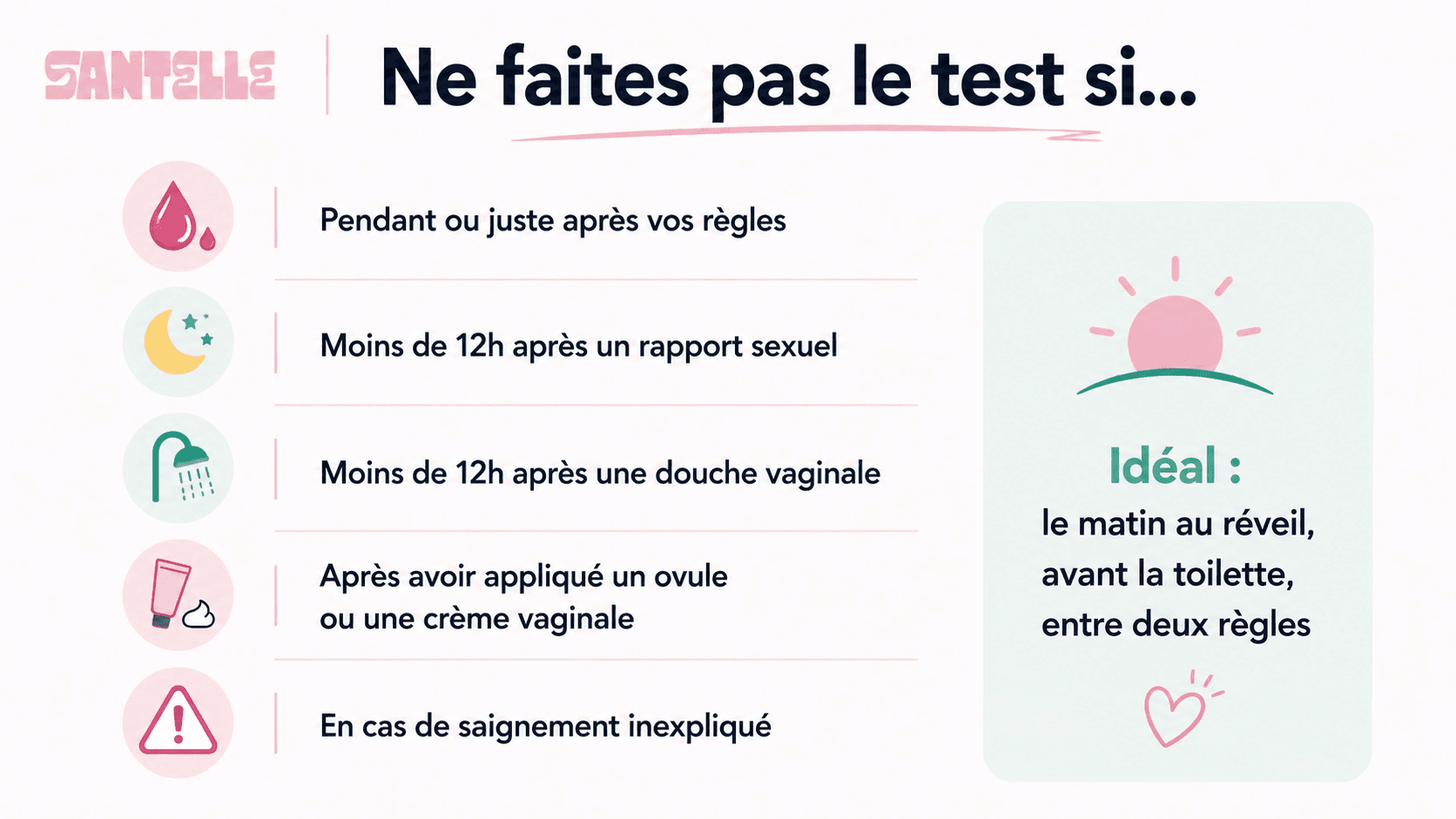
To avoid a false reading, do not test under the following conditions:
During your period, or within 24 hours of it starting or ending: Blood is alkaline. It will artificially raise your vaginal pH, leading to a false positive for a bacterial infection.
Within 12 hours of sex: Semen is alkaline (pH 7 to 8), which raises vaginal pH and will skew the test results.
Within 12 hours of douching: Water and intimate cleansers can temporarily disrupt your natural pH levels.
Immediately after using vaginal creams, suppositories, or gels: These products directly interfere with pH measurements.
If you have unexpected bleeding: If any blood gets on the test swab or strip, the reading will not be accurate. See a doctor instead.
The best time to test is first thing in the morning, before washing, between periods, and at least 12 hours after sexual intercourse.
My test is negative, but I still have symptoms. What does this mean?
A negative test does not automatically mean you do not have a yeast infection. Here are three common reasons why this happens:
1. Yeast infections do not raise your pH
This is the trickiest part of these tests: a yeast infection usually leaves your pH completely normal (between 3.8 and 4.4). A yellow test tip does not mean "no infection." If you have classic symptoms like itching, burning, and cottage-cheese-like discharge, this is actually the exact result you would expect with yeast.
What to do: Always check your pH result alongside your physical symptoms—just as the package instructions suggest—rather than looking at the pH reading alone.
2. The swab did not collect enough fluid
If the test tip is too dry, there will not be enough vaginal fluid to trigger the chemical reaction, leading to a false negative. Make sure the swab is well-moistened before reading the result.
3. Something else is mimicking a yeast infection
Several other conditions can cause very similar symptoms without being a yeast infection:
An allergic reaction to soaps, body washes, or laundry detergents
Skin irritation from shaving, waxing, or tight clothing
Contact dermatitis
An early-stage bacterial vaginosis (BV) infection that has not yet altered your pH
If your symptoms persist after using over-the-counter treatments and your test is negative, it is time to consult a doctor.
My test shows an elevated pH, but I have no BV symptoms. Is that normal?
Yes, several factors can cause your vaginal pH to rise without an active infection:
Menopause and perimenopause: Lower estrogen levels naturally cause vaginal pH to rise above 4.5. This is why pH tests are generally not recommended for menopausal or post-menopausal women, as they often give false-positive results.
Your menstrual cycle: Your pH naturally fluctuates slightly right before and during your period.
Recent sexual activity: Semen temporarily lowers the acidity of the vaginal environment.
Douching: Flushing the vagina with water or products artificially raises pH levels.
Certain medications or other underlying health conditions.
If your test shows a high pH but you feel perfectly fine, there is no need to worry. Check if any of the situations above applied when you took the test.
We recommend waiting a few days and retaking the test under better conditions before scheduling a medical appointment.
Can I take this test while pregnant?
Technically, yes. Autotests like Exacto are safe to use during pregnancy.
However, if the test shows an abnormal result or if you have any symptoms, you must consult your doctor or midwife. Self-treating with oral antifungal medications is not recommended during pregnancy.
What you should do: Use the home test to help explain your concerns to your midwife or doctor during your visit.
What you should not do: Do not take over-the-counter oral yeast infection pills without speaking to a medical professional first.
Note: Pregnant women are more prone to yeast infections (especially in the 2nd and 3rd trimesters) due to hormonal changes that affect the vaginal microbiome.
Local treatments, such as vaginal creams or suppositories (like econazole or clotrimazole), are safe during pregnancy but should always be approved by your doctor first.
Will the test work if I have already started yeast infection treatment?
No. If you have already used a vaginal cream or suppository, the pH reading will not be accurate, as these medications alter the vaginal environment and skew the results.
It is always best to test before you start any treatment.
If you have already started, wait until you finish the full treatment course and wait a few days before testing to see if the infection has cleared or if another issue is present.
My yeast infection treatment did not work. Should I test again?
Yes, this is highly recommended. If your symptoms persist after finishing your treatment, there are a few possible reasons:
1. It may not have been a yeast infection. Early-stage bacterial vaginosis (BV) and yeast infections can feel very similar.
However, they require entirely different treatments (antifungals for yeast, antibiotics for BV).
Using a yeast treatment for a bacterial infection will not work, and vice versa. A pH test can help tell them apart.
2. The treatment was stopped too early. Even if you feel better after 1 or 2 days, the fungus may not be completely gone. Stopping treatment early can cause the infection to return and make the yeast harder to treat in the future.
3. You might have a different strain of yeast. Candida albicans causes 80% to 90% of vaginal yeast infections. However, other strains like Candida glabrata (8% to 10% of cases) are naturally more resistant to standard over-the-counter treatments.
In this case, a doctor will need to take a lab-swab to identify the specific strain and prescribe a targeted medication.
4. An unaddressed trigger. If the root cause (such as unmanaged blood sugar levels, a weakened immune system, certain types of IUDs, a diet high in sugar, or tight synthetic clothing) is not addressed, the yeast infection is likely to return even after successful treatment.
I have itching but no white discharge. Can it still be a yeast infection?
Yes. Only a minority of women experience the "classic" textbook set of symptoms (itching, burning, thick white discharge, and redness all at once).
It is very common to have a yeast infection that only causes itching, or only a burning sensation, with very little or no noticeable discharge.
A pH test can still help guide your next steps, even without heavy discharge.
Can you have both a yeast infection and bacterial vaginosis at the same time?
Yes, though it is less common. In this case, your pH will typically be elevated (due to the bacterial vaginosis), but your symptoms may be a mix of both: an unpleasant odor (typical of BV) along with intense itching and thick discharge (typical of yeast).
This is where a multi-biomarker test like Santelle is incredibly helpful compared to a basic pH strip, as it can detect both imbalances at the same time.
If you suspect a co-infection, we highly recommend consulting a healthcare provider.
How soon after symptoms start can I take the test?
You can test as soon as you notice at least two clear symptoms (such as burning, itching, unusual discharge, or soreness).
There is no need to wait. In fact, testing early helps you choose the right care before the irritation gets worse or becomes harder to manage.
Just remember to avoid testing during your period, right after sex, or immediately after washing.
Can I take the test if I am on the pill or have an IUD?
Birth control pills do not interfere with vaginal pH or change your test results.
However, hormonal contraceptives can affect your vaginal microbiome over time, making you more prone to yeast infections—making regular monitoring even more useful.
Having an intrauterine device (IUD) also does not affect the test. However, if you have a copper IUD and suffer from frequent yeast infections, the device itself could be an indirect factor, as yeast can sometimes cling to the IUD strings and create a repeating cycle.
While the test can confirm if you have yeast, only your doctor can determine if changing or removing your IUD is the right option for you.
How many times a month can I test?
There is no strict limit, but testing every day is unnecessary.
For women prone to frequent infections, testing once a month as a quick check-in (using a detailed test like Santelle) is a practical approach.
If you experience sudden, uncomfortable symptoms, testing immediately is always reasonable.
Try to avoid testing multiple times in a single week to see if the colors change. If you follow the instructions, your pH levels will remain the same over a few days.
Can an at-home test replace a doctor's clinic lab test?
No. While at-home tests are convenient, reliable (around 90% accurate), and quick, they are screening tools, not clinical diagnoses.
A laboratory swab sample is much more thorough. It can pinpoint the exact strain of yeast or bacteria, run a sensitivity test to find the most effective medication, and rule out other conditions like common STIs.
You should always see a healthcare provider if:
your symptoms do not go away after using a recommended treatment;
you experience more than 4 yeast infections a year;
you are pregnant;
you are unsure what type of infection you have;
your partner is also showing symptoms of irritation.
Does my partner need to be treated too?
Generally, no. A yeast infection is not classified as a sexually transmitted infection (STI).
Routine screening and treatment for partners are not recommended if they do not have any symptoms.
However, if you suffer from recurring yeast infections, it is possible for your partner to carry yeast without showing symptoms, potentially passing it back to you during sex.
In these cases, your doctor may recommend treating both of you at the same time.
In men, a yeast infection can cause redness and irritation on the tip of the penis (balanitis), which should be evaluated by a doctor.
Using a condom during an active infection is a good way to prevent passing yeast back and forth while healing.
How can I prevent recurring yeast infections?
Many women find themselves in a tiring cycle: treating an infection, feeling fine, and then dealing with a flare-up a few weeks later. If this sounds familiar, understanding why the infections keep coming back is key to breaking the cycle.
Santelle has put together a comprehensive guide on this: Why vaginal infections keep coming back, which looks closely at why this happens and how to find lasting relief.
Hygiene and habits
Wearing tight or synthetic underwear traps heat and moisture, helping yeast grow.
Staying in a wet bathing suit, frequent hot tubs, or long swimming sessions can create an ideal environment for yeast.
Using harsh soaps, scented body washes, or douching strip away the healthy bacteria that keep your vagina balanced.
Medical factors
Taking antibiotics can wipe out the beneficial bacteria (lactobacilli) that naturally keep yeast in check.
Conditions like unmanaged diabetes, thyroid issues, or a weakened immune system can lower your body's natural defenses.
Pregnancy, menopause, and normal hormonal shifts during your cycle can alter your vaginal balance.
The IUD connection
For some sensitive women, an IUD (notably a copper IUD) can sometimes make yeast infections more likely.
Yeast can attach to the device's material, keeping a small amount of yeast present. If you have an IUD and recurring yeast infections, mention this to your gynecologist.
Simple daily tips to prevent flare-ups
Choose breathable cotton underwear.
Dry yourself thoroughly after showering or swimming.
Wash your intimate area with water or a gentle, pH-balanced cleanser.
Avoid vaginal douching entirely.
Limit highly sugary foods (since yeast feeds on sugars).
If you need to take antibiotics, talk to your doctor about taking a vaginal probiotic (with lactobacilli) to help protect your microbiome.
Vaginal yeast infections affect 3 out of 4 women at least once in their lives. For half of them, recurring infections are a frustrating part of daily life.
Several at-home tests can now help you find answers from the comfort of your own home, as long as you know which one to choose, how to use it, and how to understand your results.
This article covers everything you need to know.
Can you test for a yeast infection at home?
Yes, up to a point. While at-home tests available at pharmacies or online do not replace a doctor's diagnosis, they are a fast way to get pointed in the right direction. They help you find out if your discomfort is caused by yeast (a fungal infection) or vaginosis (a bacterial infection) so you can choose the right care.
A vaginal yeast infection happens when there is an overgrowth of a fungus that naturally lives in the vaginal microbiome: Candida albicans.
Unlike bacterial infections, a yeast infection does not raise your vaginal pH. This is exactly what most at-home tests measure: your vaginal pH level, which you then look at alongside your symptoms.
While an at-home test alone cannot give you a 100% certain diagnosis, it is very helpful for ruling out other causes of irritation and guiding your next steps.
For a deeper dive into this topic, Santelle has created a helpful guide: Yeast infection screening: Everything you need to know about vaginal at-home tests, which explains how to read your results based on your symptoms.
Which yeast infection tests can you do at home?
Vaginal pH tests
The vagina is naturally acidic, with a normal pH typically between 3.8 and 4.5.
This acidic environment acts as a natural barrier that stops harmful germs from growing. When you have a yeast infection, your pH usually stays within this normal range.
On the other hand, bacterial vaginosis (BV) or trichomoniasis (a common sexually transmitted infection) typically cause your vaginal pH to rise above 4.5.
In theory, a pH test helps tell these conditions apart. However, it is simply a tool to help guide you and should never replace medical advice if you are in doubt or experiencing these symptoms for the first time.
Here are the main at-home tests available:
1. Santelle
If you want a more complete picture than a simple pH reading, Santelle is currently the most advanced at-home test available.
While standard tests only look at one indicator (pH), Santelle checks multiple biomarkers using a single swab. This includes pH as well as other indicators linked to bacterial and yeast imbalances.
This means you get a much clearer, more detailed result. It also reduces the risk of missing a mixed infection (having both a yeast infection and bacterial vaginosis at the same time), which a basic pH test can easily miss.
How does it work?
You collect the sample yourself at home using a sterile medical swab included in the kit. It is a quick, private process that you can do anytime without needing an appointment.
You mix the swab with the liquid provided, drop it onto the test cassette, and read your results in just 10 minutes.
This test is ideal for you if:
you suffer from frequent infections and want to finally understand what is going on;
your symptoms are unusual or do not match a typical yeast infection;
you have recently finished a course of antibiotics, or are going through hormonal changes;
you do not have active symptoms but want to proactively monitor your vaginal health to prevent future flare-ups.
you do not have active symptoms but want to proactively monitor your vaginal health to prevent future flare-ups.
The kit also comes with an app that helps you track your results and spot signs of imbalance over time. This is especially helpful if you are trying to understand a pattern of recurring infections rather than just treating a single episode.
The complete kit costs around €19 and is available directly on santelle.com.
2. HydralinTest® (Bayer)
HydralinTest is one of the most popular and widely available vaginal at-home tests.
How does it work?
You gently insert the applicator into the vagina (about 5 cm), rotate it slightly, and wait 10 seconds. The color of the tip gives you your result instantly:
Yellow (no change): Your pH is normal. If you are experiencing itching, burning, or thick, white discharge, these classic signs point to a yeast infection.
Blue-green: Your pH is elevated. This is usually a sign of bacterial vaginosis or trichomoniasis, both of which require medical advice and a prescription.
Common mistake: The tip of the HydralinTest is yellow by default right out of the box. Do not worry—this is normal, as yellow indicates a normal pH. Many users think their test is broken or defective when it is actually working exactly as it should.
This test is ideal for you if:
you want a quick result in 10 seconds with no prep steps;
you want an easy-to-find, over-the-counter option from the pharmacy;
you have had yeast infections before and recognize your usual symptoms.
Accuracy: Clinically tested with a manufacturer-stated accuracy of over 90% for detecting pH changes. The color result remains stable for 30 minutes.
Things to keep in mind: Do not use this test during your period or within 24 hours of it starting or ending. Avoid testing within 12 hours of sexual intercourse or douching, as these can cause inaccurate results. It is not recommended for menopausal women, as menopause naturally raises vaginal pH and can trigger false positives. Not having enough vaginal discharge on the swab can also cause a false negative.
It costs about €6 to €8 over-the-counter at pharmacies and online drugstores.
3. Exacto Vaginal Infection Test (Biosynex)
Trustpilot ★★★★☆ 4.4/5 — 13 reviews
The Exacto at-home test, made by the French laboratory Biosynex, is a highly reliable alternative to HydralinTest.
It comes in a pack of 3 tests, making it a very convenient choice for women who experience recurring infections or want to track their vaginal health over time.
How does it work?
You gently insert the applicator (1 to 3 cm), press it against the vaginal wall for 10 seconds, and compare the color change to the scale printed on the foil pouch:
Yellow to orange (pH 3.8–4.4): Your pH is normal. If you also have itching or burning, a yeast infection is highly likely. Your pharmacist can recommend an over-the-counter treatment.
Above 4.4: A bacterial infection or trichomoniasis is more likely, meaning you should consult a doctor.
This test is ideal for you if:
you want a multi-pack that you can keep at home to use over several months without buying a new kit each time;
you have finished taking antibiotics and want to make sure your vaginal microbiome is back in balance;
you are pregnant and want a quick assessment before discussing it with your midwife or doctor.
Accuracy: 90% accurate, CE-certified (CE0123) for home use. Avoid using immediately after washing your external intimate area, as this can affect the reading.
Expect to pay around €8 to €10 for a box of 3 tests, available in pharmacies.
4. Biosynex Vaginal Test Strips
Biosynex also offers individual vaginal test strips in a highly compact, travel-friendly format.
These test strips work on the same pH-measuring principle but come in an even simpler design: a small strip that you press directly against the vaginal wall.
How does it work?
Remove the sterile strip from its foil pouch right before use, insert it briefly, and compare the color change to the provided chart. It is quick, clean, and does not require a bulky applicator.
Advantage: Compact, easy to carry, and generally more budget-friendly than the Exacto applicator kit. Sold in boxes of 3 strips.
Expect to pay €6 to €9 for a box of 3 strips at your local pharmacy or online.
5. Get Tested Candida Albicans Rapid Test
Unlike traditional pH tests that look at acidity levels, the Get Tested Candida Albicans test is an antigen test. It directly checks for the presence of the Candida albicans fungus in your vaginal discharge, bypassing pH altogether.
How does it work?
Using a sterile swab, you collect a sample of vaginal discharge from about 5 to 7 cm deep.
You then swirl the swab in a tube containing a buffer solution.
Place two drops of this mixture onto the test cassette. Your result is ready in 10 to 20 minutes, working just like a rapid home pregnancy test.
2 lines visible: Candida albicans has been detected (positive).
1 line visible (control line only): No Candida antigens detected (negative).
This test is ideal for you if:
your pH test came back normal but your symptoms will not go away;
you want direct confirmation of yeast rather than relying on pH levels;
you prefer the convenience of ordering online.
Please note: Read your results within 20 minutes, do not freeze the test components, and store the kit between 4 and 30 °C.
Expect to pay around €10 to €15, available online with home delivery.
6. The Tester Candida Test
Similar to the Get Tested kit, The Tester Candida is a rapid diagnostic cassette that directly detects Candida fungal proteins using a simple vaginal swab.
How does it work?
You take a vaginal swab, mix it in a small vial of buffer solution, and drop the sample onto the cassette. Your results will show up as colored lines: 2 lines mean positive, 1 line means negative.
This test is ideal for you if:
you are looking for a highly reliable alternative to Get Tested;
you prefer ordering directly from a specialized health website;
you want a CE-marked test specifically designed for comfortable at-home use.
Expect to pay around €10 to €15, with easy online ordering and home delivery.
7. Bulk Vaginal pH Test Strips (For regular tracking)
For women who suffer from highly frequent yeast infections and want to monitor their vaginal pH regularly without spending a lot of money, bulk pH strips are available in packs of 50 to 100.
Aeryon Wellness Vaginal pH Strips: Easy-to-read strips that measure pH from 4.0 to 8.0 with results in 30 seconds. Comes in packs of 50.
Servotest Vaginal pH Indicator Strips: High-quality German design offering precise readings between 4.0 and 7.0. Comes in packs of 100.
How does it work?
Simply place the strip at the opening of the vagina or press it against a swab moistened with vaginal discharge. Compare the color change to the chart on the box. Results are ready in 30 seconds.
Important limitations: These bulk strips are screening tools rather than fully certified medical diagnostic kits. While excellent for habit-tracking and routine self-monitoring, they are not meant to give a clinical diagnosis. They cannot distinguish between yeast and BV with the same precision as a dedicated medical at-home test.
Where to buy: Available on specialized online health stores and larger e-commerce platforms.
Average price: €10 to €20 for 50 to 100 strips.
Multi-Biomarker Tests
Moving beyond basic pH tracking, a new generation of at-home tests can analyze several biological markers at once to pin down the exact cause of vaginal discomfort.
Santelle is currently the most advanced product in this category, analyzing 6 key biomarkers from a single gentle swab.
These markers work together to help differentiate between a yeast infection, a bacterial imbalance, or non-infectious irritation.
By crossing-checking multiple indicators, a multi-biomarker test provides a far more accurate picture than a simple pH reading, significantly reducing the chances of a misinterpretation.
This level of detail is highly valuable for women dealing with recurring issues who need reliable, regular monitoring.
At-Home Vaginal Tests Comparison Chart
Test | Type | What It Measures | Format | Where to Buy | Estimated Price |
|---|---|---|---|---|---|
Santelle | Multi-biomarker | 6 biomarkers | Swab + test card | santelle.com | €19 |
HydralinTest® (Bayer) | Vaginal pH | pH + symptoms | Internal applicator | Pharmacies and online drugstores | €6–8 / unit |
Exacto (Biosynex) | Vaginal pH | pH + symptoms | Internal applicator | In-store pharmacies | €8–10 / pack of 3 |
Biosynex Strips | Vaginal pH | pH only | Test strip | Pharmacies and online drugstores | €6–9 / pack of 3 |
Get Tested Candida | Antigen test | Candida albicans proteins | Swab + cassette | Online retailers (Amazon, etc.) | ~€10–15 |
The Tester Candida | Antigen test | Candida proteins | Swab + cassette | the-tester.com | ~€10–15 |
Bulk pH Strips | Vaginal pH | pH only | Test strip | Online platforms | €10–20 / pack of 50–100 |
What are the symptoms of a yeast infection?
Yeast infection symptoms are usually quite distinct, though they can sometimes overlap with other types of irritation:
Intense itching around the vulva and inside the vagina
A burning sensation, especially when peeing or during sex
Thick, white, odorless vaginal discharge that resembles cottage cheese
Redness and soreness of the vulva
Swelling of the labia
If you have persistent vaginal itching but no unusual discharge, it might not be a yeast infection. Normal friction, an allergy to soap or laundry detergents, or a simple disruption of your vaginal flora can cause identical symptoms.
To understand why an itchy vagina does not always mean you have a yeast infection, and to learn when an at-home test is truly helpful, it is best to identify the source of the irritation before treating it.
Note: Unlike bacterial vaginosis (BV), a yeast infection never causes a fishy odor. The discharge is white and completely odorless. If you notice a strong, unpleasant smell combined with grayish or yellowish discharge, it is likely a different type of infection.
How to understand your test results
All pH-based tests work on the same color-matching principle, showing one of two outcomes:
Normal pH (3.8 to 4.4) → Yellow or Orange
Your vagina is in its normal, healthy acidic range. If you are experiencing itching, burning, and thick white discharge, you likely have a yeast infection. You can ask your pharmacist for an over-the-counter antifungal treatment (like a suppository pill or cream).Elevated pH (Above 4.4) → Blue or Green
Your pH is higher than normal, which suggests bacterial vaginosis (BV) or trichomoniasis. These infections cannot be cured with yeast infection treatments. You should consult a healthcare provider to get the correct treatment (usually prescription antibiotics).
Common concerns about using home tests
When should I absolutely avoid taking the test?
To avoid a false reading, do not test under the following conditions:
During your period, or within 24 hours of it starting or ending: Blood is alkaline. It will artificially raise your vaginal pH, leading to a false positive for a bacterial infection.
Within 12 hours of sex: Semen is alkaline (pH 7 to 8), which raises vaginal pH and will skew the test results.
Within 12 hours of douching: Water and intimate cleansers can temporarily disrupt your natural pH levels.
Immediately after using vaginal creams, suppositories, or gels: These products directly interfere with pH measurements.
If you have unexpected bleeding: If any blood gets on the test swab or strip, the reading will not be accurate. See a doctor instead.
The best time to test is first thing in the morning, before washing, between periods, and at least 12 hours after sexual intercourse.
My test is negative, but I still have symptoms. What does this mean?
A negative test does not automatically mean you do not have a yeast infection. Here are three common reasons why this happens:
1. Yeast infections do not raise your pH
This is the trickiest part of these tests: a yeast infection usually leaves your pH completely normal (between 3.8 and 4.4). A yellow test tip does not mean "no infection." If you have classic symptoms like itching, burning, and cottage-cheese-like discharge, this is actually the exact result you would expect with yeast.
What to do: Always check your pH result alongside your physical symptoms—just as the package instructions suggest—rather than looking at the pH reading alone.
2. The swab did not collect enough fluid
If the test tip is too dry, there will not be enough vaginal fluid to trigger the chemical reaction, leading to a false negative. Make sure the swab is well-moistened before reading the result.
3. Something else is mimicking a yeast infection
Several other conditions can cause very similar symptoms without being a yeast infection:
An allergic reaction to soaps, body washes, or laundry detergents
Skin irritation from shaving, waxing, or tight clothing
Contact dermatitis
An early-stage bacterial vaginosis (BV) infection that has not yet altered your pH
If your symptoms persist after using over-the-counter treatments and your test is negative, it is time to consult a doctor.
My test shows an elevated pH, but I have no BV symptoms. Is that normal?
Yes, several factors can cause your vaginal pH to rise without an active infection:
Menopause and perimenopause: Lower estrogen levels naturally cause vaginal pH to rise above 4.5. This is why pH tests are generally not recommended for menopausal or post-menopausal women, as they often give false-positive results.
Your menstrual cycle: Your pH naturally fluctuates slightly right before and during your period.
Recent sexual activity: Semen temporarily lowers the acidity of the vaginal environment.
Douching: Flushing the vagina with water or products artificially raises pH levels.
Certain medications or other underlying health conditions.
If your test shows a high pH but you feel perfectly fine, there is no need to worry. Check if any of the situations above applied when you took the test.
We recommend waiting a few days and retaking the test under better conditions before scheduling a medical appointment.
Can I take this test while pregnant?
Technically, yes. Autotests like Exacto are safe to use during pregnancy.
However, if the test shows an abnormal result or if you have any symptoms, you must consult your doctor or midwife. Self-treating with oral antifungal medications is not recommended during pregnancy.
What you should do: Use the home test to help explain your concerns to your midwife or doctor during your visit.
What you should not do: Do not take over-the-counter oral yeast infection pills without speaking to a medical professional first.
Note: Pregnant women are more prone to yeast infections (especially in the 2nd and 3rd trimesters) due to hormonal changes that affect the vaginal microbiome.
Local treatments, such as vaginal creams or suppositories (like econazole or clotrimazole), are safe during pregnancy but should always be approved by your doctor first.
Will the test work if I have already started yeast infection treatment?
No. If you have already used a vaginal cream or suppository, the pH reading will not be accurate, as these medications alter the vaginal environment and skew the results.
It is always best to test before you start any treatment.
If you have already started, wait until you finish the full treatment course and wait a few days before testing to see if the infection has cleared or if another issue is present.
My yeast infection treatment did not work. Should I test again?
Yes, this is highly recommended. If your symptoms persist after finishing your treatment, there are a few possible reasons:
1. It may not have been a yeast infection. Early-stage bacterial vaginosis (BV) and yeast infections can feel very similar.
However, they require entirely different treatments (antifungals for yeast, antibiotics for BV).
Using a yeast treatment for a bacterial infection will not work, and vice versa. A pH test can help tell them apart.
2. The treatment was stopped too early. Even if you feel better after 1 or 2 days, the fungus may not be completely gone. Stopping treatment early can cause the infection to return and make the yeast harder to treat in the future.
3. You might have a different strain of yeast. Candida albicans causes 80% to 90% of vaginal yeast infections. However, other strains like Candida glabrata (8% to 10% of cases) are naturally more resistant to standard over-the-counter treatments.
In this case, a doctor will need to take a lab-swab to identify the specific strain and prescribe a targeted medication.
4. An unaddressed trigger. If the root cause (such as unmanaged blood sugar levels, a weakened immune system, certain types of IUDs, a diet high in sugar, or tight synthetic clothing) is not addressed, the yeast infection is likely to return even after successful treatment.
I have itching but no white discharge. Can it still be a yeast infection?
Yes. Only a minority of women experience the "classic" textbook set of symptoms (itching, burning, thick white discharge, and redness all at once).
It is very common to have a yeast infection that only causes itching, or only a burning sensation, with very little or no noticeable discharge.
A pH test can still help guide your next steps, even without heavy discharge.
Can you have both a yeast infection and bacterial vaginosis at the same time?
Yes, though it is less common. In this case, your pH will typically be elevated (due to the bacterial vaginosis), but your symptoms may be a mix of both: an unpleasant odor (typical of BV) along with intense itching and thick discharge (typical of yeast).
This is where a multi-biomarker test like Santelle is incredibly helpful compared to a basic pH strip, as it can detect both imbalances at the same time.
If you suspect a co-infection, we highly recommend consulting a healthcare provider.
How soon after symptoms start can I take the test?
You can test as soon as you notice at least two clear symptoms (such as burning, itching, unusual discharge, or soreness).
There is no need to wait. In fact, testing early helps you choose the right care before the irritation gets worse or becomes harder to manage.
Just remember to avoid testing during your period, right after sex, or immediately after washing.
Can I take the test if I am on the pill or have an IUD?
Birth control pills do not interfere with vaginal pH or change your test results.
However, hormonal contraceptives can affect your vaginal microbiome over time, making you more prone to yeast infections—making regular monitoring even more useful.
Having an intrauterine device (IUD) also does not affect the test. However, if you have a copper IUD and suffer from frequent yeast infections, the device itself could be an indirect factor, as yeast can sometimes cling to the IUD strings and create a repeating cycle.
While the test can confirm if you have yeast, only your doctor can determine if changing or removing your IUD is the right option for you.
How many times a month can I test?
There is no strict limit, but testing every day is unnecessary.
For women prone to frequent infections, testing once a month as a quick check-in (using a detailed test like Santelle) is a practical approach.
If you experience sudden, uncomfortable symptoms, testing immediately is always reasonable.
Try to avoid testing multiple times in a single week to see if the colors change. If you follow the instructions, your pH levels will remain the same over a few days.
Can an at-home test replace a doctor's clinic lab test?
No. While at-home tests are convenient, reliable (around 90% accurate), and quick, they are screening tools, not clinical diagnoses.
A laboratory swab sample is much more thorough. It can pinpoint the exact strain of yeast or bacteria, run a sensitivity test to find the most effective medication, and rule out other conditions like common STIs.
You should always see a healthcare provider if:
your symptoms do not go away after using a recommended treatment;
you experience more than 4 yeast infections a year;
you are pregnant;
you are unsure what type of infection you have;
your partner is also showing symptoms of irritation.
Does my partner need to be treated too?
Generally, no. A yeast infection is not classified as a sexually transmitted infection (STI).
Routine screening and treatment for partners are not recommended if they do not have any symptoms.
However, if you suffer from recurring yeast infections, it is possible for your partner to carry yeast without showing symptoms, potentially passing it back to you during sex.
In these cases, your doctor may recommend treating both of you at the same time.
In men, a yeast infection can cause redness and irritation on the tip of the penis (balanitis), which should be evaluated by a doctor.
Using a condom during an active infection is a good way to prevent passing yeast back and forth while healing.
How can I prevent recurring yeast infections?
Many women find themselves in a tiring cycle: treating an infection, feeling fine, and then dealing with a flare-up a few weeks later. If this sounds familiar, understanding why the infections keep coming back is key to breaking the cycle.
Santelle has put together a comprehensive guide on this: Why vaginal infections keep coming back, which looks closely at why this happens and how to find lasting relief.
Hygiene and habits
Wearing tight or synthetic underwear traps heat and moisture, helping yeast grow.
Staying in a wet bathing suit, frequent hot tubs, or long swimming sessions can create an ideal environment for yeast.
Using harsh soaps, scented body washes, or douching strip away the healthy bacteria that keep your vagina balanced.
Medical factors
Taking antibiotics can wipe out the beneficial bacteria (lactobacilli) that naturally keep yeast in check.
Conditions like unmanaged diabetes, thyroid issues, or a weakened immune system can lower your body's natural defenses.
Pregnancy, menopause, and normal hormonal shifts during your cycle can alter your vaginal balance.
The IUD connection
For some sensitive women, an IUD (notably a copper IUD) can sometimes make yeast infections more likely.
Yeast can attach to the device's material, keeping a small amount of yeast present. If you have an IUD and recurring yeast infections, mention this to your gynecologist.
Simple daily tips to prevent flare-ups
Choose breathable cotton underwear.
Dry yourself thoroughly after showering or swimming.
Wash your intimate area with water or a gentle, pH-balanced cleanser.
Avoid vaginal douching entirely.
Limit highly sugary foods (since yeast feeds on sugars).
If you need to take antibiotics, talk to your doctor about taking a vaginal probiotic (with lactobacilli) to help protect your microbiome.
Home Yeast Infection Test 2026: Comparing the 7 Best Self-Test Kits
Home Yeast Infection Test 2026: Comparing the 7 Best Self-Test Kits
Home Yeast Infection Test 2026: Comparing the 7 Best Self-Test Kits
Itching or unusual white discharge? Find out how to test for a vaginal yeast infection at home in just 10 minutes. Compare HydralinTest,
Itching or unusual white discharge? Find out how to test for a vaginal yeast infection at home in just 10 minutes. Compare HydralinTest,
© 2026 Santelle Sàrl+41 79 738 46 35c/o Roxanne SabbagRoute de Pressy 5b1253 Vandoeuvres, CH

© 2026 Santelle Sàrl. +41 79 738 46 35Roxanne Sabbag, Route de Pressy 5b, 1253 Vandoeuvres, CH
© 2026 Santelle Sàrl+41 79 738 46 35c/o Roxanne SabbagRoute de Pressy 5b1253 Vandoeuvres, CH