

Infections
Vaginal self-test: how do you know if you have a vaginal infection?

Zineb Sadki
Editorial writing, Santelle
An intimate change can quickly become stressful. An unusual vaginal odour, different vaginal discharge, itching or simply a feeling of discomfort... and often, you do not really know how to read these signs.
The vaginal self-test is there to help you see more clearly.
By measuring vaginal pH and taking other indicators into account, such as biomarkers, it helps you place your intimate balance more accurately.
This can guide you in understanding your symptoms and help you decide whether it is better to see a health professional.
Why vaginal symptoms are hard to make sense of
Understanding your vaginal symptoms is not always straightforward, in particular because several imbalances can cause very similar signs.
What can the different vaginal symptoms correspond to?
In practice, many women describe the same signs:
Itching: often associated with a vaginal yeast infection, especially when it is pronounced and persistent
Thick, whitish discharge: generally linked to a yeast infection, most often without a strong odour
An unusual odour: frequently seen with bacterial vaginosis
Thinner or greyish discharge: often characteristic of vaginosis
Mild discomfort or diffuse irritation: can correspond to a microbiome imbalance, with no identified infection
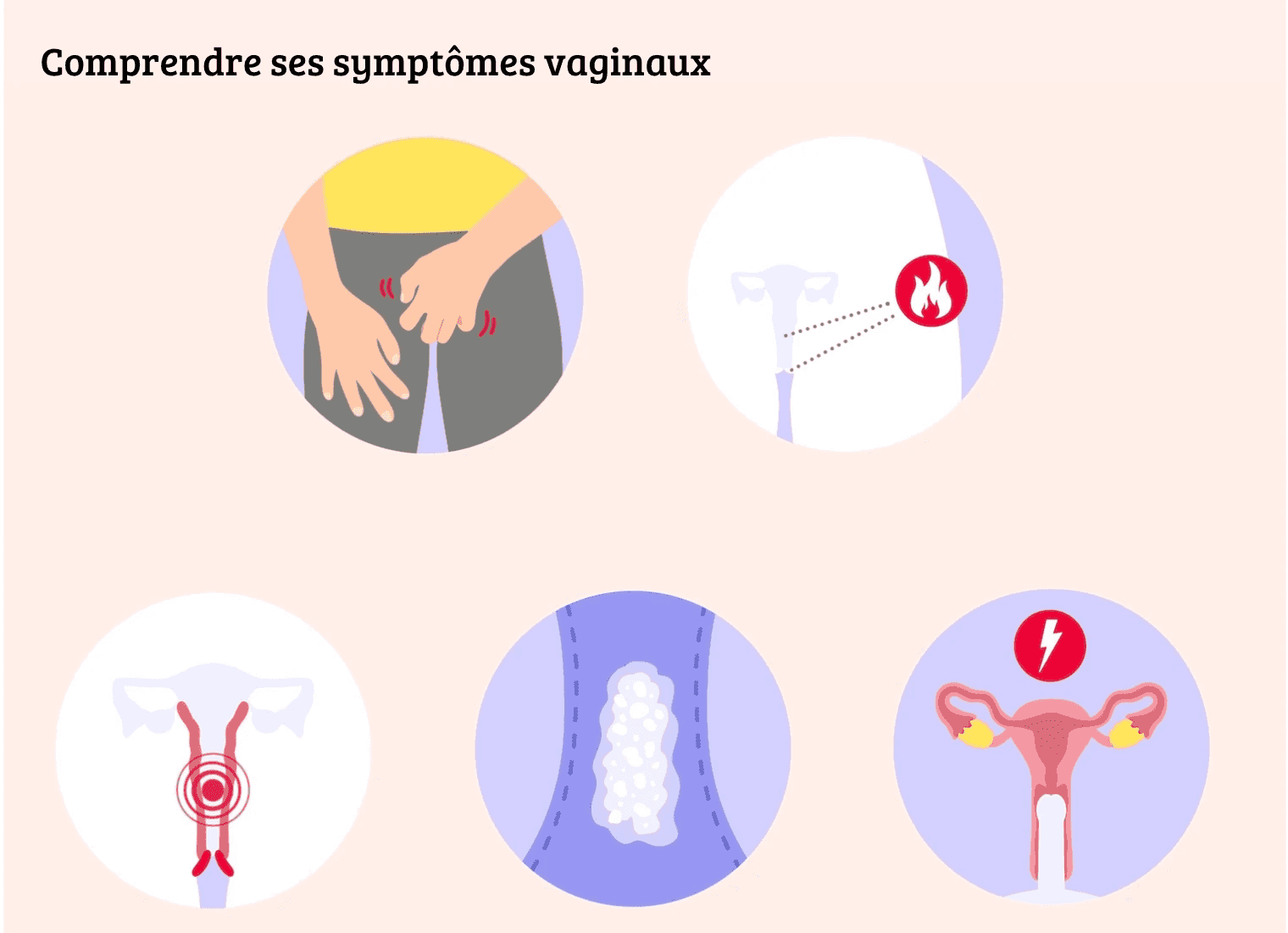
The important point is that these symptoms do not all correspond to the same situation.
Situation | What is actually happening | Typical signs |
|---|---|---|
Vaginal yeast infection | overgrowth of a fungus (Candida) | intense itching, thick discharge with no odour |
Bacterial vaginosis | imbalance of the vaginal bacteria | strong odour, thin greyish discharge |
Microbiome imbalance | weakened flora, with no clear infection | discomfort, slight variations |
In practical terms, a yeast infection mainly causes itching, whereas vaginosis is often linked to a more pronounced odour and a higher pH.
In this context, it becomes hard to know precisely what you have without an objective indicator, especially since vaginal discharge changes naturally across the cycle.
Vaginal self-test: how does it work?
A vaginal self-test rests on a simple principle: analysing certain indicators present in the vaginal environment to better understand what is going on.
The vaginal pH test
The vaginal pH test is the analysis most commonly used in self-tests. It quickly assesses whether the vaginal environment is broadly balanced or disturbed.
It is simple to use:
Take a vaginal sample
Apply it to the strip
Observe the colour
Compare it with the scale
Vaginal pH is a useful indicator, because a healthy vagina is naturally acidic. A rise in pH can therefore point to an imbalance, particularly a bacterial one.
General interpretation:
Acidic pH: vaginal environment generally balanced
Higher pH: possible microbiome imbalance
However, this indicator alone does not allow a complete interpretation.
For example:
A vaginal yeast infection can appear with a still-normal pH
A high pH does not always indicate a specific infection
and some imbalances can exist without a clear change in pH.
In other words, pH gives you a first piece of information, but it does not let you pinpoint where the symptoms come from.
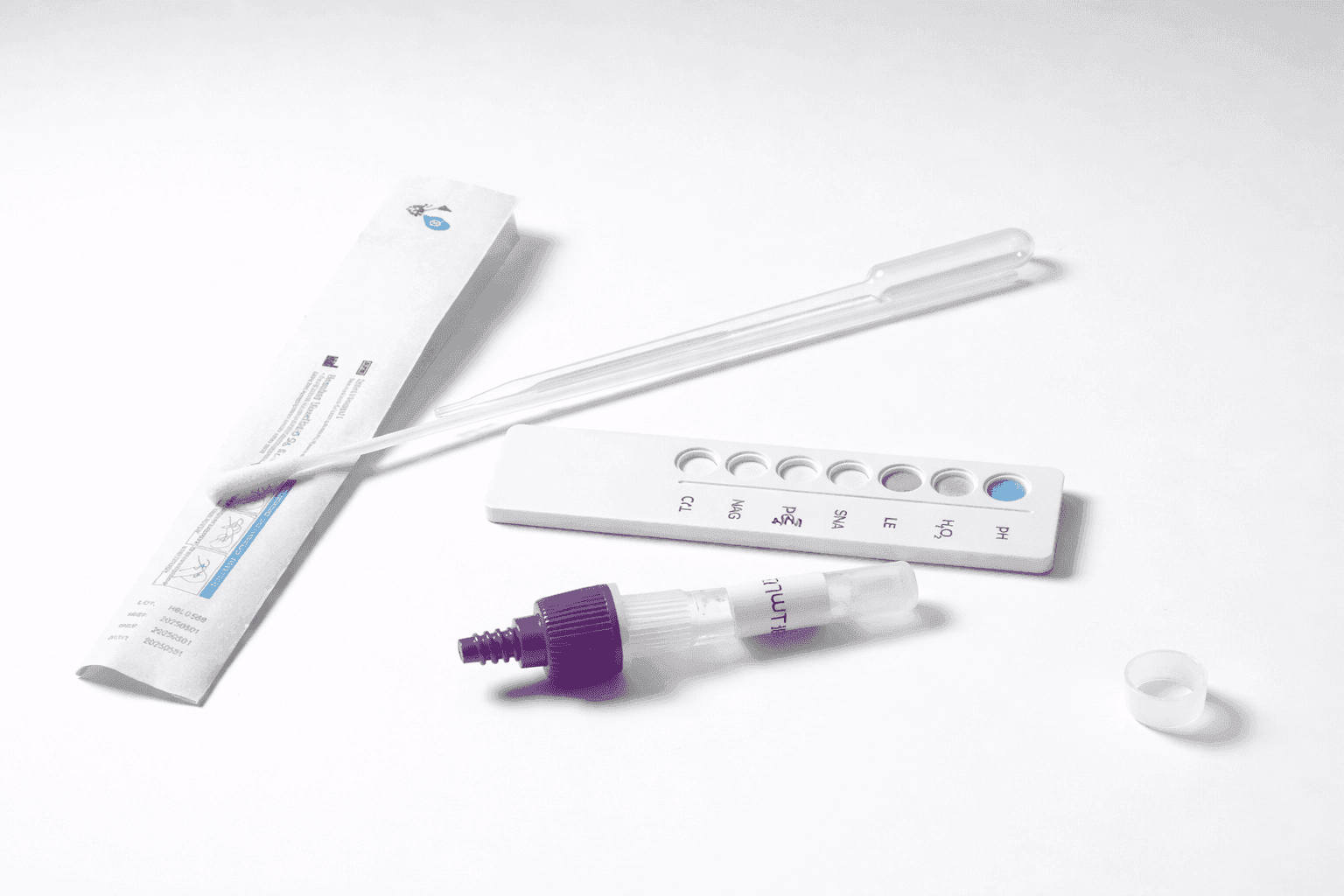
The other indicators analysed (biomarkers)
To go further, some self-tests also analyse other biological indicators, called biomarkers.
A biomarker is simply a measurable signal that helps identify an imbalance, unusual bacterial activity or a reaction from the body.
They make it possible to assess:
The balance of the vaginal microbiome, indicating whether the flora is preserved or disturbed
The activity of certain bacteria, which can point to a bacterial imbalance
The body's response, particularly in cases of inflammation or infection
Today, some self-tests combine several of these indicators to offer a fuller reading, as is the case with certain solutions available in pharmacies or online, which integrate several biomarkers to refine the analysis.
What can a vaginal self-test reveal?
Faced with intimate symptoms, one question comes up often: is this a simple imbalance or something that needs particular attention?
A vaginal self-test does not make a diagnosis, but it provides objective elements for better understanding what is going on.
In concrete terms, a self-test can indicate:
Whether the vaginal environment appears balanced or disturbed
Whether certain signs point to a bacterial imbalance
Whether the body is showing signs of a reaction, such as inflammation
Whether the results are consistent with the symptoms you feel
This information does not give a diagnosis, but it helps you read your symptoms better and avoid some common confusions.
For example, itching does not always correspond to a yeast infection, and an unusual odour is not systematically linked to a severe infection. The self-test is precisely there to add nuance to these interpretations.
It therefore sits as an intermediate tool: between how you feel and a consultation, to better understand what is going on before acting.
With fuller vaginal self-tests, such as those offered by Santelle, several biomarkers can be analysed in parallel.
In particular this provides indications about:
The overall balance of the vaginal microbiome
Whether or not there is unusual bacterial activity
Signs of a reaction from the body, such as inflammation
Whether the natural protective mechanisms are holding up
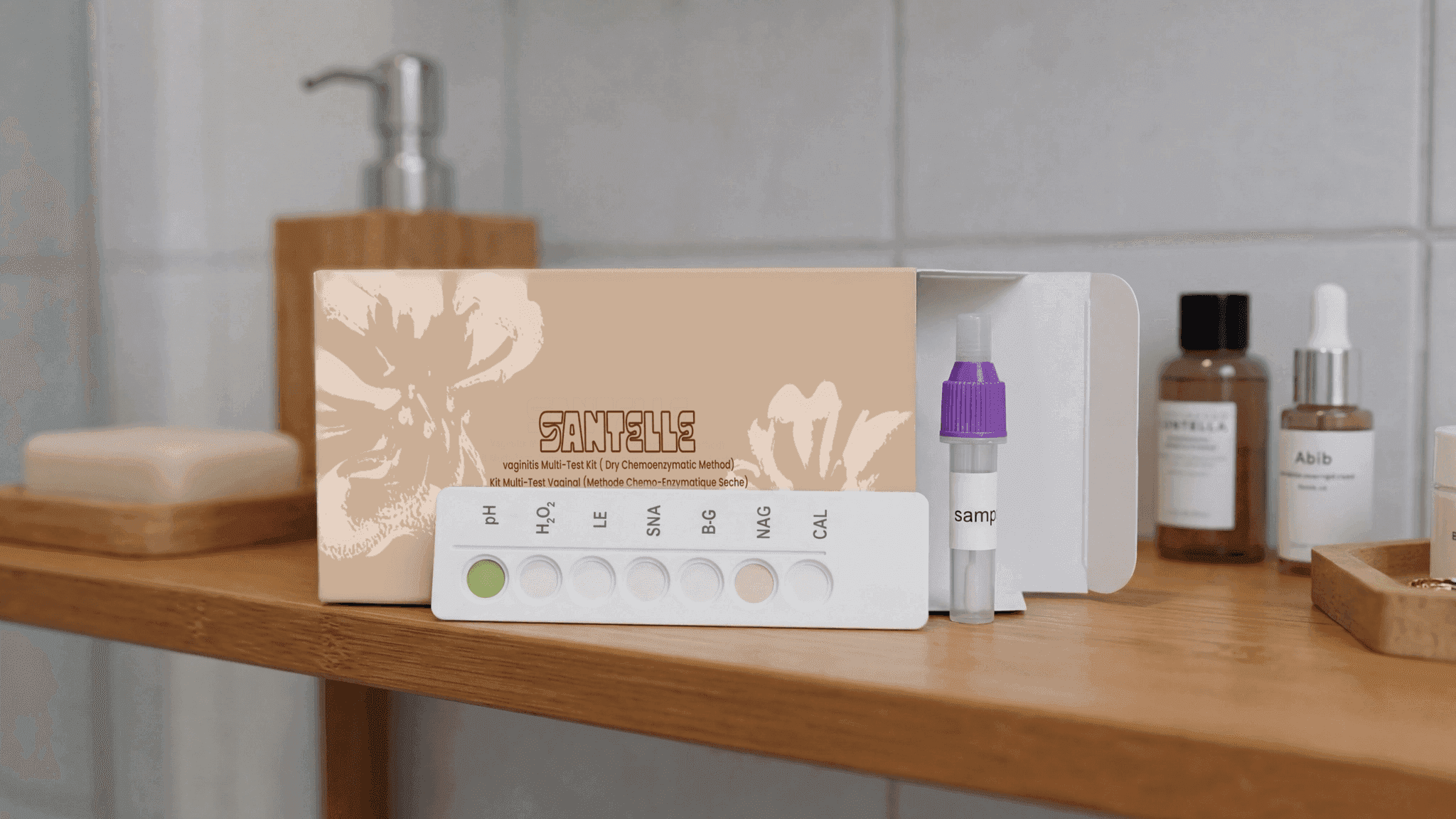
How do you use a vaginal self-test?
It is generally simple and quick to use.
take a vaginal sample using the swab provided
apply the sample to the test area (strip or cassette)
wait a few seconds for the reaction to take place
compare the result with the scale or the reference points shown
Depending on the test, several indicators can be analysed at once, which gives a fuller reading.
Interpretation should always take your symptoms into account.
If in doubt, if discomfort persists or if symptoms are unusual, it is still better to see a health professional.
What should you do after a vaginal self-test?
After a self-test, the main thing is to interpret the results carefully and place them in context.
A few useful reference points:
Watch how the symptoms develop over the following days
Avoid drawing conclusions too quickly from a single result
Cross-check the results against the signs you feel (discomfort, odour, discharge...)
If in doubt, the advice of a health professional remains the reference.
Today, some devices also offer follow-up through an app.
This lets you keep your results, watch how they change over time and better understand the variations linked to your cycle or to everyday factors.
Conclusion: understanding your vaginal balance with a vaginal self-test
Faced with intimate changes, it is normal to have questions. Symptoms are not always easy to interpret, and it can be hard to know how to react.
The vaginal self-test provides a first level of understanding. It does not replace medical advice, but it helps you place what is happening, with concrete reference points.
In practice, it can help you:
Better understand certain symptoms
Avoid hasty interpretations
Decide on the next steps more calmly
Above all it is a tool for regaining confidence in situations that so often cause doubt.
If symptoms persist, are unusual or are troublesome, it remains essential to see a health professional.
But in many situations, better understanding your vaginal balance is already an important first step.
Frequently asked questions
How do you take a vaginal test at home?
An at-home vaginal test is done with a self-test kit. You take a vaginal sample, then analyse it with a strip or a device that changes colour. The result gives you a first indicator of your vaginal balance.
How do you tell a yeast infection from vaginosis?
The difference is not always obvious without analysis. A yeast infection often causes itching and thick discharge. Vaginosis is more often linked to an unusual odour and a higher pH. A vaginal self-test can help point you in the right direction.
Is there a self-test for vaginosis?
Yes. Some self-tests can detect signs consistent with vaginosis, in particular by measuring pH and analysing biomarkers. They do not replace a diagnosis, but they give you a first indication.
Is pH enough to detect a vaginal infection?
No. pH is a useful indicator, but not enough on its own. Some infections, such as a yeast infection, can occur with a normal pH. That is why additional analysis (biomarkers) may be needed.
Is a vaginal self-test reliable?
A vaginal self-test is reliable for giving a first indication, but it does not replace a medical examination. It should be read alongside your symptoms.
Can vaginal pH change naturally?
Yes. pH can vary with your cycle, your hormones or certain external factors. An occasional variation is normal, but if it comes with symptoms it may need closer attention.
Written by
Zineb Sadki
Editorial writing, Santelle
Zineb writes and edits the Santelle blog, on intimate health and the vaginal microbiome.