

Symptoms
Smelly discharge without itching: what does it mean?

Zineb Sadki
Editorial writing, Santelle
Smelly discharge without itching can be surprising and sometimes worrying.
Many women wonder whether a bad vaginal odour necessarily means an infection or a health problem.
In reality, several factors can explain an unusual vaginal odour, even with no irritation.
Understanding where smelly vaginal discharge comes from lets you know whether the situation is normal and identify the cause.
Is vaginal discharge always abnormal?
Vaginal discharge is part of how the body naturally works.
It is produced by the vagina and the cervix and plays an important role in maintaining vaginal health.
In particular, it helps to:
clean the vagina naturally
remove dead cells
keep the mucous membranes hydrated
contribute to the balance of the vaginal microbiome
Its appearance can vary across the menstrual cycle. For example, some women see clear, thin discharge around ovulation, and whiter or creamier discharge at other points in the cycle. These variations are generally normal and do not necessarily mean there is a vaginal infection.
Vaginal discharge accompanied by a strong odour, on the other hand, can sometimes indicate a vaginal imbalance.
Which everyday factors can change vaginal odour?
In some cases, an unusual vaginal odour is not linked to an infection.
Certain everyday factors can temporarily change the vaginal environment and influence the odour of vaginal discharge, even with no irritation.
1. Using perfumed intimate hygiene products
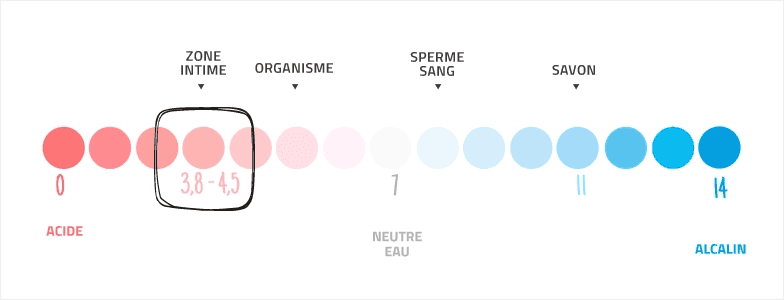
Perfumed soaps, shower gels or intimate wipes can disturb the balance of the vaginal flora. These products can change vaginal pH, which sometimes encourages a stronger vaginal odour.
2. Douching
Douching means cleaning the inside of the vagina with water or specific solutions.
Yet the vagina cleans itself naturally, and these practices can disturb the protective bacteria. That can sometimes encourage a vaginal imbalance and lead to an unusual odour in vaginal discharge.
3. Wearing synthetic underwear for long periods
Synthetic underwear can trap moisture and heat, creating an environment where certain bacteria thrive. This can change intimate odour, even when vaginal discharge stays normal.
4. Hormonal variations
Hormonal changes linked to the menstrual cycle, contraception or stress can also influence the vaginal flora. During these periods, some women notice that their vaginal discharge has a slightly different odour.
Why can these factors change vaginal odour?
All of these have one thing in common: they can disturb the balance of the vaginal flora.
The vagina naturally contains protective bacteria, called lactobacilli, which maintain an acidic vaginal pH. This environment helps limit the growth of other bacteria.
When that balance is disturbed, some bacteria can become more numerous. They then produce compounds responsible for a stronger or unusual vaginal odour.
In these situations, vaginal discharge can keep a normal appearance, but the intimate odour can change. When that odour becomes persistent or very strong, it can indicate a vaginal imbalance, or even bacterial vaginosis.
Bacterial vaginosis: a common cause of smelly discharge
One of the most common causes of smelly discharge is bacterial vaginosis.
It corresponds to an imbalance of the vaginal flora, in which the protective bacteria become less numerous and make way for other bacteria.
This imbalance can cause several characteristic symptoms:
a strong vaginal odour, often described as fishy
greyish or whitish vaginal discharge
a more pronounced odour after sex
Unlike a vaginal yeast infection, bacterial vaginosis rarely causes itching, which can make it less obvious to identify. If smelly vaginal discharge persists, it is advisable to look for the cause.
According to medical studies, around 23% to 29% of women of reproductive age worldwide are affected by bacterial vaginosis, making it one of the most common causes of abnormal vaginal discharge.
How do you know if smelly vaginal discharge is a concern?
Smelly vaginal discharge is not always a sign of infection. However, certain changes can indicate a vaginal imbalance or an infection such as bacterial vaginosis.
To know whether this discharge needs particular attention, it helps to look at several signs.
Signs that may indicate a problem
Some symptoms should alert you:
A strong or persistent vaginal odour, often described as fishy
Greyish, yellowish or greenish discharge
More discharge than usual
An unusual texture to the vaginal discharge
Other symptoms appearing, such as pain, burning or irritation
For example, a fishy odour together with greyish discharge can be a common sign of bacterial vaginosis, a frequent cause of smelly discharge without itching. If these symptoms persist for several days, get worse or become unusual, it is better to see a health professional to identify the cause and receive suitable treatment.
How do I know if I have a vaginal infection?
Some smelly vaginal discharge can be a sign of a vaginal infection, such as bacterial vaginosis. To identify the cause, it helps to look at certain signs: a strong vaginal odour, a change in the colour of the discharge, an unusual texture, or burning or pain appearing.
To go further, some vaginal tests quickly analyse the balance of the vaginal flora. In particular they measure vaginal pH and various biomarkers linked to the vaginal microbiome.
The Santelle test, for example, analyses six vaginal biomarkers, including pH and other indicators of the vaginal microbiome.
This can help detect imbalances such as bacterial vaginosis more easily.

If symptoms persist, it is advisable to see a health professional.
A doctor can carry out a gynaecological examination. They can also analyse the vaginal discharge. This confirms a vaginal infection. They can then propose a suitable treatment.
Frequently asked questions
Why does my discharge smell bad?
Smelly vaginal discharge often appears when the balance of the vaginal flora is disturbed. The most common cause is bacterial vaginosis. The odour can also be influenced by perfumed hygiene products, douching, hormonal variations or certain sexual encounters.
How do you treat smelly discharge?
Treatment depends on the cause. With bacterial vaginosis, a doctor can prescribe an antibiotic treatment. It is also advisable to avoid perfumed products and douching, and to choose cotton underwear.
How do you get rid of a bad odour in the intimate area?
To limit an unusual vaginal odour, use a gentle hygiene product, avoid perfumed products and douching, and wear breathable underwear. If the odour persists, it is better to see a health professional.
What is the treatment for smelly discharge without itching?
Smelly discharge without itching is often linked to bacterial vaginosis. Treatment generally relies on antibiotics prescribed by a doctor once the diagnosis is confirmed.
How do you stop having smelly discharge?
To prevent smelly vaginal discharge, avoid irritating hygiene products and douching, and choose cotton underwear. If the odour persists or keeps returning, it can help to identify the cause. Vaginal tests, such as the Santelle test, analyse certain biomarkers of the vaginal flora to detect an imbalance such as bacterial vaginosis. If in doubt, it is always advisable to see a health professional to confirm the diagnosis and receive suitable treatment.
Written by
Zineb Sadki
Editorial writing, Santelle
Zineb writes and edits the Santelle blog, on intimate health and the vaginal microbiome.