
Infections
How to treat vaginitis: understanding and treating recurrences

Yasmina Akni
Press relations and writing, Santelle
How to treat vaginitis: understanding, treating and avoiding recurrences
Vaginitis affects almost every woman at some point in her life.
Itching, burning, unusual discharge: these symptoms deserve a clear, tailored answer, not just generic solutions.
This guide explains how to treat vaginitis and, above all, how to prevent recurrences so it does not come back.
What is vaginitis?
Vaginitis is an inflammation of the vagina, sometimes extending to the vulva, in which case we speak of vulvovaginitis.
It can be infectious in origin (fungus, bacteria, parasite) or non-infectious (irritation, allergy, hormonal imbalance).
What is important to understand is that not all vaginitis is alike and it is not all treated the same way.
Making the right diagnosis is the first step, which is why seeing a doctor before starting treatment, even with a recurrence, remains the reference recommendation.
Worth knowing
The vagina is a self-cleaning organ. It has its own microbiome, dominated by lactobacilli that maintain a protective acidic pH.
When that balance breaks down, infections can set in. Good vaginal hygiene therefore means never washing inside the vagina, only the external area.
The different types of vaginitis
There are several forms of vaginitis, each with its causes, its characteristic symptoms and its specific treatment.
Vaginal yeast infection
This is an infection caused by a fungus, Candida albicans, which lives naturally in the vagina in very small quantities.
The problem arises when it multiplies too much, often after a course of antibiotics (which also destroy the "good" bacteria that keep it in check), during periods of intense stress, or with hormonal changes such as pregnancy.
The result: itching, thick white discharge and burning. Three women in four will have at least one in their lifetime.
Bacterial vaginitis
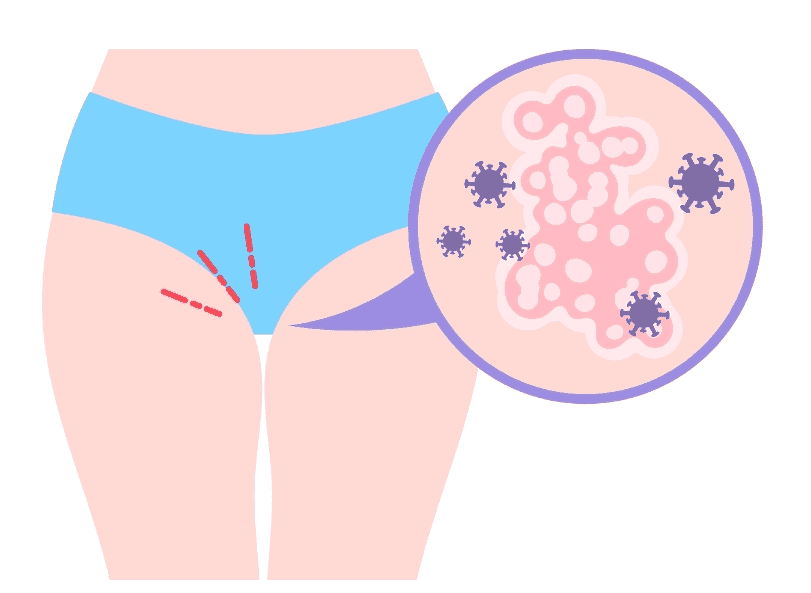
The vagina naturally hosts millions of protective bacteria. When that balance is disrupted, because of douching, a change of partner or antibiotics, some less friendly bacteria take over.
This is not a sexually transmitted infection, but a dysbiosis: rather like when your gut microbiome is disturbed.
The most characteristic sign is a fishy odour, especially after sex. It can also cause no symptoms at all.
Atrophic vaginitis
At menopause, oestrogen production falls. These hormones played a key role in keeping the vaginal mucous membrane hydrated, supple and resilient.
Without them, the vaginal walls thin and dry out, like skin lacking moisturiser, but from the inside.
This causes burning, dryness, and sometimes pain during sex. It is not an infection, but a physiological change.
And contrary to received wisdom, there are very effective treatments.
Trichomoniasis
This one is caused by a microscopic parasite, Trichomonas vaginalis, transmitted through sex.
It is distinguished by yellow-green, frothy discharge, often with an unpleasant odour.
What you need to know: your partner must be treated at the same time, even without symptoms, otherwise you risk reinfecting each other.
Recognising the symptoms by type
Some symptoms are common to all forms of vaginitis, itching, burning, unusual discharge, but the nature and appearance of the discharge vary with the cause. This table helps you get your bearings.
Type | Vaginal discharge | Odour | Other signs |
|---|---|---|---|
Yeast infection | White, thick, cottage-cheese-like or curd-like | Little or no odour | Intense itching, burning, redness of the vulva, pain during sex |
Bacterial vaginosis | Greyish or yellowish, thin and heavy | Fishy odour, especially after sex | Little or no itching, sometimes no symptoms at all (50% of cases) |
Atrophic | Reduced or absent, significant dryness | No particular odour | Pain during sex, burning, repeated urinary infections |
Trichomoniasis | Yellow-green, frothy and heavy | Unpleasant, sometimes acrid odour | Intense irritation, pain when urinating, discomfort during sex |
These symptoms can overlap. A woman may think she has a yeast infection when she has bacterial vaginosis, and vice versa.
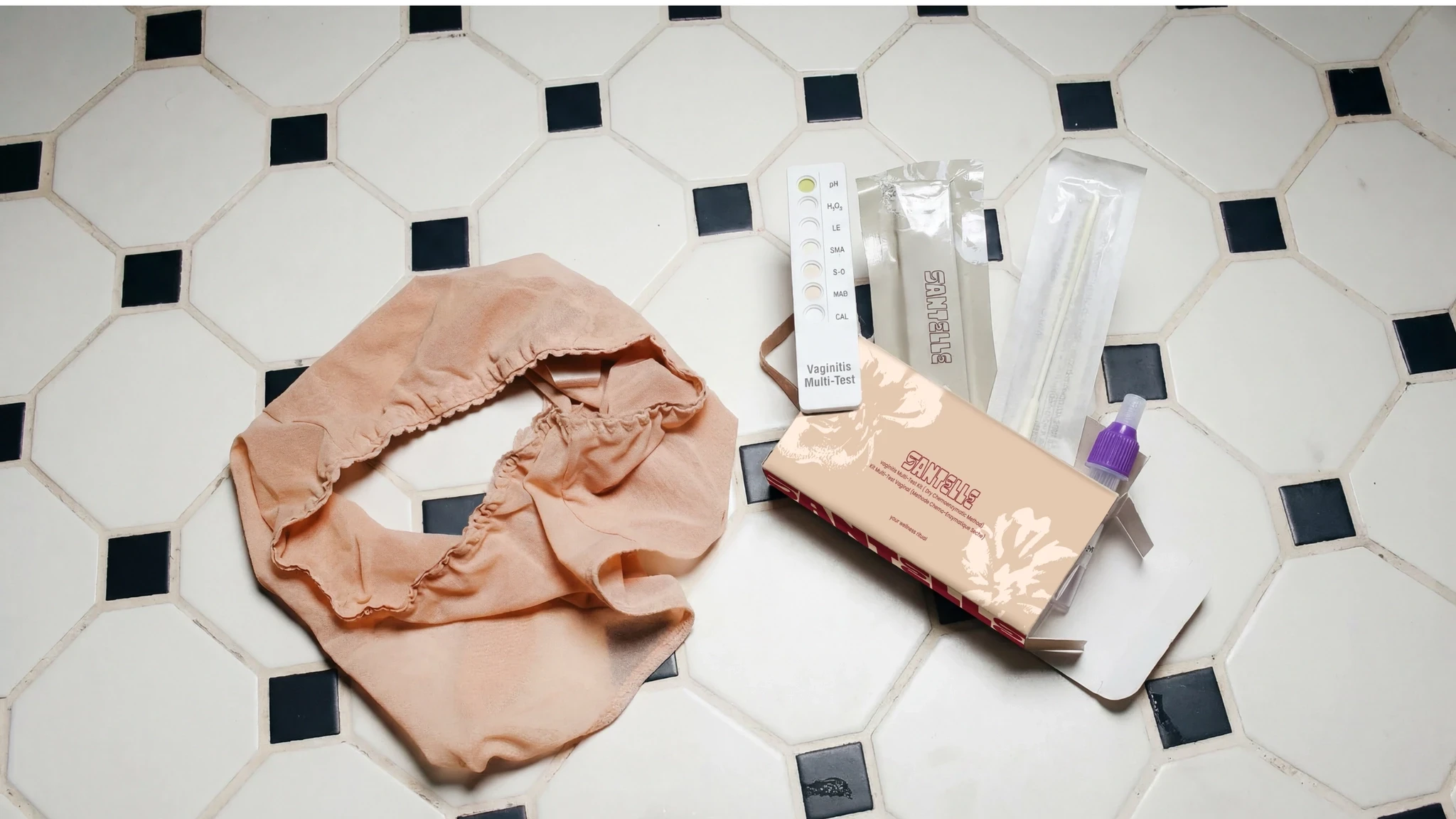
Since several forms of vaginitis have similar symptoms, a vaginal test such as Santelle can be a useful aid for better understanding where the symptoms come from.
Treating with the wrong medicine delays recovery and can make the vaginal imbalance worse.
How to treat a vaginal yeast infection
Vaginal yeast infection (vulvovaginal candidiasis) is the most common infectious vaginitis. It is treated effectively with antifungals, available in local form (pessaries, creams) or orally.
Local treatment: antifungal pessaries and creams
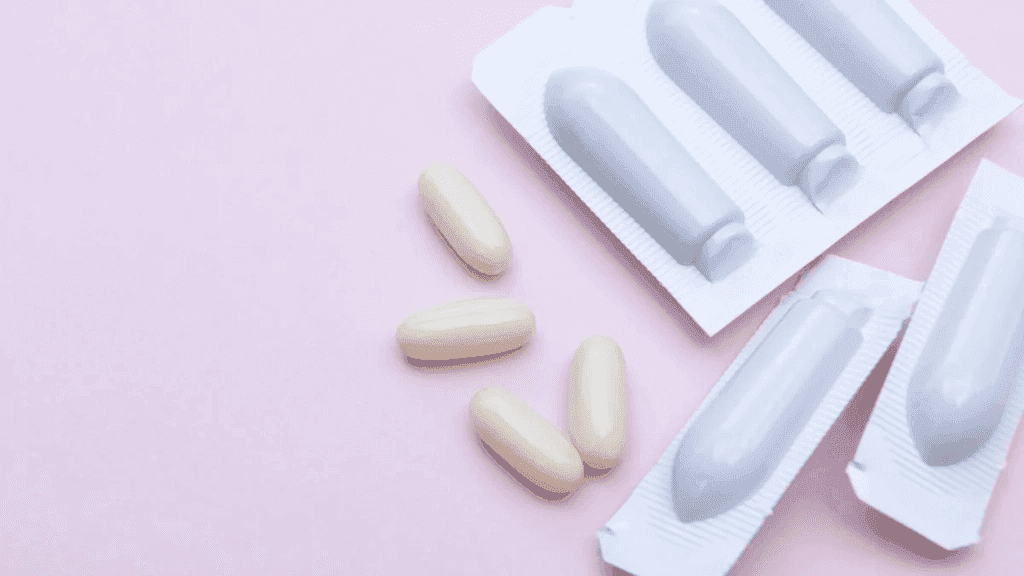
For an uncomplicated yeast infection, antifungal pessaries available without a prescription are the first-line treatment. They contain clotrimazole, econazole or fenticonazole.
Single-dose sustained-release pessary (econazole SR, Lomexin 600mg, MycoHydralin 500mg): a single application in the evening at bedtime
A 3-day course for classic forms: pessary plus vulval cream, preferably in the evening
Always combine an intravaginal pessary and an antifungal cream to treat both the vagina and the vulva
Thick discharge after treatment is normal: the pessary melts with body heat
Note: pessaries can reduce the effectiveness of latex condoms during treatment
Oral treatment on prescription
Fluconazole 150 mg as a single oral dose is prescribed by a doctor.
Its advantage: it acts on the vagina and the vulva at the same time through systemic action, avoiding the irritation linked to prolonged use of creams. It is contraindicated during pregnancy.
For recurrent yeast infections (more than 4 episodes a year)
If you suffer from repeated yeast infections, do not settle for treating each episode in isolation.
Your doctor may prescribe a maintenance treatment over several months based on weekly fluconazole, which reduces the frequency of relapses by more than 80% after six months of continuous treatment.
A vaginal swab will also confirm that Candida albicans really is the cause, rather than a resistant species.
How to treat bacterial vaginosis
Bacterial vaginosis is a bit like when the "good" bacteria in your vagina lose ground to others that are less benign.
The result: unusual discharge, sometimes an unpleasant odour. The good news is that it responds well to treatment. The less good news: it often recurs.
What does the treatment actually involve?
Your doctor will prescribe an antibiotic, most often metronidazole, to be taken for 7 days.
It comes in two forms depending on what suits you best: tablets to swallow, or a gel applied directly in the vagina.
If you do not tolerate metronidazole well, there are other options such as clindamycin, in capsules or as a vaginal cream.
Your partner does not need treatment: vaginosis is not a sexually transmitted infection.
Why are recurrences so frequent?
This is one of the most common frustrations: bacterial vaginosis recurs in more than 50% of cases within six months of treatment.
This tendency is explained by how hard it is to restore a lastingly lactobacillus-dominant flora.
To prevent relapses, your doctor may consider a suppressive treatment, or vaginal probiotics based on Lactobacillus rhamnosus and Lactobacillus reuteri, which several studies show to be effective in preventing recurrences.
Natural relief: what can help alongside treatment
These steps do not replace medical treatment, but they can reduce discomfort and support recovery.
And some are good habits to keep long term to avoid recurrences.
Suitable intimate hygiene
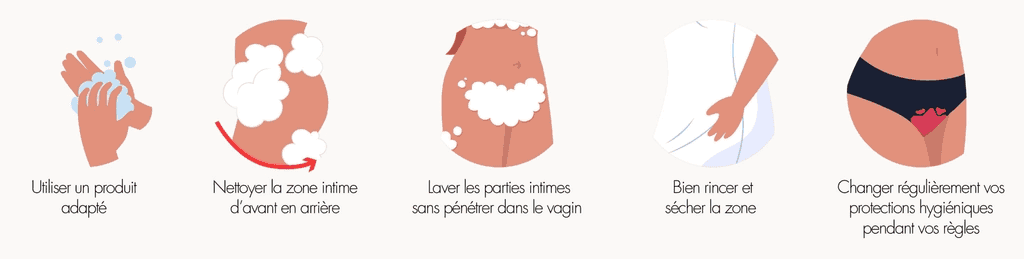
The vagina cleans itself. Your role is limited to the external area (the vulva), with a gentle, fragrance-free wash whose pH is between 4 and 5.5.
The products we think of as "hygienic" (ordinary soaps, perfumed wipes, intimate deodorants, douches) actually do the opposite: they destroy the protective bacteria and weaken the mucous membrane. One external wash a day is plenty.
Aloe vera gel
If the vulva is irritated, red or uncomfortable, a pure aloe vera gel, free of preservatives and fragrance, can soothe locally.
It has gentle anti-inflammatory properties. To be applied externally only, never inside the vagina. It treats nothing, but it relieves.
Dietary probiotics
Plain fermented yoghurt, kefir, raw sauerkraut: these foods rich in lactic ferments support your overall microbiome.
It is a maintenance habit, not a remedy. But combined with medical treatment, it can help restore balance faster.
Preventing vaginitis and avoiding recurrences
The good news: many infectious forms of vaginitis can be prevented or spaced out through simple everyday habits.
What is best to do
Wear cotton underwear that is not tight. Synthetic materials create heat and moisture, ideal ground for infection.
Always wipe from front to back after using the toilet, so as not to bring intestinal bacteria towards the vagina.
Use a condom with a new partner, at least until you know each other's STI status.
Change sanitary protection regularly and prefer fragrance-free pads or liners.
Tell your doctor if you are prescribed antibiotics. They can co-prescribe an antifungal to protect your vaginal flora during treatment.
What is best to avoid
Internal douching, even with plain water. The vagina cleans itself, and internal rinsing destroys its protective flora.
Perfumed products on intimate areas: ordinary soaps, sprays, wipes. They disturb vaginal pH.
Very tight trousers and synthetic materials day to day. Ventilation matters.
Staying too long in a wet swimsuit. Prolonged heat and moisture encourage fungal growth.
When should you seek advice without delay?
Vaginitis is not an emergency in most cases, but some situations warrant a prompt consultation.
See your doctor or gynaecologist if this is your first episode, if you are pregnant (some vaginal infections can cause premature birth), if you have a fever or lower abdominal pain (the infection could travel up towards the uterus), if the treatment has not worked after 7 days, or if you have more than 4 episodes a year.
That last point matters: frequent recurrences are not inevitable.
They signal that the assessment needs to go further and that a longer-term treatment is probably needed. Your doctor is there for that.
And if you are post-menopausal with troublesome vaginal symptoms: say so. There are very well tolerated local treatments that genuinely change quality of life. Too many women carry on suffering in silence when a simple solution exists.
Frequently asked questions
Can vaginitis be treated without a prescription?
Yes, in the case of an uncomplicated vaginal yeast infection whose symptoms you recognise (after a first medical diagnosis). Antifungal pessaries based on clotrimazole or econazole are available in pharmacies without a prescription. Bacterial vaginosis or trichomoniasis, however, always need a prescription, because the appropriate antibiotics are not sold over the counter.
How long does vaginitis last with treatment?
With suitable treatment, a vaginal yeast infection usually clears in 3 to 7 days. Treated bacterial vaginosis resolves within a few days. Symptoms can persist for 1 to 2 days after treatment starts before improving, which is normal. If nothing changes after 7 days, seek advice.
What is the difference between vaginitis and vaginosis?
Vaginitis is a general term for any vaginal inflammation, whatever the cause. Bacterial vaginosis is a specific type of vaginitis caused by an imbalance of the vaginal flora, where protective lactobacilli are replaced by anaerobic bacteria. It is the most common form of vaginal infection in adult women.
Can vaginitis be passed to a partner?
It depends on the type. A vaginal yeast infection is not an STI, but in rare cases it can be passed on during sex. Bacterial vaginosis does not require treating the partner. Trichomoniasis, however, is a sexually transmitted infection: both partners must be treated at the same time to avoid reinfection.
How do you treat vaginitis naturally?
Natural remedies can relieve discomfort alongside medical treatment, but cannot cure an infection on their own. Aloe vera gel applied externally can soothe vulvar itching. Probiotics (vaginal or oral) can support the restoration of the flora. Gentle, suitable hygiene is essential. Vaginal applications of yoghurt, vinegar or garlic, on the other hand, are not validated and can make things worse.
Written by
Yasmina Akni
Press relations and writing, Santelle
Yasmina looks after press relations and writing at Santelle.