

Symptoms
Vaginal Swab Test: Complete Guide to Purpose, Procedure & Results

Zineb Sadki
Editorial writing, Santelle
A vaginal swab is one of the most common gynecological exams performed today.
The procedure involves collecting a small sample of vaginal discharge to analyze the microorganisms present and pinpoint the cause of discomfort or infection.
A doctor may order a vaginal swab when a woman experiences unusual symptoms, as part of STI (sexually transmitted infection) screening, during pregnancy, or following a course of treatment.
The good news? It's a simple, quick procedure that takes just a few minutes and, in the vast majority of cases, is completely painless.
What is a vaginal swab?
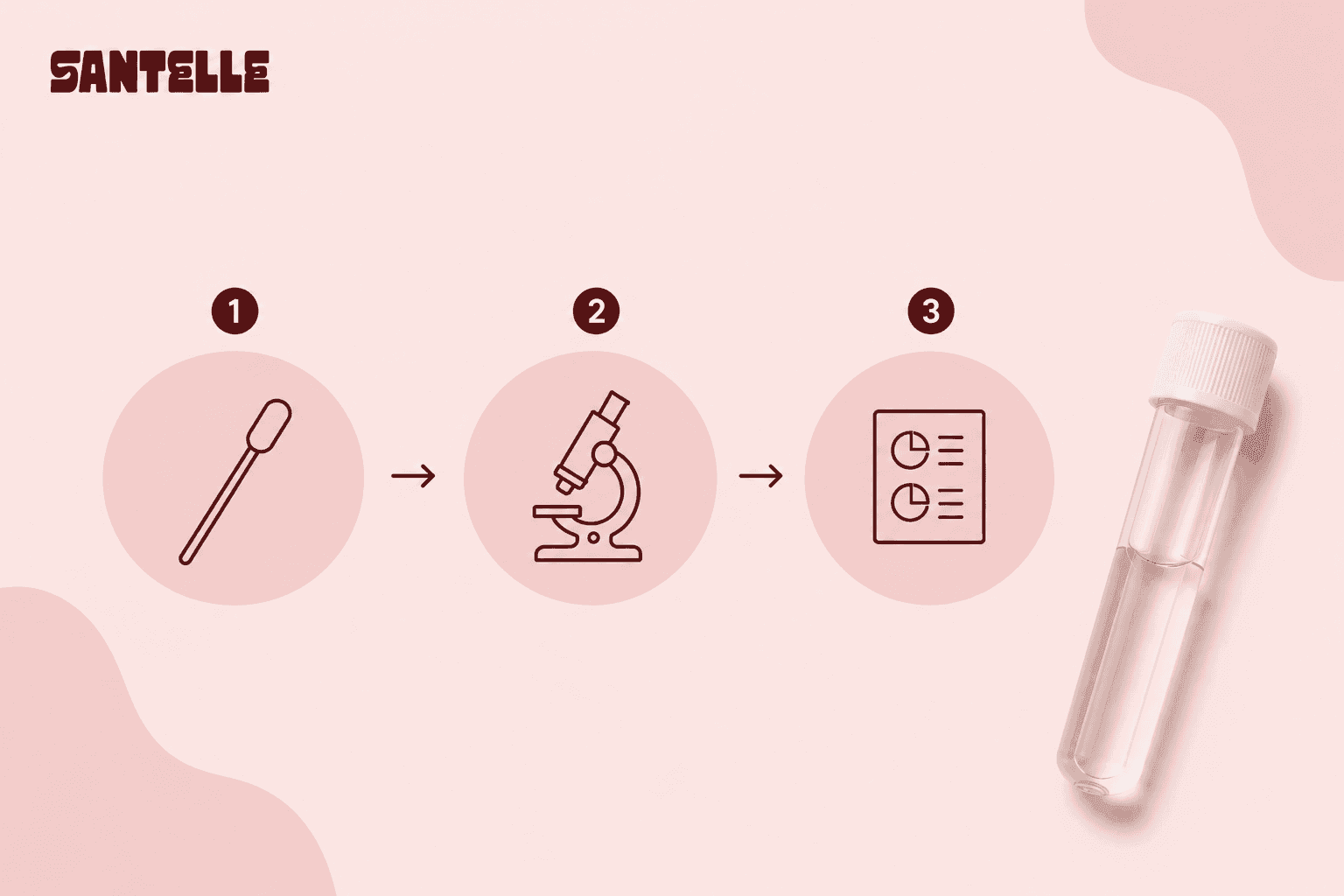
A vaginal swab is a medical procedure that involves collecting a sample of vaginal secretions using a sterile swab, a thin instrument similar to a medical-grade cotton swab.
The sample is then sent to a laboratory for analysis to precisely identify the microorganisms present in the vagina: bacteria, fungi, viruses, or parasites.
It is the only reliable method to accurately diagnose the root cause of vaginal discomfort, since each type of infection requires a specific course of treatment.
A vaginal swab can detect:
Bacteria responsible for bacterial vaginosis or other infections
Fungi that cause yeast infections (primarily Candida)
Viruses such as HPV
Parasites like Trichomonas
A simple imbalance in the vaginal flora, even without noticeable symptoms
Certain sexually transmitted infections (STIs): Chlamydia, gonorrhea, and more
What is tested in a vaginal swab?
Not all causes of vaginal discomfort are treated the same way.
A yeast infection is treated with antifungals, bacterial vaginosis requires targeted antibiotics, and an STI like Chlamydia calls for an entirely different treatment protocol.
Without a precise identification of the underlying pathogen, there's a real risk of prescribing the wrong treatment, and unnecessarily prolonging symptoms in the process.
That's exactly why a vaginal swab matters: it pinpoints the root cause so the right treatment can be started from day one.
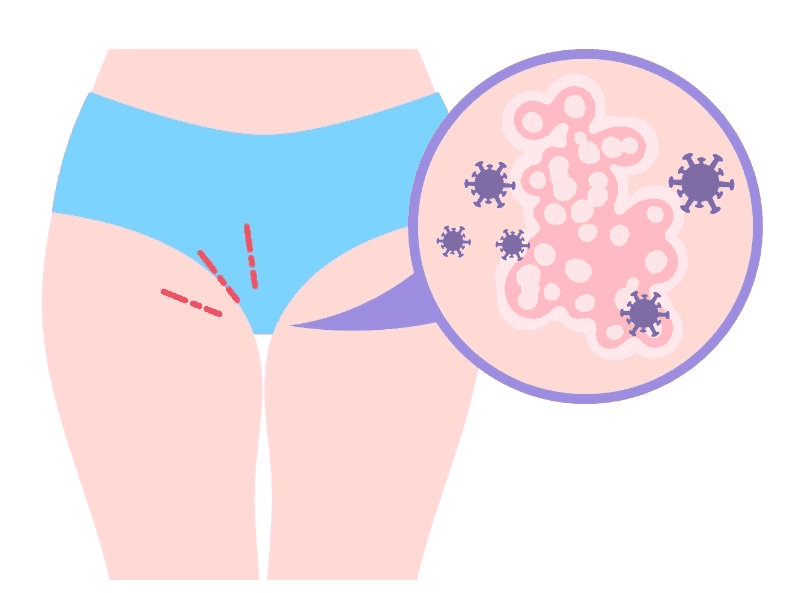
Why is your doctor ordering a vaginal swab test?
There are many valid reasons your doctor may order a vaginal swab — and none of them should cause alarm.
You're experiencing uncomfortable symptoms Unusual discharge, itching, burning, or an unfamiliar odor.
A vaginal swab is the most reliable way to identify exactly what's going on so you can get the right treatment on the first try — no guesswork involved.
You want to get tested for STIs Whether it's after unprotected sex or as part of a routine health checkup, a vaginal swab can screen for infections like Chlamydia, gonorrhea, Trichomonas, or HPV.
Getting tested is an act of self-care — and care for your partner.
You're pregnant In the late stages of pregnancy (around 34–38 weeks), a swab is typically recommended to screen for Group B Streptococcus (GBS).
This bacteria is completely harmless to you, but it can be passed on to the baby during delivery — which is why detecting it early allows the care team to take the right precautions.
You're finishing up a course of treatment After a round of antibiotics or antifungal medication, a vaginal swab can confirm that the infection has fully cleared. A reassuring step to have behind you!
As part of a fertility workup Before undergoing assisted reproductive technology (ART) procedures, a vaginal swab is often performed to make sure no underlying infection could complicate the process.
How is a vaginal swab performed at the lab?
A vaginal swab is performed by a licensed healthcare professional — a pathologist, nurse, or lab technician. Here's exactly what happens, step by step:
Check-in: Depending on the lab, you may not need an appointment. You can wash normally that morning (external cleansing with water only), but avoid any vaginal douching.
Getting set up: You'll lie down on the exam table with your knees bent — just like during a standard gynecological visit.
The speculum: A small medical instrument is gently inserted into the vagina to allow a clear view of the vaginal walls. It may sound intimidating, but it's over very quickly.
The swab itself: One or two sterile swabs are gently passed along the vaginal walls and/or the cervix. For the vast majority of women, it's completely painless — at most, a slight feeling of pressure.
And that's it! The swabs are placed in a transport tube and sent to the lab for analysis.
The entire procedure takes about five minutes from start to finish.
Simple things to keep in mind before your vaginal swab
To ensure your results are truly accurate, follow these straightforward guidelines:
No local treatments (vaginal suppositories, creams, or vaginal gels) for 3 to 5 days before the exam
No ongoing antibiotic use — the swab should be done before starting a course of antibiotics, or at least 8 to 10 days after finishing one
No sexual intercourse the night before
Avoid scheduling during your period if possible — blood can interfere with the analysis
On the day of the procedure, skip any intravaginal soap or vaginal douching — a simple external rinse with water is all you need
Following these precautions helps ensure nothing skews your results and that the analysis gives a truly accurate picture of what's going on.
How does a home vaginal test work?
Experiencing discomfort, itching, or unusual discharge, but not quite ready to book a doctor's appointment just yet?
Today, at-home vaginal swab tests are available, delivering a first-line assessment in about ten minutes to help you decide whether a consultation is actually needed.
Standard at-home tests are often limited to measuring vaginal pH.
Newer devices go further by analyzing multiple biological markers at once, making it possible to distinguish between the main causes of vaginal discomfort: yeast infections, bacterial vaginosis, or aerobic vaginitis.
One such option is Santelle, an at-home test based on the analysis of six scientifically validated biomarkers, all from a single swab.
Biomarker | What It Tells You |
|---|---|
pH | Measures vaginal acidity. An elevated pH often signals an imbalance in vaginal flora. |
Hydrogen Peroxide (H₂O₂) | Indicates whether the beneficial protective bacteria (lactobacilli) are present in healthy levels. |
Leukocyte Esterase (LE) | Detects the presence of white blood cells — a sign of inflammation or infection. |
Sialidase (SNA) | An enzyme produced by certain bacteria; elevated levels point toward bacterial vaginosis. |
Beta-Glucuronidase (β-G) | A marker for aerobic vaginitis, an infection caused by a different type of bacteria than those responsible for vaginosis. |
N-Acetyl-Glucosaminidase (NAG) | An enzyme associated with the presence of fungi, characteristic of a vaginal yeast infection. |
Once the test is complete, the Santelle app provides a clear, personalized breakdown of your results.

When an at-home test isn't enough
The Santelle at-home test is an excellent first-step tool: it helps you understand what's going on and decide whether a doctor's visit is needed.
That said, if you experience recurring infections, severe symptoms, or a positive result, a lab-based vaginal swab remains essential, it's the only way to precisely identify the pathogen responsible and get a targeted course of treatment.
To put it simply: when symptoms appear, the ideal path is to start with an at-home test for a quick initial read, then follow up with a doctor's visit and a lab vaginal swab if the result comes back positive or symptoms persist.
When to expect results and how to read them
Vaginal swab results are typically available within 24 to 72 hours, depending on the type of analysis requested, bacterial culture, PCR testing for STIs, or fungal screening.
Results are sent directly to your prescribing physician, who will walk you through what they mean and recommend a treatment plan if needed.
There are two possible outcomes:
Nothing abnormal detected: your vaginal flora is healthy. No treatment necessary.
A pathogen is identified: the lab will specify exactly which microorganism was found and, if relevant, provide an antibiogram — a report listing which antibiotics are effective against that particular pathogen. This allows your doctor to prescribe precisely the right treatment from the start.
No need to panic if something does show up, that's the whole point of getting tested in the first place.
In the vast majority of cases, a vaginal imbalance or infection is very treatable once it's been properly identified.
Pap Smear vs. Vaginal Swab: What's the Difference?
These two gynecological exams are often confused since they can be performed during the same appointment. However, they serve completely different purposes and address distinct medical objectives.
Pap Smear (Cervical Cytology) | Vaginal Swab | |
|---|---|---|
Purpose | Cervical cancer screening | Detection of infections and STIs |
What's analyzed | Cervical cells | Microorganisms present (bacteria, viruses, fungi) |
Type of analysis | Cytology (cell health) | Microbiology (culture, PCR) |
Frequency | Every 3 to 5 years for women aged 25 to 65 | As prescribed, based on symptoms |
Bottom line: a Pap smear monitors cell health to screen for cervical cancer, while a vaginal swab tracks down infections. In some cases, both can be performed at the same appointment.
Frequently asked questions about vaginal swabs
What is a gynecological swab?
It's a broad term that covers any sample collected from the female genital area — vagina, cervix, or vulva. In everyday use, it's often used interchangeably with "vaginal swab."
Does a vaginal swab hurt?
In the vast majority of cases, no. You may feel a slight pressure when the speculum is inserted, but the exam itself is very brief.
If you're feeling anxious, let the healthcare provider know beforehand — it genuinely helps to relax.
Is it safe to get a vaginal swab during pregnancy?
Absolutely, there's no risk to the baby. In fact, it's routinely recommended in the third trimester to screen for Group B Streptococcus (GBS).
Do I need a prescription for a vaginal swab?
Generally yes, if you want the exam covered by health insurance. A prescription can be issued by a primary care physician, a gynecologist, or a midwife.
What if bacteria show up in my results?
Finding bacteria in the vagina is completely normal, the vaginal flora naturally contains them. What matters is whether harmful pathogens are present in significant amounts.
Your doctor will interpret the results in the context of your symptoms.
Can I test myself at home?
Yes! At-home solutions like Santelle let you analyze 6 biomarkers in just 10 minutes — right from the comfort of your home. It's a great first step before deciding whether to see a doctor.
How long after unprotected sex should I wait before getting tested?
It depends on the STI. For chlamydia and gonorrhea, waiting at least 7 days is generally recommended. Your doctor will advise you based on your specific situation.
Frequently asked questions
What is a gynaecological swab?
This is a broad term for any sample taken from the female genital area (vagina, cervix, vulva). In practice it is often used as a synonym for a vaginal swab.
Does it hurt?
No, in the vast majority of cases. You may feel slight pressure as the speculum is inserted, but the examination really is very short. If you feel anxious, do say so to the professional taking the sample, it can help you relax.
Can a vaginal swab be taken during pregnancy?
Yes, with no risk to the baby. It is in fact recommended late in pregnancy to screen for streptococcus.
Do you need a prescription for a vaginal swab?
Generally yes, for the test to be reimbursed by the health system. It can be issued by a GP, a gynaecologist or a midwife.
What if bacteria are found in the results?
The presence of bacteria in the vagina is entirely normal, the vaginal flora naturally contains them. What matters is the presence of pathogenic organisms in significant quantities. Your doctor will interpret the results in light of your symptoms.
Can I do a vaginal self-test at home?
Yes. Solutions such as Santelle analyse 6 biomarkers from home in 10 minutes. It is ideal for a first indication, before seeing a professional if needed.
How long after unprotected sex can you get tested?
It depends on the STI. For chlamydia and gonorrhoea, it is advisable to wait at least 7 days. Your doctor will guide you according to your personal situation.
Is a swab possible if I am not sexually active?
Yes, absolutely. The professional will adapt by using a smaller speculum or offering a finer swab. There is no contraindication.
Written by
Zineb Sadki
Editorial writing, Santelle
Zineb writes and edits the Santelle blog, on intimate health and the vaginal microbiome.