
Yasmina Akni
Nearly 1 in 3 women of reproductive age will experience bacterial vaginosis at some point in their lives, and in most cases, an imbalanced vaginal pH is the underlying trigger.
Yet most women have never been told what their vaginal pH should actually be, or why it matters.
Vaginal pH is a measure of how acidic or alkaline your vaginal environment is. When it stays within its healthy range, it acts as your body's first line of defense against infections.
When it shifts, even slightly, symptoms can follow quickly.
In this guide, you'll learn:
What vaginal pH is and why it matters
What the normal range looks like at every life stage
What disrupts it (and what doesn't)
How to recognize when something is off
How to test your pH at home
Evidence-based ways to restore and maintain balance
What Is Vaginal pH?
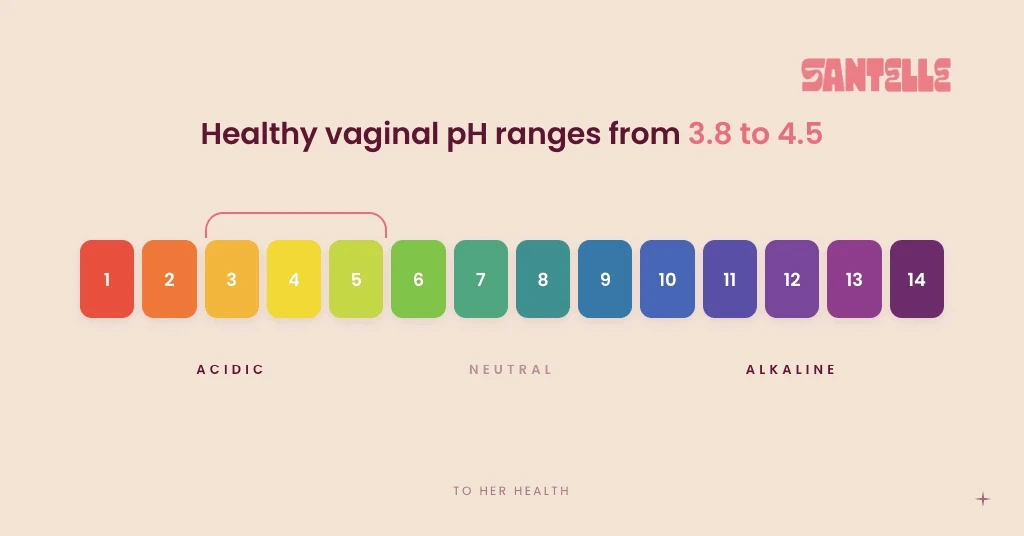
You've probably seen "pH" on skincare labels or pool test kits. It's simply a measure of how acidic or alkaline something is — on a scale from 0 to 14. Anything below 7 is acidic, anything above is alkaline, and 7 is neutral, like plain water.
Your vagina is naturally acidic, and that's a good thing.
That acidity comes from beneficial bacteria called Lactobacillus, which live in your vagina and work around the clock to protect it.
They feed on natural sugars in your vaginal cells and produce lactic acid, which is what keeps your pH low.
Why does that matter? Because the bacteria behind infections like BV, yeast infections, and some STIs can't survive in an acidic environment. They need things to be more neutral to grow and spread.
What Is a Normal Vaginal pH Level?
For women of reproductive age, a healthy vaginal pH is 3.8 to 4.5.
Once pH rises above 4.5, the protective environment starts to weaken, and harmful bacteria find it much easier to take hold. In fact, pH above 4.5 is one of the four clinical criteria doctors use to diagnose BV.
But vaginal pH isn't a fixed number. It shifts across your menstrual cycle, your life stages, and even throughout the day. What matters is that your baseline stays consistently within the healthy range for where you are in life:
Life Stage | Normal pH Range | Why |
|---|---|---|
Before puberty | 6.0 – 7.0 | Low estrogen; Lactobacillus not yet active |
Reproductive age (15–49) | 3.8 – 4.5 | Lactobacillus-dominant microbiome |
During your period | Up to 7.4 | Menstrual blood is alkaline — temporary rise |
Pregnancy | 3.8 – 4.5 | High estrogen keeps Lactobacillus strong |
Perimenopause | 4.5 – 5.0 | Estrogen declining; protective bacteria decreasing |
Post-menopause | 4.5 – 6.0 | Low estrogen; reduced protective bacteria |
The rise during your period is temporary, pH usually returns to baseline within a day or two after bleeding stops.
Post-menopause, a higher pH is physiologically normal, though it does increase susceptibility to dryness and irritation.
What Can Change Your Vaginal pH?
1. Your Period
Menstrual blood has a pH of around 7.4 — well above the healthy vaginal range.
While this temporary rise is completely normal, leaving a tampon or pad in too long extends the exposure window and may prolong the disruption.
2. Semen and Unprotected Sex
Semen is alkaline (pH 7.2–8.0) by design — sperm need a less acidic environment to survive.
After unprotected sex, vaginal pH rises temporarily. In most women, Lactobacillus restores acidity within a few hours. But frequent unprotected sex without recovery time can make sustained pH elevation more likely, which is partly why BV rates are higher in sexually active women.
4. Antibiotics
Antibiotics don't discriminate. They wipe out harmful bacteria and your beneficial Lactobacillus along with them.
A single course of broad-spectrum antibiotics can significantly deplete your vaginal flora, leaving the door open for BV or yeast infections, which is why both are so common after antibiotic treatment.
4. Douching and Scented Products
Your vagina is self-cleaning. It doesn't need to be rinsed, perfumed, or freshened.
Douching — whether with water, vinegar, or store-bought products, washes away the good bacteria that keep your vagina protected, and if the product is alkaline, it directly raises your pH too. Decades of research consistently link douching to higher rates of BV.
The same applies to scented soaps, gels, bubble baths, and sprays used near the vaginal opening. Plain warm water on the external vulva is all you need. Your vagina handles the rest on its own.
6. Hormonal Changes
Estrogen is what keeps Lactobacillus thriving. It stimulates vaginal cells to produce the sugars that Lactobacillus converts into protective acid.
When estrogen drops — during perimenopause, menopause, postpartum recovery, or with certain hormonal contraceptives — Lactobacillus populations thin out and pH rises.
7. Stress and Sleep
Chronic stress suppresses estrogen production, which indirectly reduces Lactobacillus and raises pH over time. This is one of the more overlooked triggers, especially for women with recurring BV and no other obvious cause.
8. Diet
The evidence here is still emerging, but high sugar intake is linked to yeast overgrowth, and probiotic-rich foods (yogurt, kefir, fermented vegetables) may modestly support a healthier vaginal microbiome.
Diet alone won't correct a significant imbalance, but it can be a contributing factor.
Signs Your Vaginal pH Might Be Off
pH imbalance doesn't always cause obvious symptoms. When it does, here's what to look for:
Symptom | What It Could Suggest |
|---|---|
Gray, white, yellow, or green discharge | BV, yeast infection, or STI |
Fishy or unpleasant odor, especially after sex | Classically associated with BV |
Itching or burning around the vaginal opening | pH imbalance, yeast infection, or irritation |
Burning during urination | Can accompany vaginal or urinary infections |
Pain or discomfort during sex | Dryness, infection, or pH disruption |
None of these confirm a specific diagnosis on their own, and many overlap between conditions.
That's exactly where a pH test becomes useful.
Does Vaginal pH Affect Your Risk of Infection?
Your pH level doesn't just reflect what's happening inside your vagina. In many cases, it's actually what's driving it.
Bacterial Vaginosis (BV) is the infection most directly tied to pH. When pH rises above 4.5, harmful bacteria overgrow and push out Lactobacillus. Even after antibiotic treatment, BV comes back in many women — because antibiotics kill the bad bacteria but don't rebuild the good ones.
Yeast infections work differently. Candida actually thrives in more acidic environments, so yeast infections typically occur when pH is normal or even lower than 4.5. This is why a home pH test is so useful: if your symptoms feel like an infection but your pH is normal, BV is unlikely — a yeast infection is a much better guess. Getting these two mixed up is extremely common, and treating one when you have the other does nothing.
Trichomoniasis is an STI that closely mimics BV — same elevated pH above 4.5, similar symptoms (discharge, odor, irritation). The key difference: it's sexually transmitted, requires a specific prescription treatment, and both partners must be treated or reinfection will keep happening. It can only be confirmed with a lab test.
If you're pregnant: elevated vaginal pH in early pregnancy is linked to a higher risk of preterm birth. Some OBs now check vaginal pH as part of prenatal care, especially in women with a history of early delivery. If something feels off, don't wait — mention it at your next appointment.
How to Test Your Vaginal pH at Home
Home pH testing is simple, non-invasive, and can give you genuinely useful information — especially for telling BV and yeast infections apart before you decide what to do.
A vaginal pH test strip or swab-based test. These are available at pharmacies and online.
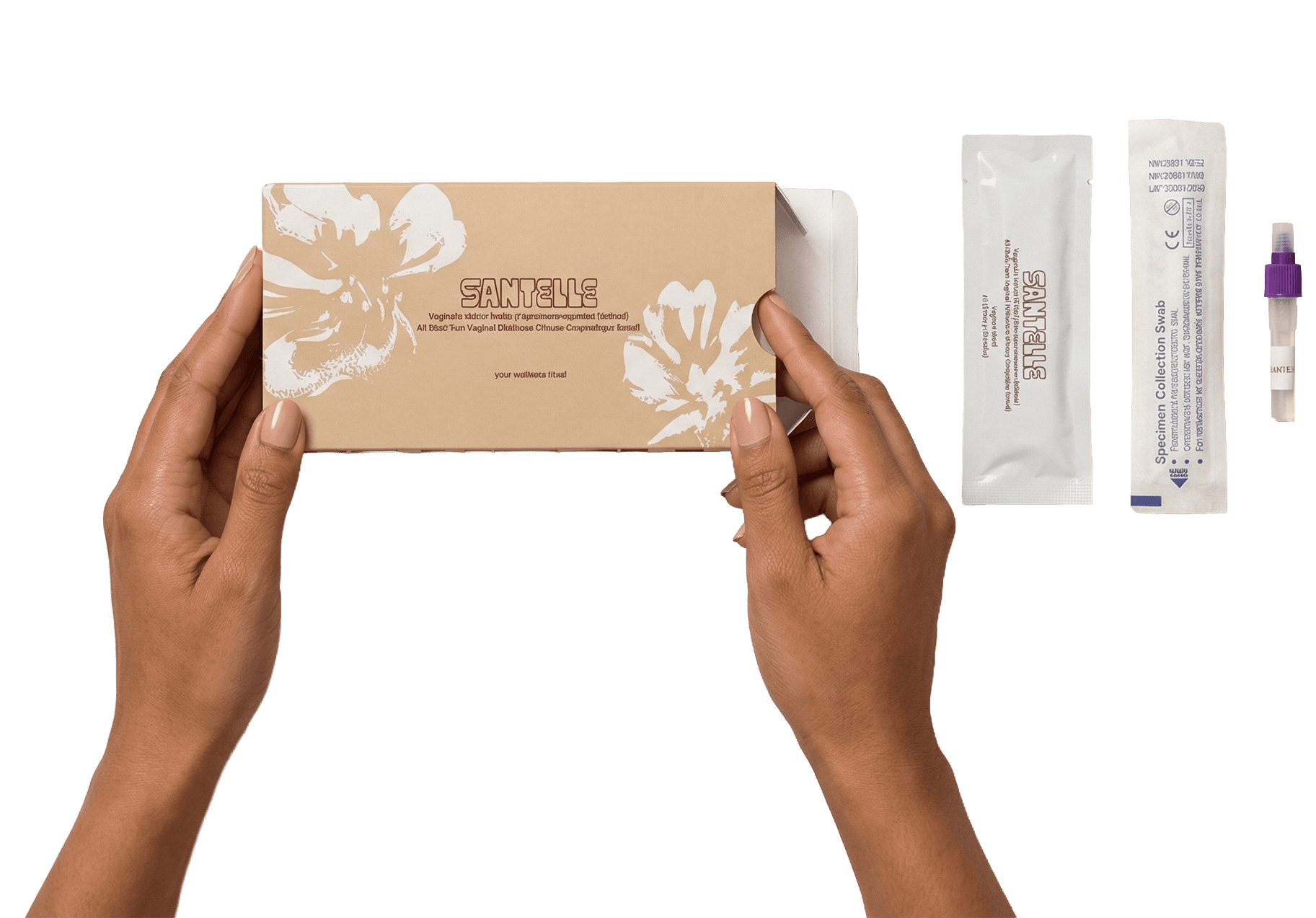
Look for tests calibrated for the vaginal pH range (typically 3.5 to 7.5 or similar). Santelle offers a home vaginal pH test designed specifically for this purpose.
How to use a vaginal test:
Wash and dry your hands thoroughly before starting.
Do not test during your menstrual period — blood will temporarily raise the reading and produce a false result.
Wait at least 24 hours after sexual intercourse before testing, for the same reason.
Avoid douching, using vaginal products, or swimming in the 12 hours before testing.
Using the applicator or swab provided, collect a small sample of vaginal secretions from inside the vaginal canal, approximately 2–3 cm from the opening.
Apply the secretions to the pH strip and wait the time indicated in the instructions (typically 30 seconds).
Compare the color of the strip to the provided color chart under natural or white light.
How to interpret your result:
pH 3.8–4.5 (reproductive age): Normal range. If you have symptoms, a yeast infection is more likely than BV.
pH above 4.5: Elevated. This does not diagnose anything on its own, but it suggests a possible bacterial imbalance. BV or trichomoniasis should be considered. See a healthcare provider for confirmation, especially if symptoms are present.
pH above 6.0: Notably elevated. May reflect menstrual blood contamination (check testing conditions), significant imbalance, or hormonal changes (menopause). Seek clinical assessment.
Home pH testing is a triage tool, not a diagnosis. It helps you walk into your doctor's appointment already knowing something useful.
How to Restore and Maintain a Healthy Vaginal pH
When your vaginal pH is balanced, your vagina can naturally protect itself from irritation, odor, and infections.
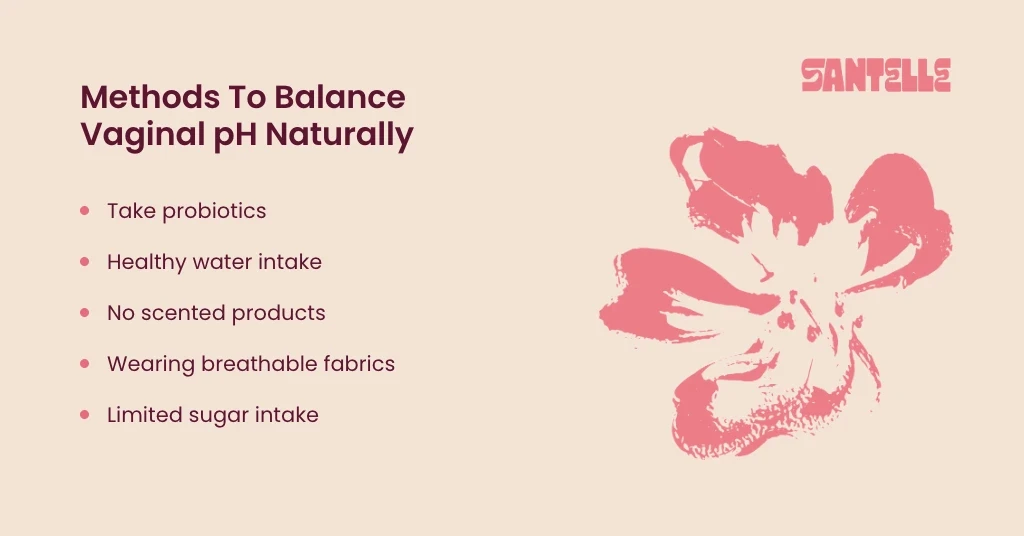
Here are a few things that actually help:
Stop using scented washes, wipes, or douches. They often make irritation and odor worse, not better.
If you keep getting BV or yeast infections, probiotics may help restore healthy bacteria after treatment.
Wear breathable underwear and avoid staying in wet clothes for hours.
Use condoms if you notice odor or irritation after sex.
Finish any antibiotic treatment fully, even if symptoms improve quickly.
If symptoms started around perimenopause or menopause, hormones may be affecting your vaginal health too.
Nearly 1 in 3 women of reproductive age will experience bacterial vaginosis at some point in their lives, and in most cases, an imbalanced vaginal pH is the underlying trigger.
Yet most women have never been told what their vaginal pH should actually be, or why it matters.
Vaginal pH is a measure of how acidic or alkaline your vaginal environment is. When it stays within its healthy range, it acts as your body's first line of defense against infections.
When it shifts, even slightly, symptoms can follow quickly.
In this guide, you'll learn:
What vaginal pH is and why it matters
What the normal range looks like at every life stage
What disrupts it (and what doesn't)
How to recognize when something is off
How to test your pH at home
Evidence-based ways to restore and maintain balance
What Is Vaginal pH?
You've probably seen "pH" on skincare labels or pool test kits. It's simply a measure of how acidic or alkaline something is — on a scale from 0 to 14. Anything below 7 is acidic, anything above is alkaline, and 7 is neutral, like plain water.
Your vagina is naturally acidic, and that's a good thing.
That acidity comes from beneficial bacteria called Lactobacillus, which live in your vagina and work around the clock to protect it.
They feed on natural sugars in your vaginal cells and produce lactic acid, which is what keeps your pH low.
Why does that matter? Because the bacteria behind infections like BV, yeast infections, and some STIs can't survive in an acidic environment. They need things to be more neutral to grow and spread.
What Is a Normal Vaginal pH Level?
For women of reproductive age, a healthy vaginal pH is 3.8 to 4.5.
Once pH rises above 4.5, the protective environment starts to weaken, and harmful bacteria find it much easier to take hold. In fact, pH above 4.5 is one of the four clinical criteria doctors use to diagnose BV.
But vaginal pH isn't a fixed number. It shifts across your menstrual cycle, your life stages, and even throughout the day. What matters is that your baseline stays consistently within the healthy range for where you are in life:
Life Stage | Normal pH Range | Why |
|---|---|---|
Before puberty | 6.0 – 7.0 | Low estrogen; Lactobacillus not yet active |
Reproductive age (15–49) | 3.8 – 4.5 | Lactobacillus-dominant microbiome |
During your period | Up to 7.4 | Menstrual blood is alkaline — temporary rise |
Pregnancy | 3.8 – 4.5 | High estrogen keeps Lactobacillus strong |
Perimenopause | 4.5 – 5.0 | Estrogen declining; protective bacteria decreasing |
Post-menopause | 4.5 – 6.0 | Low estrogen; reduced protective bacteria |
The rise during your period is temporary, pH usually returns to baseline within a day or two after bleeding stops.
Post-menopause, a higher pH is physiologically normal, though it does increase susceptibility to dryness and irritation.
What Can Change Your Vaginal pH?
1. Your Period
Menstrual blood has a pH of around 7.4 — well above the healthy vaginal range.
While this temporary rise is completely normal, leaving a tampon or pad in too long extends the exposure window and may prolong the disruption.
2. Semen and Unprotected Sex
Semen is alkaline (pH 7.2–8.0) by design — sperm need a less acidic environment to survive.
After unprotected sex, vaginal pH rises temporarily. In most women, Lactobacillus restores acidity within a few hours. But frequent unprotected sex without recovery time can make sustained pH elevation more likely, which is partly why BV rates are higher in sexually active women.
4. Antibiotics
Antibiotics don't discriminate. They wipe out harmful bacteria and your beneficial Lactobacillus along with them.
A single course of broad-spectrum antibiotics can significantly deplete your vaginal flora, leaving the door open for BV or yeast infections, which is why both are so common after antibiotic treatment.
4. Douching and Scented Products
Your vagina is self-cleaning. It doesn't need to be rinsed, perfumed, or freshened.
Douching — whether with water, vinegar, or store-bought products, washes away the good bacteria that keep your vagina protected, and if the product is alkaline, it directly raises your pH too. Decades of research consistently link douching to higher rates of BV.
The same applies to scented soaps, gels, bubble baths, and sprays used near the vaginal opening. Plain warm water on the external vulva is all you need. Your vagina handles the rest on its own.
6. Hormonal Changes
Estrogen is what keeps Lactobacillus thriving. It stimulates vaginal cells to produce the sugars that Lactobacillus converts into protective acid.
When estrogen drops — during perimenopause, menopause, postpartum recovery, or with certain hormonal contraceptives — Lactobacillus populations thin out and pH rises.
7. Stress and Sleep
Chronic stress suppresses estrogen production, which indirectly reduces Lactobacillus and raises pH over time. This is one of the more overlooked triggers, especially for women with recurring BV and no other obvious cause.
8. Diet
The evidence here is still emerging, but high sugar intake is linked to yeast overgrowth, and probiotic-rich foods (yogurt, kefir, fermented vegetables) may modestly support a healthier vaginal microbiome.
Diet alone won't correct a significant imbalance, but it can be a contributing factor.
Signs Your Vaginal pH Might Be Off
pH imbalance doesn't always cause obvious symptoms. When it does, here's what to look for:
Symptom | What It Could Suggest |
|---|---|
Gray, white, yellow, or green discharge | BV, yeast infection, or STI |
Fishy or unpleasant odor, especially after sex | Classically associated with BV |
Itching or burning around the vaginal opening | pH imbalance, yeast infection, or irritation |
Burning during urination | Can accompany vaginal or urinary infections |
Pain or discomfort during sex | Dryness, infection, or pH disruption |
None of these confirm a specific diagnosis on their own, and many overlap between conditions.
That's exactly where a pH test becomes useful.
Does Vaginal pH Affect Your Risk of Infection?
Your pH level doesn't just reflect what's happening inside your vagina. In many cases, it's actually what's driving it.
Bacterial Vaginosis (BV) is the infection most directly tied to pH. When pH rises above 4.5, harmful bacteria overgrow and push out Lactobacillus. Even after antibiotic treatment, BV comes back in many women — because antibiotics kill the bad bacteria but don't rebuild the good ones.
Yeast infections work differently. Candida actually thrives in more acidic environments, so yeast infections typically occur when pH is normal or even lower than 4.5. This is why a home pH test is so useful: if your symptoms feel like an infection but your pH is normal, BV is unlikely — a yeast infection is a much better guess. Getting these two mixed up is extremely common, and treating one when you have the other does nothing.
Trichomoniasis is an STI that closely mimics BV — same elevated pH above 4.5, similar symptoms (discharge, odor, irritation). The key difference: it's sexually transmitted, requires a specific prescription treatment, and both partners must be treated or reinfection will keep happening. It can only be confirmed with a lab test.
If you're pregnant: elevated vaginal pH in early pregnancy is linked to a higher risk of preterm birth. Some OBs now check vaginal pH as part of prenatal care, especially in women with a history of early delivery. If something feels off, don't wait — mention it at your next appointment.
How to Test Your Vaginal pH at Home
Home pH testing is simple, non-invasive, and can give you genuinely useful information — especially for telling BV and yeast infections apart before you decide what to do.
A vaginal pH test strip or swab-based test. These are available at pharmacies and online.
Look for tests calibrated for the vaginal pH range (typically 3.5 to 7.5 or similar). Santelle offers a home vaginal pH test designed specifically for this purpose.
How to use a vaginal test:
Wash and dry your hands thoroughly before starting.
Do not test during your menstrual period — blood will temporarily raise the reading and produce a false result.
Wait at least 24 hours after sexual intercourse before testing, for the same reason.
Avoid douching, using vaginal products, or swimming in the 12 hours before testing.
Using the applicator or swab provided, collect a small sample of vaginal secretions from inside the vaginal canal, approximately 2–3 cm from the opening.
Apply the secretions to the pH strip and wait the time indicated in the instructions (typically 30 seconds).
Compare the color of the strip to the provided color chart under natural or white light.
How to interpret your result:
pH 3.8–4.5 (reproductive age): Normal range. If you have symptoms, a yeast infection is more likely than BV.
pH above 4.5: Elevated. This does not diagnose anything on its own, but it suggests a possible bacterial imbalance. BV or trichomoniasis should be considered. See a healthcare provider for confirmation, especially if symptoms are present.
pH above 6.0: Notably elevated. May reflect menstrual blood contamination (check testing conditions), significant imbalance, or hormonal changes (menopause). Seek clinical assessment.
Home pH testing is a triage tool, not a diagnosis. It helps you walk into your doctor's appointment already knowing something useful.
How to Restore and Maintain a Healthy Vaginal pH
When your vaginal pH is balanced, your vagina can naturally protect itself from irritation, odor, and infections.
Here are a few things that actually help:
Stop using scented washes, wipes, or douches. They often make irritation and odor worse, not better.
If you keep getting BV or yeast infections, probiotics may help restore healthy bacteria after treatment.
Wear breathable underwear and avoid staying in wet clothes for hours.
Use condoms if you notice odor or irritation after sex.
Finish any antibiotic treatment fully, even if symptoms improve quickly.
If symptoms started around perimenopause or menopause, hormones may be affecting your vaginal health too.
Vaginal pH Balance: Signs, Causes & Solutions
Vaginal pH Balance: Signs, Causes & Solutions
Vaginal pH Balance: Signs, Causes & Solutions
Vaginal pH imbalance can trigger BV, odor, itching, and infections. Learn the normal range, causes, symptoms, testing, and solutions.
Vaginal pH imbalance can trigger BV, odor, itching, and infections. Learn the normal range, causes, symptoms, testing, and solutions.
FAQ
What is a normal vaginal pH?
For women of reproductive age, normal vaginal pH is 3.8 to 4.5. This range shifts with age and hormonal status — see the table above for values by life stage.
Can I fix vaginal pH without medication?
Mild or transient pH elevations — such as those following menstruation or sex — often normalize on their own.
For infections like BV or trichomoniasis, antibiotics are required and cannot be substituted with supplements or dietary changes. Probiotics may support recovery and help prevent recurrence but are not a treatment for active infection.
Does diet affect vaginal pH?
Indirectly, and the evidence is limited. High sugar intake may promote yeast overgrowth; Lactobacillus-supporting foods (fermented foods, high fiber) may modestly benefit vaginal microbiome composition. Diet is unlikely to correct a significant pH imbalance on its own.
Is pH 5.0 normal after menopause?
Yes, pH between 4.5 and 6.0 is typical post-menopause due to declining estrogen. It's physiologically expected and not inherently a sign of infection. However, if accompanied by symptoms like discharge, odor, or significant discomfort, evaluation is warranted.
How long does it take for vaginal pH to return to normal?
After a temporary disruption (menstruation, sex), pH usually normalizes within hours to a day or two.
After antibiotic treatment for BV, it can take several weeks for the microbiome to fully restabilize — which is part of why recurrence rates are significant in the months following treatment.
Does vaginal pH affect fertility?
Somewhat. Semen and the cervical mucus around ovulation are both alkaline, which temporarily creates a more sperm-friendly environment. A chronically low or high vaginal pH can theoretically affect sperm survival, but this is rarely the primary factor in fertility challenges. If you are trying to conceive and have concerns, speak with your gynecologist.
What pH level is associated with a yeast infection?
Yeast infections caused by Candida are typically associated with a normal or below-normal vaginal pH (under 4.5). If your pH test shows an elevated result above 4.5, a yeast infection is unlikely to be the sole cause — bacterial or parasitic infection should be considered instead.
© 2026 Santelle Sàrl+41 79 738 46 35c/o Roxanne SabbagRoute de Pressy 5b1253 Vandoeuvres, CH

© 2026 Santelle Sàrl. +41 79 738 46 35Roxanne Sabbag, Route de Pressy 5b, 1253 Vandoeuvres, CH
© 2026 Santelle Sàrl+41 79 738 46 35c/o Roxanne SabbagRoute de Pressy 5b1253 Vandoeuvres, CH